Author Archives: Dorothy Max Prior

Dorothy Max Prior

About Dorothy Max Prior

Dorothy Max Prior is the editor of Total Theatre Magazine, and is also a performer, writer, dramaturg and choreographer/director working in theatre, dance, installation and outdoor arts. Much of her work is sited in public spaces or in venues other than regular theatres. She also writes essays and stories, some of which are published and some of which languish in bottom drawers – and she teaches drama, dance and creative non-fiction writing. www.dorothymaxprior.com

YUCK Circus: YUCK Circus

‘Sisters are Doing it For Themselves’ blares out as we take our seats. The family next to me in the queue have a young girl of around 10 or 11 in their party, and they ask an usher if the show is suitable for her. There may be some things that go over her head, is the reply…

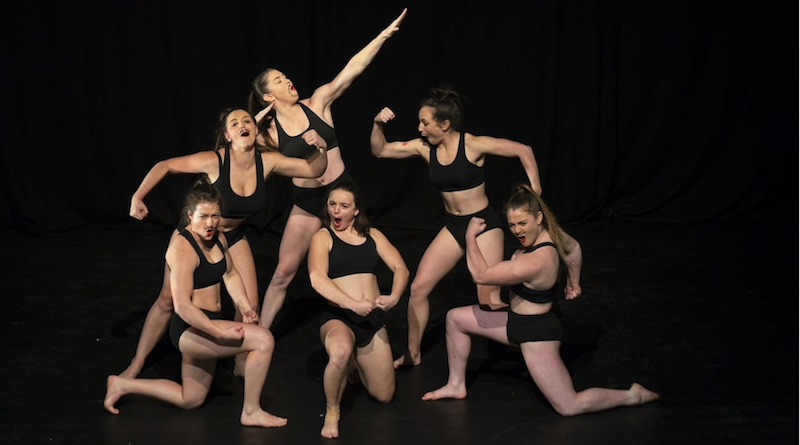
And we’re off! Seven strong women in plain black, practical two-piece circus outfits bounce onto the stage. ‘Here we go, boys!’ they cry in broad Aussie accents, and – oh, OK, we now notice the bulges in their crotches and the moustaches drawn on with black kohl pencil. They perform a mock-macho acrobatic dance number: ‘I’m a man / nothing to break!’ booms out as they flex biceps and pump iron, forming towers and pyramids, flipping this way and that, maintaining the stereotypical masculine pose throughout. One of the ‘men’ is now a ‘woman’. She stands in a Betty Boop pose, wrapped in a white towel, as the ‘men’ cheer and crow. As she turns around we see the bright red stain on back of the white towel… ‘Oh NO… Urrrggghh’ cry the men. ‘But would you?’ says one. ‘Would you?’

The lights turn red. Long red ribbons are fluttered as the women skip around girlishly like young female gymnasts, then the mood shifts and they become a many-headed menstruation monster, as one steps out to tell harrowing tales of flash foods and failing tampons. Most of the audience are laughing and applauding; some are sitting silently, aghast; a few walk out. And we’re only ten minutes in!

The gender play – switching into ‘man’ mode and back again, often in one scene – continues throughout, occasionally undermined with lines such as ‘this may surprise you, but I’m not a man’. The ensemble work well together, taking turns to step out of the circus action into narrator role, or morphing into characters – notably, a line-up of drunken night-out confessions that starts with ‘Five pints of Fosters and I…’, and the skilled portrayal an old woman in a housecoat and slippers musing on the men in her life: ‘He was a good man…’ which pre-empts harrowing tales of male entitlement, although housecoat-lady can clearly hold her own.

Which is the point, ultimately – this is a show about female resilience. When we get a repeat of the ‘one woman in a room full of crowing men’ scenario, our heroine kick-boxes and cartwheels her way to personal space alone on the stage.

I find myself wondering what the 11-year-old girl is making of all this – a glance behind me shows that she is sitting on her dad’s lap laughing merrily…

Along with mocking male mores, the team are also willing to take the Mickey out of stereotypical female behaviour. We are treated to a wonderful Can Can inspired dance routine to Tom Jones’ She’s a Lady, replete with Tiller-girl  kicks and handstand walk-overs, all teeth and smiles and flowery knicker adornments. Oh, and there is an aerial act, introduced with, ‘Did you think you could come to an all-female circus show and not see an aerial act? Did you?’

With the exception of this one aerial (straps) number, the action is floor based: excellent ensemble acrobatics, full-on dance, physical comedy skits, and more. YUCK is a mighty mash-up of feminist message and fun-filled circus numbers  – full of raucous energy, and a joyous exploration of all those lady things nobody likes to talk about. Take your daughters – and your sons.


Cirque Les Foutoukours: Kombini

The phone rings. The pair of clowns onstage are waiting for the big call – the one from an international festival that will make them stars. Nope, not this time…

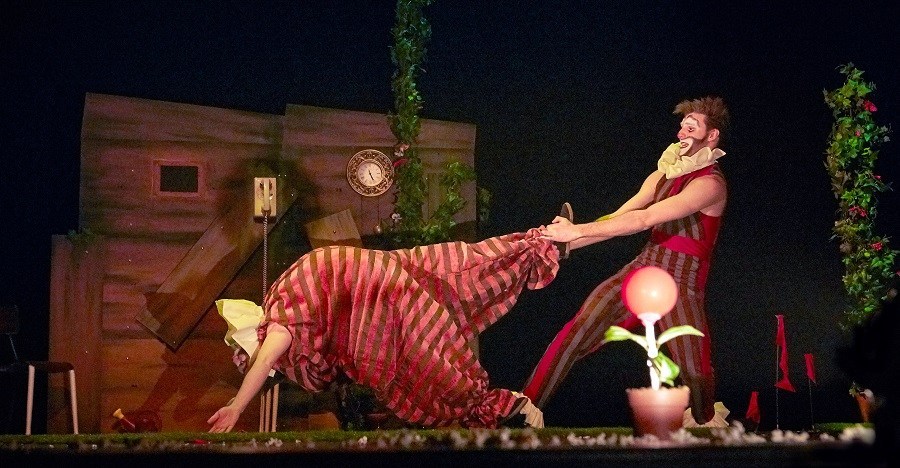
Both are in traditional dress and make-up. One is definitely of higher status: tall, slim, obviously in charge – and the base in the highly skilled acrobalance routines that follow. The other is the Auguste, the anarchic fool (although both men bear the traditional Auguste clown ‘muzzle’ and white and black eye make-up, with little red noses painted on). He wears a baggy, horizontally-striped suit – as opposed to his partner’s flattering vertically-striped suit which shows off his manly figure. The opening sequence, in which our foolish friend refuses to be hoisted up onto his partner’s shoulders, terrified that he’ll fall and die, but of course eventually gets forced up, is a beautiful demonstration of classic acrobatic clowning. All communication between the two is through physical action, or a kind of nonsense grommelage with the occasional French or English word thrown in (the company are from Montreal, Quebec).

The phone rings again – it’s an offer! But not the one they were hoping for. They’ve been asked to perform at a children’s party! Now it gets interesting, as the clowns subvert the mores of traditional clowning (with no doubt an ironic comment in there about what depths some contemporary clowning has sunk to).

Out higher status friend goes backstage and comes back on in a ludicrously wide and luridly patterned outfit, and a ridiculous orange wig. He has an equally garish outfit for his partner, plus a turquoise wig which is strongly resisted – but of course, the boss wins.

The story of the kid’s party that goes wrong plays out beautifully. Bunches of balloon flowers are burst, and the foolish one (or at least, the one who is foolish and knows it) manages to push blame onto an audience member. A beautifully crafted balloon poodle is torn to shreds. There is popcorn. And more popcorn. And more popcorn…

Skills-wise: gorgeous comic acrobalance / hand-to-hand moves, combining  skill and humour effortlessly; a wonderfully whimsical hand-balancing act on chairs, as the traditional clown scenario of the imaginary date is played out (with a brilliantly nasty twist); and really clever working of the audience, who lap up every moment. I enjoy everything, although the gym work-out section feels a little bit jaded – mostly down to the fact that I really don’t think I can bear to hear Eye of the Tiger used as part of a comic act ever again (or maybe they were being double-bluff ironic in choosing a track that is not only hackneyed but over-used ironically?). Elsewhere, the soundtrack is fine, with lots of nice trombone interludes.

Our two clowns – Rémi Jacques and Jean-Félix Bélanger – know their stuff. We are safe in their hands, and the show works on many different levels. The youngsters took it all at face value (although they are never played down to in a demeaning way), the adults enjoyed the knowing double-takes, and those of us with an interest in the art of clowning enjoyed the playing with form at the heart of the piece.

So a grand success for Kombini’s UK debut – and great to see a show built around traditional clowning (that is usurped as well as honoured) programmed at the Circus Hub for Edinburgh Festival Fringe.


Featured image (Top): Cirque Les Foutoukours: Kombini. Photo by Carl Archambault

We Are Europeans! BE Festival 2019

Dorothy Max Prior spends a whirlwind 24 hours in Birmingham, enjoying a taster menu of the 10th edition of BE FESTIVAL 

We’re onstage at Birmingham Repertory Theatre – not performing in a show, although you could describe it as a performative event. It’s a communal dinner – long tables laid with white tablecloths, vases of flowers and bread baskets, salad bowls dotted along, with plates of chicken or squash curry with rice being served to the tables. The conversation is animated – some are talking about the show we’ve just seen – Edurne Rubio’s documentary in the dark Light Years Away – others are networking madly, or telling their neighbours about the show they’ve already presented this week or are going to present.

This is BE FESTIVAL, the BE stands for Birmingham European, and it is an annual festival of new performance work from across Europe – with discussion about the work a key element to the festival’s unusual structure of three shows per evening, punctuated with dinner. It is curated and produced by Miguel Oyarzun and Isla Aguilar, and this year  (July 2019) celebrates its tenth anniversary, having started in response to a public arts meeting held in Birmingham in 2009, where the city requested a greater presence of international work.
 

BE FESTIVAL co-founders and directors Miguel Oyarzun and Isla Aguilar


And who better placed than Miguel and Isla to deliver! Both are Internationalists. He is from Madrid, an actor writer and director. She is also Spanish, a curator and editor of visual arts books. Together, they not only present BE for a week in July every year, and produce the BE On Tour programme, but also manage a theatre in Madrid and numerous other projects in the UK, Spain, and throughout Europe.

Isla, Miguel and co-founder Mike Tweddle (who has since left to be director of Bristol’s Tobacco Factory, but stays supportive – he was there in the audience this year) allegedly ‘fleshed out a plan on the back of a napkin at a Birmingham curry house’ – and thus a festival was born. In the early years, they were generously supported by Birmingham based Stan’s Cafe, who gave them use of the company’s AE Harris building. The festival grew, and by 2014, they became an Arts Council National Portfolio Organisation, staffed by a full team of producers and administrators, supported by a merry horde of volunteers, and guided by a board chaired by none other than the Birmingham born and bred Joseph Seelig, founder and co-director of the London International Mime Festival. BE FESTIVAL now work with the Birmingham Rep, using the theatre’s backstage spaces (and the stage!) converting them into a lively shabby-chic bar, the marvellous communal dining area, and three different performance spaces.
 

Tom Cassani: Someone Loves You Drive With Care


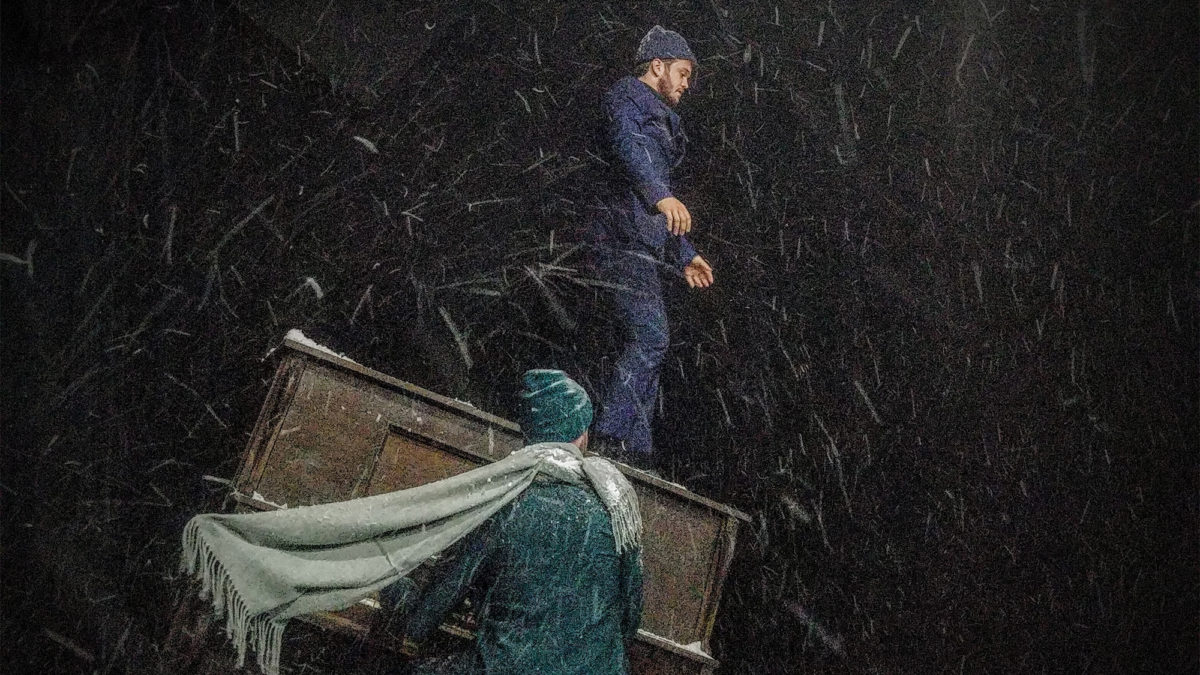
Work presented in these spaces over the week is an eclectic mix – diverse in every sense of the word. I’m here on a 24-hour flying visit, and things I’ve missed over the previous four days include Dies Irae, a visceral performance piece by Italian provocateurs Sotterraneo; Soul Seekers, a performance-documentary by Iraqi-Belgian Mokhallad Rasem following his and fellow refugees journey to asylum; and German choreographer Paula Rosolen’s provocative Punk, investigating what now remains of the visual language of punk rock, featuring a live band and pogo sticks. Also in this year’s programme: Catalan company Ça Marche presented Silence, which uses a cast of children to explore the future of the world and coexistence with our ghosts; and in Promises of Uncertainty by Swiss circus-dance company Moost, daredevil Marc Oosterhoff transforms into a naive explorer, armed with a teeter-board and a raft of props. There was also a return visit for last year’s winner Tom Cassani – for there is a competition element to this festival. Tom is here to show two works: I Promise You That Tonight is his new piece, presented on Tuesday, the opening night of the festival; and BE 2019 closes on Saturday night with a full-length version of last year’s winning show, Someone Loves You Drive With Care, which channels the spirit of classic sideshow stunts and trickster’s wiles into an odd and intriguing combination of prestidigitation and performance art.

So that’s some of what has gone before in this very full week – now let’s go back to Friday evening, which gives us one full-length show pre-dinner, then two 30-minute pieces afterwards.
 

Edurne Rubio: Light Years Away


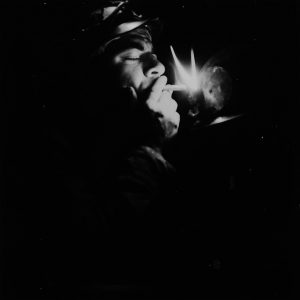
First we have Light Years Away, by Edurne Rubio, which we happily chew over during dinner. It is a show ‘presented in darkness, transforming its audience into cave explorers’ – sharing the experiences of the artist’s father and uncles as they endeavour to map the caves of Ojo Guareña in Northern Spain.

We are ushered into the tiered, seated theatre space – which is more-or-less dark. There is the clattering of metal buckets, and a spotlight highlights a woman, the artist we presume, who introduces the show, speaking in a hesitant and heavily accented English that is a little hard to understand. Then a projector whirrs into life, and we hear voices – men’s voices, as they move down and through the tunnels and caves. We see pinpoints of light, little flickers of lanterns and flashlights around the space, on screen and live, and we don’t see the men whose voices we hear – so we are placed in the position of fellow explorers moving through the tunnels. I applaud the premise, and the exchanges between the explorers (both mundane and philosophical) are wonderful. Later, there are reflections on the social and political context of the documentary material, set as it is in Franco’s Spain. It is lovely to be taken along on the journey in this way – but there is an artistic and technical dilemma here, as the fact that the men are speaking Spanish means that their words are subtitled, and the subtitles create light pollution, spoiling the key element of the piece – hearing voices in the dark and occasional flashes of light, and imagining we are there with them. From where I am, near the back of the theatre, and thus near the projector, it is actually so bright that I can see all my neighbours very clearly. I end up feeling that I would much rather have done without the subtitles and relied on my rudimentary Spanish, so that I had the experience in the dark the piece needs – but I suppose that wouldn’t be ideal either. Or is dubbing an option? Of course, as it is an aural documentary, the artist might well feel that dubbing in actors’ voices would be anathema. So we have a dilemma: content and form are struggling to work together in the piece, as witnessed. I loved so much about it, in theory, but in practice, it wasn’t working for me. And although I am happy to concede that my dinner conversations only represent a small cross-section of the audience opinion, our end of the table felt united in loving the show’s concept, but finding the presentation flawed.

Which feels the right moment to say that the discussion is key to the ethos of BE FESTIVAL, both the in-person debate over meals and in the bar, and the submitting of post-show reports on postcards that aim to be more than the standard booker’s evaluation form for their funders – in this case, copies get given to the artists, to take what they want from them.
 

Anna Biczoc: Precedents to a Potential Future


After dinner, it’s time for two more shows: and in this slot – whether excerpts, or shortened versions, or the beginnings of a new show – the brief is that the presentation is no more than 30 minutes.

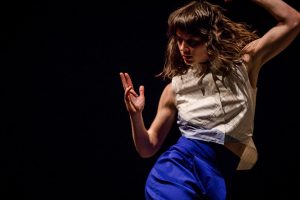
First up, Precedents to a Potential Future, by Anna Biczók from Hungary, a solo lecture-performance that interrogates the art and craft of dance, and explores what it means to live in the present moment.

We see a woman sitting at a desk talking about the performance we are supposed to be seeing. She outlines what would happen, but then, with a healthy dose of irony and humour, gets up and does it. Take two. Look how flexible she is, what excellent technique she has, what wonderful shapes she makes! She moves into a story about a mother watching a dance performance featuring a dancer with excellent technique, who falls asleep during the performance. Her mother? Her performance? We don’t know, but we presume yes.

Reflections on the real-time present moment, and the immediate past, the here and now (or almost now) in this theatre, and memories of long-past moments, continue to interweave and inter-relate. Is this now? Or this? The piece builds nicely to an intense finale as the philosophical musings are abandoned in favour of full-on physical expression with a rip-roaring soundtrack.

It’s a very cleverly structured and well-executed piece by a talented dance artist, appealing (in my case, anyway) more to the head than the heart. As a lecture-performance about dance – an interrogation of the artform and its mores – it works very well, but I think it’s fair to say that it is a piece that will mostly appeal to those working in dance.
 

Bertrand Lesca & Nasi Voutsas: The End

The final show of the day is by returning BE FESTIVAL favourites Bertrand Lesca and Nasi Voutsas (France/UK) – they presented Palmyra in 2017, which went on to won a Total Theatre Award at the Edinburgh Fringe that same year. The show is still touring internationally to great acclaim, as are the other two in the trilogy of works exploring ‘contemporary questions’, Eurohouse and One.

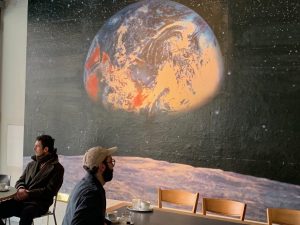
New show The End reflects on both the end of the world, and the imagined end of Bert and Nasi’s relationship.

At the back of the space, a table, a laptop, and above them a screen. The words on the screen give us the narrative of the end of the world, the story unfolding through a poetic list that reminds me a little of the old Zager and Evans hit In the Year 2525, outlining what’ll happen to the earth and its fauna, flora, and human occupants as the decades, centuries and millennia pass by. This unfolding future, end-of-the-world as a list device has been explored previously not only by Zager and Evans but also by both Forced Entertainment and Ontroerend Goed, and I feel is thus of less interest than the parallel exploration of endings in the show – the end of Bert and Nasi, the enactment of which is a stroke of genius.

For the duo have chosen to explore the end of their relationship through the medium of interpretative dance. Oh yes! It works, it really does – and for many different reasons. First, the choice of music is inspired – a whole story in itself, tugging us hither and thither. There’s a gorgeous guitar-led country waltz (possibly by Arthur Russell), and a contrasting bombastic classical ballet sequence that gives us some fabulous grands jetés. We get The Beatles’ Across the Universe, and Dionne Warwick’s Walk on By. The men walk – and run, and skip – in circles around the space, following the line of dance; or leap or glide across diagonals. There’s a fabulously frenetic Salsa-ish partner dance to the Latin classic Tanto Tanto Tanto. Meanwhile, the imagined future of the pair unfolds in words: marriage and kids, or not; working together, not working together, trying again, giving up; awkward meetings years later; fizzling out email exchanges; ageing and illnesses; and inevitably, one dying before the other. It is poignant, and funny, and thought-provoking, and lump-in-the-throat heartbreaking – all at one and the same time. Early days for The End, and work needed – but on the evidence of this showing, it’s going to be another hit.

There’s a live band booked for the bar – but I sneak away, not just because I’m tired, but because my head feels very full after seeing three shows in a row…
 

La Conquesta del Pol Sud: A Land Full of Heroes


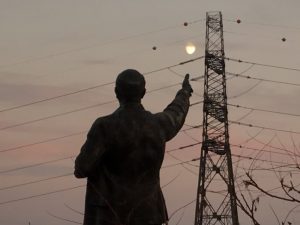
Saturday finds me back at the Rep, ready and waiting for the midday matinee show. It’s a full-length show – A Land Full of Heroes, by La Conquesta del Pol Sud – a collaboration between a Spanish, French and UK team, about a Romanian artist who moves to Germany. It somehow seems to sum up the best of BE: an experimental, hybrid form; riveting content, entertaining, political and thought-provoking; and created collaboratively by a truly pan-European team.

Form-wise, it mixes journalistic research, and film documentary with live onstage fictionalised biography, poetic text, and movement. Scenography is a key element, not a decorative add-on – the excellent set and video design is by Eugenio Szwarcer, one half of La Conquesta del Pol Sud – and the show is directed by the other half, Carles Fernández Giua. A Land Full of Heroes is supported by the Testimony in Practice project being led by researchers at the University of Birmingham. The company are presenting a workshop in tandem with the show – called ‘Archive, Memory, Performance: presenting “true stories” on stage.’

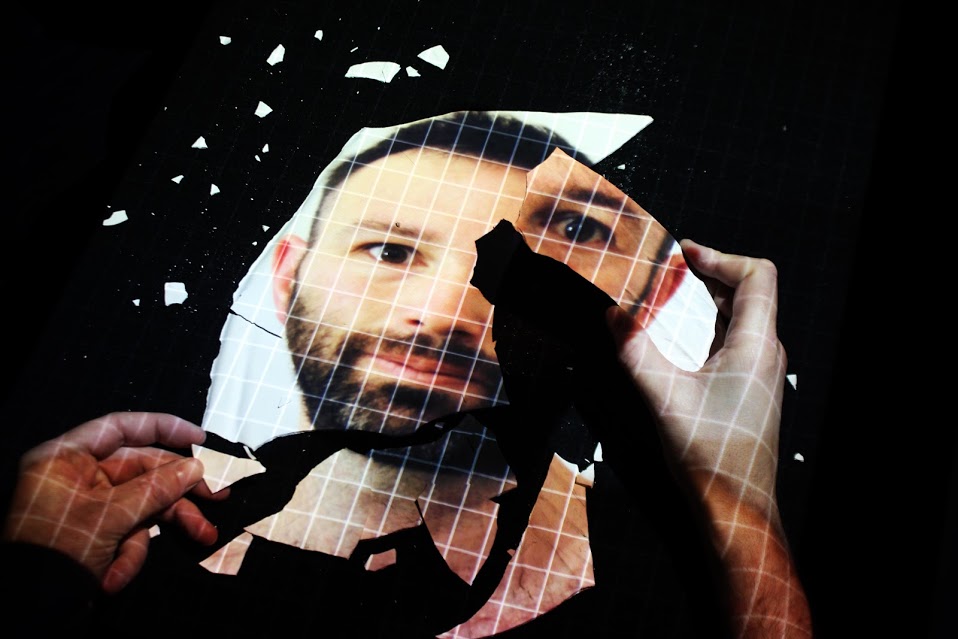
Screens are at the heart of the scenography: there’s a traditional back-wall film screen, and a chequered structure that performers can move behind and around that can be projected onto. The piece is multi-layered, the layers unfolding and revealing like a Matryoshka nesting doll structure. We first (on screen) encounter the Conquesta del Pol Sud team creating a road-movie re-enactment of Romanian writer Carmen-Francesca Banciu’s flight to Berlin. We then meet two female actors, playing the writer at different ages, and playing Maria Maria – the character from Banciu’s books who most resembles her. So we have fiction and non-fiction mixed throughout the piece, on screen, on stage, and in our imaginations, as excerpts from Banciu’s writings are spoken aloud and acted out. There is an extra layer of intrigue in the fact that the older woman, whilst a wonderful performer with immense stage presence, has a way of being onstage that suggests she is not acting, she is performing the self. Could it be Carmen-Francesca Banciu herself? There is no indication of this in the programme notes, but it becomes increasingly obvious and a minimal amount of internet research brings it up – yes, she is credited as co-creator and performer. And is the young actress with the shared surname her real daughter, or is that a theatrical device? Yes, it would seem she is! There are some extraordinary scenes, as, for example, when Carmen Francesca Banciu sits and witnesses her daughter Meda G. Banciu playing her younger self, cloaked in the veil of the fictional Maria Maria.   

Carmen-Francesca’s (or is it Maria Maria’s?) personal biography becomes the metaphor for the late twentieth century European experience. Through her story, we explore the collapse of the socialist regimes of Eastern Europe, the particular and individual experience informing and elucidating what we know through our history books. And in her longing for a new life in a free Western Europe, all the hopes and dreams of the ‘European project’ are highlighted. Berlin, where she eventually finds herself in the 1990s, acts as a kind of teasing mirage. This is openly acknowledged in the piece, and the fantasy alternative life that Berlin represents is the central axis around which all else revolves. It is particularly interesting to witness how the Berlin-born German speaking daughter who has never known war and oppression, and the Romanian speaking refugee mother, who still bears the scars of a childhood and young adulthood living under the Communist regime, explore their different takes on the world. Meda enacting a relentless interrogation by the authorities (which goes on daily for months) for not being quite loyal enough to the regime, for daring to think and write, says more about how it was to grow up in Romania in the Communist era than any detached factual account could ever do.

An extraordinary piece that proves that political theatre can use a cross-artform approach, and experiment in form, whilst simultaneously conveying the truth of real-life historical and biographical experience. A Land Full of Heroes is, indeed, a powerful testimony in practice.
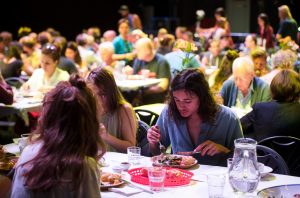
 

BE communal meals. Photo Alex Brenner


So, reeling with the fullness of this wonderful piece, we move into the cafe-bar for a brief networking meeting (another element of the festival programme) and then on to the dining area to take our places for lunch. After which, I head off into the mad medley of roadworks and redevelopment that is Birmingham city centre (local joke: ‘They’ll have finished Birmingham soon) and head to the train station.

I’m leaving behind a vibrant community of artists, producers, and audience members – a local, national and international medley. On the menu for the rest of the day: the Feedback Cafe, the BE Youth Theatre group, three more shows, an interval dinner – and a late night awards ceremony and closing party.

Just 24 hours in Birmingham – but 24 hours filled to the brim with wonderful experiences. I leave well-fed in body, mind and spirit. Bravo BE – a truly unique festival experience. Here’s to the next ten years!


Featured image (top): Aiguafreda, 1981. Artwork by BE FESTIVAL artist in residence Francesc Serra Vila, who will be responding to the 2019 festival and its given theme of Archive and Memory. He will present at BE FESTIVAL 2020.

BE FESTIVAL champions emerging artists in theatre, dance, circus and visual artists from across Europe. The festival’s ethos is rooted around creating community and connection through diverse arts and culture.

BE FESTIVAL celebrated its 10th edition in 2019, and ran from 27 June to 6 July 2019. Dorothy Max Prior attended Friday 5–Saturday 6 July as a guest of the festival. 

www.befestival.org
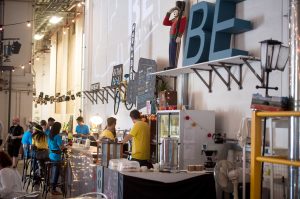
 

BE FESTIVAL bar. Photo Alex Brenner

Bongsu Park/Jin-Yeob Cha: Dream Ritual

She sleeps, she dreams, she sleepwalks…

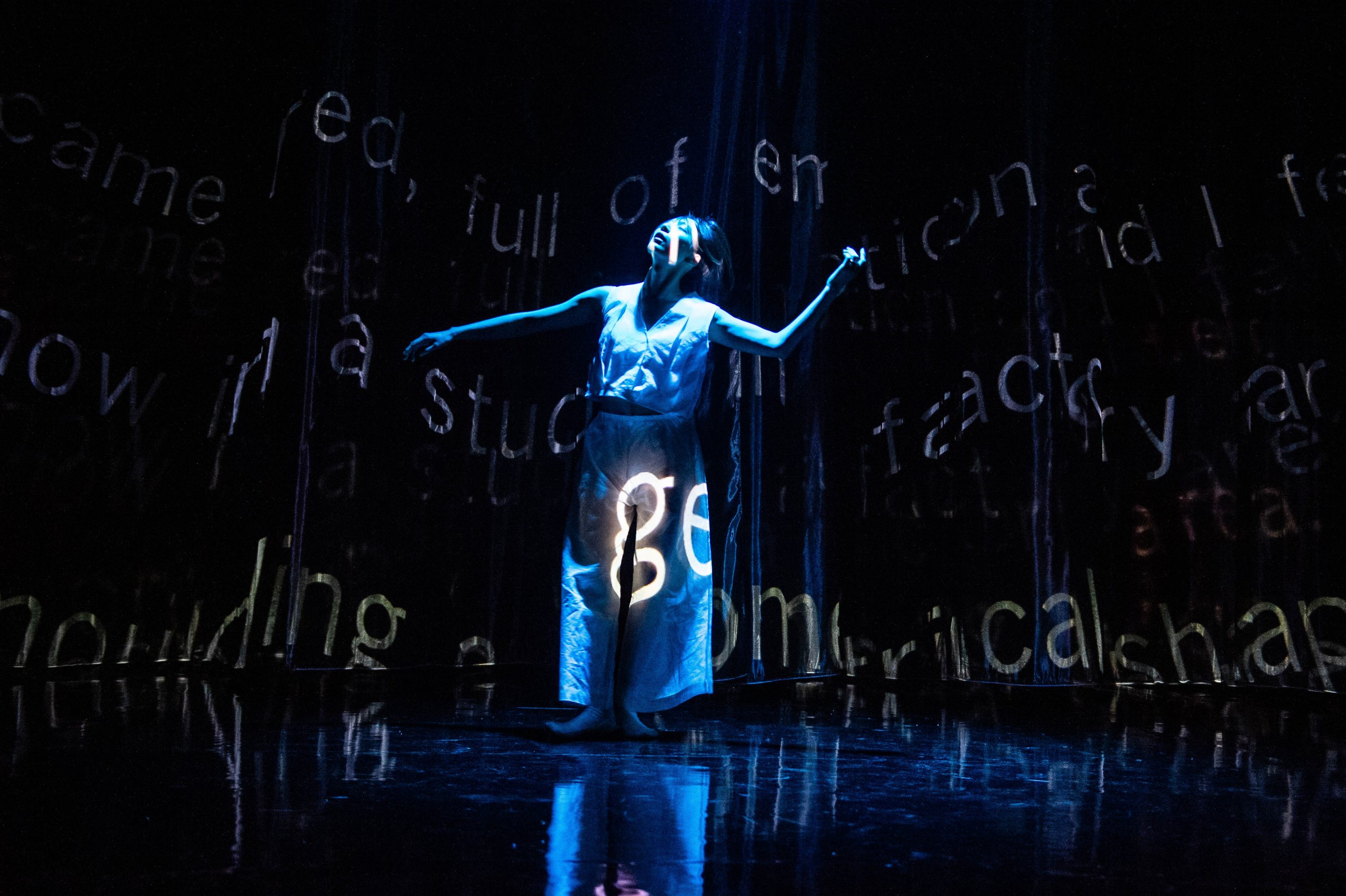
She is dressed in diaphanous white. She lies, curled, on a glossy black floor that’s as reflective as a mirror. The low-key soundtrack hinting at a heartbeat, a ticking clock. The electronic drones and pulses are augmented by bells and bowls.

She is lit beautifully, her graceful form illuminated by intense copper and cobalt beams. As she moves and spreads her limbs, she becomes two – a symmetrical imprint from a Rorschach blot test.

She stands, in a dream trance. She walks, she pulls a voile curtain across the front of the performance space, and this becomes a screen. Graphs of REM read-outs are projected onto it, the lines peaking and dipping – the parallel with musical waves apparent as the pulsing electronic soundtrack follows the patterns.

Words dance on the screen: ‘Munhui buys a dream from her sister Bohui… “What will you give me for it?’ Bohui asked. “I will give you my skirt of embroidered brocade.” Munhui spread her skirt and said, “I am ready to catch your dream.”’

Now she is not one but many, as sleeping spirits are awakened, her ghost-selves escaping from her to leap and dance. She leaps and dances, too. The projected words have broken down into letters that also dance across the space, reforming themselves into words that then quickly dissolve. I see ‘soil’ and ‘tree’ and ‘corridor’ and ‘fireplace’. Now there are sentences, and spoken word to accompany the projections. We hear and see fragments of dream stories that have been donated to Dream Ritual via a website, creating an interesting element of interactivity between audience and artists. In a further element, these dreams will be auctioned online, as part of the broader project, Dream Auction (with the profits going to charity) – a modern take on the Korean tradition of buying and selling dreams to bring good fortune.

But back to the stage: performer Jin-Yeob Cha works through a thrilling succession of scenes, a one-woman powerhouse commanding the stage with elegance, energy and a gentle but determined presence. There’s a pattern. She takes a movement motif – running on the spot, pirrouetting in big circles, spinning slowly and carefully in Sufi style  – and pushes the possibilities of each motif, creating a shamanistic performance ritual that ebbs and flows but never flags. As, for example, when the meditative sufi-like spin becomes a wild and joyous gyration, like a samba dancer at carnival time. The live physical action, projections and soundscape work together in close harmony. The lighting design and execution, by Connor Sullivan and Oliver Curtis, is always immaculate.

Lead artist on the project, and responsible for its conception and delivery, is London based Korean artist Bongsu Park – visual artist, director, dance-video maker and more. Performer Jin-Yeob Cha is also the choreographer – an acclaimed artist in Korea, director of Seoul’s Collective A, and choreographer for the opening and closing ceremonies of the PyeongChang Winter Olympic Games 2018. The third key player is composer haihm, a classical pianist turned renowned electronic musician, producer and DJ. This three-woman core team (augmented by a strong behind-the-scenes posse of designers, photographers, voice-over artists etc) have created an elegant, inventive, and thought-provoking work. Dream Ritual has, appropriately, a dreamlike, almost soporific quality – as we sit and watch and listen, we are lulled into another world. One in which dream and reality, conscious thought and unconscious feelings, merge so effectively that it is hard to tell where the boundaries begin and end.

The artists’ aim is to ‘immerse the audience in the traditional concept of sharing dreams’ – and in this they have succeeded admirably, creating a kind of modern day Midsummer’s Night Dream in which our collective desires and fantasies play out before us, in a delightful dance of spoken word, moving image, movement and music.

The show is accompanied by a video installation showing three earlier works by Bongsu Park: Cube (2011), Lethe (2015), and Internal Library (2017); and the gloriously eccentric and shabby chic Coronet Theatre bar hosts an exhibition of her artwork.

Featured image (top): Dream Rituals. Photo by Quan Van Truong.

The Dream Ritual London premiere at The Coronet Theatre, Notting Hill Gate, 3 July 2019 was hosted by The Korean Cultural Centre UK.


Jessica Wilson: The Passenger

Oh, the passenger / He rides and he rides / He sees things from under glass / He looks through his window’s eye / He sees the things he knows are his / He sees the bright and hollow sky…

Today I am The Passenger. And I ride, and I ride: train, train, tube, DLR, DLR – and with just 1 minute to spare, I arrive at Beckton Park station, and luckily Bus Stop X is just outside. Phew, made it!

So, I board the bus, and as most seats are already taken, try to sit down next to a middle-aged man in a grey suit. Then I notice he’s wearing a radio mic headset. Oh, right – a performer, then…

I sit a few seats back, and watch the back of his head. No ‘emerging from the audience’ scenario in this show, then – the mic flags him up as ‘not one of us’. Now the bus driver has the engine is running. At the last minute, a woman gets on – tousled blonde hair, jeans. She sits down, takes off her sweatshirt. Bare-armed, casual – in contrast to the suited and booted man she’s sitting next to.

And we’re off. The man takes a call on his mobile. He’s talking to someone called Patrick, about the Tesco sales and saving 2p on a litre. (Of what? surely not milk – his suit looks expensive and there can’t be much money in dairy, can there?) So we gather that he’s a salesman, or buyer, or something… a business man. There are more calls: a conversation about after-school childcare, then Patrick again. The woman starts a conversation: Is Patrick your boss? Was that your son? She apologises for prying. He replies, a bit cautiously at first. Yes, and yes. He’s separated from the boy’s mother. His boss dumps a lot on him. She talks about her day – a frustrating meeting with a bank manager about a loan, and then trying to get through to someone important on the phone, to resolve a complaint. You have to find out who the person you need to speak to is, he says. Get past the minions, get directly to that man. And never lose your temper, that’s crucial.

We listen in to all this, wondering where it’s going. Now the conversation has stopped. Music is playing (an upbeat road-movie soundtrack – composer Tom Fitzgerald knows his stuff, his music referencing key movie genres throughout the show).

Meanwhile, where are we going? We ride and we ride ‘through the city’s backside’. Well, what would have been the city’s backside once upon a time – an area now in a state of flux. Redevelopment is everywhere. Dockland Light Railway stations with metal-and-glass walkways and giant robot legs; the insect-like O2 Dome; planes from nearby City Airport coming so low they are almost on top of us. A graffiti daubed brick building sits alone on a piece of wasteland, bearing the sign-written legend: George’s Diner. A Majestic Wine warehouse. Brand new toy-building-block self-storage units all along the riverside. We move further into the city. Interesting juxtapositions: Launderettes and beauty therapists. Sleek sushi bars and greasy spoons. Novotel versus Top Night Hotel.

As we get close to Canary Wharf, the man is speaking again. This area was a wasteland 20 or 30 years ago, he says. Now look at it. Gleaming towers. Foreign investment. Bankers’ crash pads. He offers the woman advice on buying property. Borrow money to make money. Buy to let. Put your assets in to debt and make them work for you. The woman tries to say that she’s not in any position to buy anything, but he’s not having any of it: be braver, take risks.

Another musical interlude. A different mood, a little more edgy. We reverse out. The city moves past us, a panoramic display. I play a typical passenger game with myself: spotting red things. Ladbrokes, request bus stops, the Tesco sign, a Vodaphone ad, Ibis hotel sign, the red cladding on a high rise block. The man and the woman are talking again – about dodgy characters, homelessness and murders in the capital.

We’ve stopped for no apparent reason. Looking through the bus windows, we see a man in a brown fringed jacket, hat and cowboy boots – sitting, watching. Have we seen him before? He looks familiar. These sort of shows always invite musings on the performativity of everyday life. Is he a plant? Or just part of the East London landscape?

The conversation inside the bus has started up again. They’re talking about films with revenge plots, and she moves the conversation on to Clint Eastwood’s revisionist Western, Unforgiven. How many cows is a woman worth, she wonders. And then, as we draw into wasteland close to the airport, everything shifts… Cue mounting tension music, with a touch of Ennio Morricone in there somewhere.

The Passenger conceived and directed by Jessica Wilson and Ian Pidd, with a script by Nicola Gunn and ‘local dramaturgy’ by Tassos Stephens – cleverly works a plot trope beloved of thriller auteurs, from Agatha Christie to Alfred Hitchcock and beyond – that of total strangers, supposedly meeting randomly, who turn out to have a crucial connection, and to have been engineered together.

The cowboy motif is relevant to this connection between our two strangers, and it is worked into the piece with skill and humour. It’s a slow build and, despite the well written dialogue and strong acting, there are moments when you can’t help but wonder how the dramatic conflict is going to manifest, and then (when, at last, it emerges), what the resolution might be. But rest assured, Wilson and team know what they’re doing – the denouement makes sense of all that has gone before, and the Deus ex Machina resolution is stunning, turning our live movie into something magnificently surreal and gloriously cinematic.

I do, though, wonder why Mr Grey Suit is riding on a public bus – I mean, would he? Is it a public bus? Or are we all delegates on a works outing? But never mind, let’s put that aside… the bus is the bus – a device.

The Passenger is a tightly written and brilliantly executed piece that turns the London landscape into a thriller movie, framing the city so that we see it with the eye of a cinematographer. Its central premise – that the underdog can take on Mr Big and win, even if that means resorting to unusual methods – is one particularly appealing at a time in which capitalism is running rampant, making a mockery of notions of fairness in ‘free enterprise’.

Revenge is indeed sweet.

Lyrics from Iggy Pop’s The Passenger, composed by James Newell Osterberg and Ricky Gardiner.

Greenwich + Dockland International Festival (GDIF) runs 21 June to 6 July 2019. See www.festival.org