Author Archives: Jeremy Goldstein

Jeremy Goldstein

About Jeremy Goldstein

Jeremy Goldstein is a Manchester born interdisciplinary theatre maker and HIV+ activist with ACT UP London. For three decades he has championed underrepresented voices and new forms of artistic and political expression. In 2002, he founded London Artists Projects, and has since co-commissioned and co-created socially engaged work with celebrated artists, winning theatre awards including Evening Standard, Scotsman Fringe First, London Cabaret, and BBC Audio Drama.

Queer Theatre, Then and Now

From Hot Peaches to Footprints of Love; from Bette Bourne in Read My Hips to Kit Green in Mrs Dalloway, queer artist, writer and producer Jeremy Goldstein tracks some key moments along the way and quotes some key voices in his ongoing journey toward truth and becoming. 

Twenty-five years ago, I embarked on a queer artistic journey called London Artists Projects – a theatre production company I set up with a mission to speak truth to power for audiences hungry for live and authentic moments of joy, beauty and meaning. Founded in response to my HIV diagnosis in 1999, LAP has evolved through thousands of queer stories from all over the world. From Johannesburg to New York City, Zagreb, Vancouver, London and into the Australian outback and beyond, queer artists and participants have taught me a lot about love, and resistance, and the joy and empowerment that comes from speaking the truth of our lived experience. 

As I approach the 25th anniversary of London Artists Projects, I’ve been reflecting on my own personal memories and lived experience of some of the queer artists I’ve worked with or admire, and how they continue to influence my own practice and path towards truth and reconciliation.
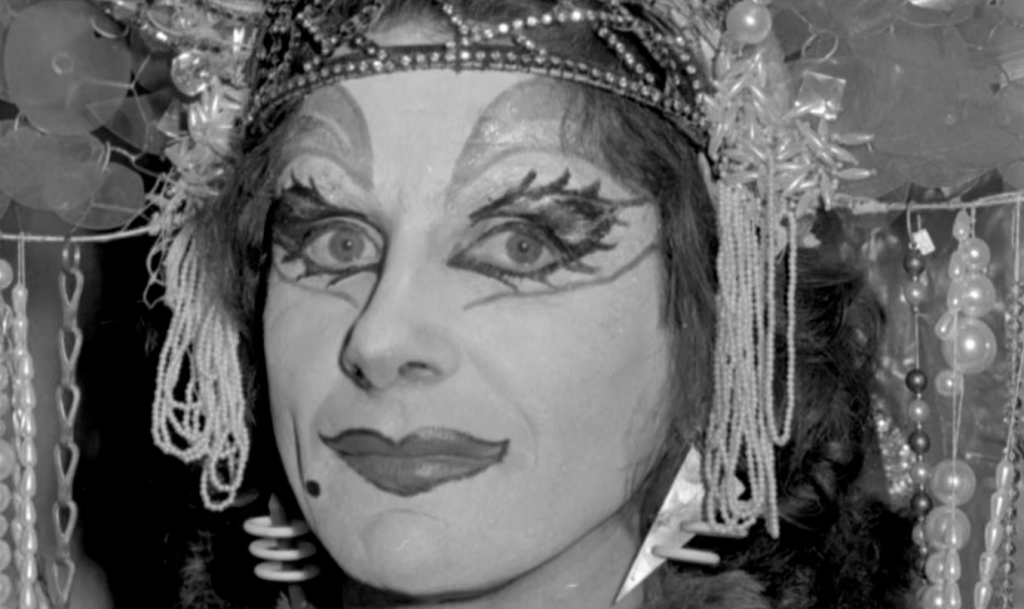
Bette Bourne. Photo Robert Workman Archive, Bishopsgate Institute

In the early days of LAP, I worked with Britain’s late doyen of high voltage radical drag theatre, Bette Bourne. Bette and I made four shows together including Read My Hips (by Ray Dobbins) with Lavinia Co-Op in 2005. The play, performed at London’s Drill Hall, was about the twentieth-century queer Greek poet Constantine P Cavafy of Alexandria, during the time that he was having an affair with a younger rent boy. Every night Vin would tear down the aile in roller skates proclaiming the interval. In Act II you could hear a pin drop as Bette would sit up in a makeshift bed (designed by Robin Whitmore) and read Cavafy’s Odyssey-inspired Ithaka. It was less a reading than a manifesto: “As you set out for Ithaka, hope your road is a long one,” it begins, “full of adventure, full of discovery.”

Twenty years on, that moment has stayed with me. Bette understood something essential: queer theatre has always been a voyage of becoming, and of self-discovery, as much as a destination. I saw that up close whilst working with Bette for over a decade, and learning about Bloolips, the anarchic theatre troupe he founded in 1977 in the wake of the Gay Liberation Front and the ‘political camp’ of New York’s gay performance ensemble Hot Peaches. 

Founded by Jimmy Camicia in 1972, Hot Peaches included Marsha P Johnson and Peggy Shaw, who in 1980 would go on to co-found the transatlantic queer company Split Britches with Lois Weaver, a former artistic director of Gay Sweatshop in London. (The third co-founder was Deb Margolin, who later left to pursue a solo performance career.)

Bloolips were hugely popular on both sides of the Atlantic. They produced six seasons off Broadway, and thirteen shows at what were once London hubs of queer culture including Oval House (now Brixton House) and the now defunct Drill Hall. Hot Peaches, Bloolips, and Split Britches helped shape a generation of queer working-class artists who did not see theatre as an elitist artform, but as an expression of identity, activism, community, and survival.
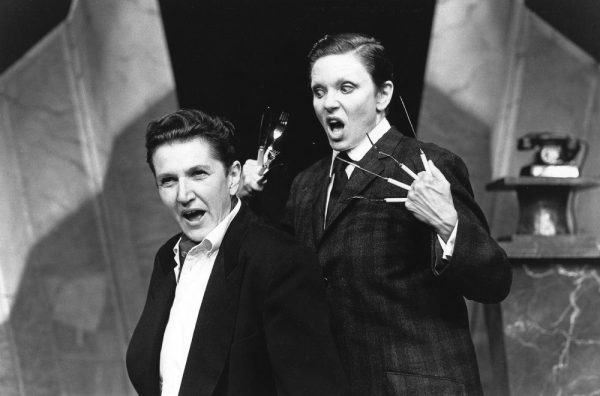
Split Britches

When I arrived in London in 1994, the political queer theatre culture of the 1980s had migrated to the ICA on The Mall. This did not happen over night. In 1976, the ICA hosted Hot Peaches in The Divas of Sheridan Square – a show which also played at Oval House, where Bette Bourne had seen it. In 1988 Erica Carter and Simon Watney organised Taking Liberties: AIDS and Cultural Politics, and in 1992 Lois Keidan became ICA Director of Live Arts and put it on the map as the most exciting and interesting queer performance venue on the planet. It was then that I worked at the ICA for nearly two years and saw Penny Arcade, Tim Miller, and Ron Athey for the first time; and met queer artists and producers of my generation including Robert Pacitti, Simon Casson (co-founder and producer of Duckie, who amongst many other projects held court at the Royal Vauxhall Tavern for 25 years) and Marisa Carnesky from whom LAP would later co-commission Carnesky’s Ghost Train with Fierce in Birmingham and Queer Up North in Manchester.

I’ve lived nine lives since those heady London nights of queer culture, Britpop and politics and learnt how to live in the moment, so I asked Simon Casson, now celebrating three decades of ‘government sponsored drag’: What is the story you want to tell now?  

“Back in the day, we were gay men and lesbians, and in my culture that meant white, cis, competitive, mental, and drunk,” said Simon. “But now, with LGBTQI+ Gen Z, the queer underground is a catalyst for revolutions in gender fluidity, neurodiversity, racial justice, sobriety, and queer care. We’re learning how to love each other and show solidarity.”

Gonzalo Quintana: All My Bodies featuring Malamar Abrodose. Photo Gastón Marin 

I put the same question to queer artists I admire, including Argentine theatre maker Gonzalo Quintana, who directed my latest work This Is Who I Am at last year’s Queer Zagreb

“I am drawn to the simplicity of real stories and relationships within our communities,” said Gonzalo, “and I want to tell our stories from a place of joy, especially trans stories that challenge binary ways of understanding life.”  

All My Bodies is Gonzalo’s ongoing theatrical collaboration with Argentina’s leading trans actress and activist Maiamar Abrodose. This restorative show, which I saw at Queer Zagreb, is a deeply humane work of queer theatre. Beautifully directed by Gonzalo, All My Bodies is the dignified story of Maiamar’s transition told through all the bodies Maiamar has inhabited. It charts her relationships and life-changing decisions which culminated in her personally receiving her new gender documents from then Argentine President Cristina Fernández de Kirchner in 2012. This is living breathing history from the Argentine Trans Memory Archive live on stage. 
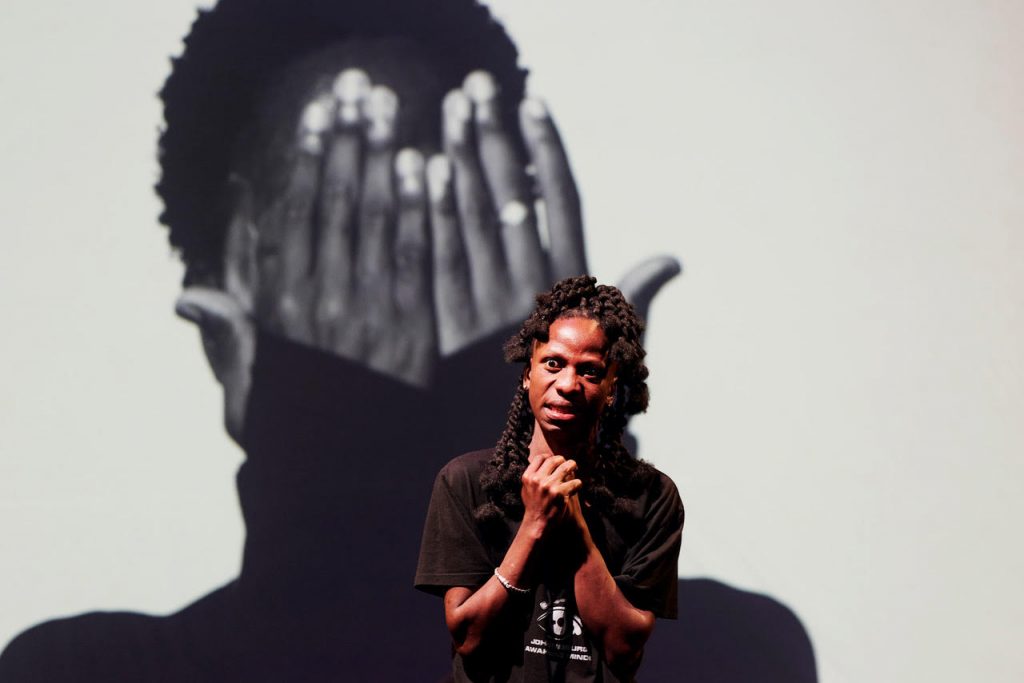
This Is Who I Am, at Market Theatre Johannesburg. Photo Roger Machin 

Queer South African playwright Jason Wheeler, who I met through the most recent edition of This Is Who I Am at Market Theatre Johannesburg, is now co-curator of the Market’s inaugural queer festival in October, and says that “right now, I want to share stories of queer joy. I want to move away from the sadness so often assigned to queer stories and shift the focus to happiness and triumph. I want to demystify the myth that queerness is so vastly different and highlight the relatability found in the minutiae of daily life.”

Australian director Sean Landis is telling radical stories that heal and disrupt: “I want to tell stories that speak to my queer way of looking at the world, and stories that I recognise my friends and community in.”  Sean’s vivid production of Cruise by this year’s Olivier Award-winning actor Jack Holden, transported me back in time to 1994 – the year I arrived in London and into Soho and the ICA. This exhilarating journey into queer social history gives voice to those we’ve lost to HIV/AIDS in a single urgent monologue, and will transfer to Sydney Seymour Centre in October.
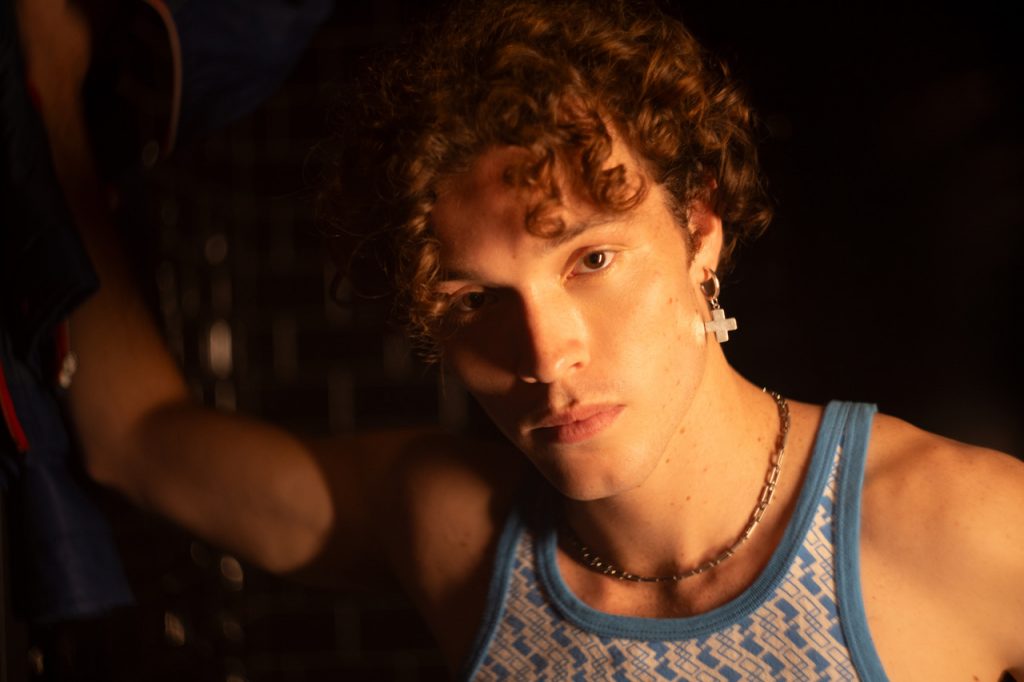
 

Sean Landis: Cruise.. Photo Abraham de Souza 

Sydney-based director Kate Gaul whose new play Eden took this year’s Adelaide Fringe by storm says: “Queer theatre isn’t about declaring itself; it’s about destabilising what we think we know about love, gender, and power.” Kate feels it reflects her desire for stories “that slip between forms, resist resolution, and trust the body as much as language. In that ambiguity, that friction, something honest and alive emerges”.

It’s a path which also belongs to Jen Heyes, the visionary Liverpool-based UK theatre director who directed my own activist theatre Truth to Power Café and the world premiere of This Is Who I Am in Singapore in 2022.
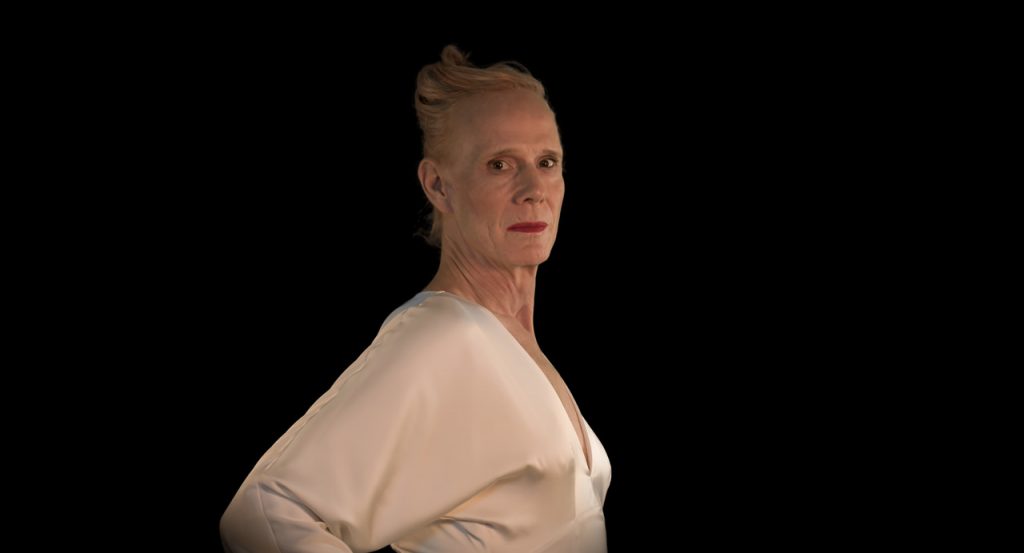
Kit Green as Mrs Dalloway

Jen is pioneering her own form of cinematic theatre with digital adaptations of Truth to Power Café and collaborations with queer icon David Hoyle and trans artist and performer Kit Green. During COVID, David bedazzled as Hedda in Jen’s Hedda (After Ibsen) at Soho Theatre Online; and now Kit Green steps into sixteen roles in a new live adaptation of Virginia Woolf’s Mrs Dalloway. Described by The New Yorker as “deliciously mischievous” Kit says she wants to tell stories of resistance, transcendence, and hope – stories that capture what it feels like to be alive now.

“Virginia Woolf’s queerness isn’t about labels,” says Jen, “it’s in how people shift beyond society’s expectations in a world that embodies openness, fluidity, and what it means to be queer. Kit can dissolve into multiple characters shaped by time and memory, moving between voices and states with a precision that never feels technical, only lived, as their body becomes the meeting point between character, author, and self.” 

Blending theatre, cabaret, and film, Mrs Dalloway opens at Storyhouse in Chester at the end of May 2026 before touring to Harlow Playhouse and Wilton’s Music Hall in June, and HOME in Manchester in September.
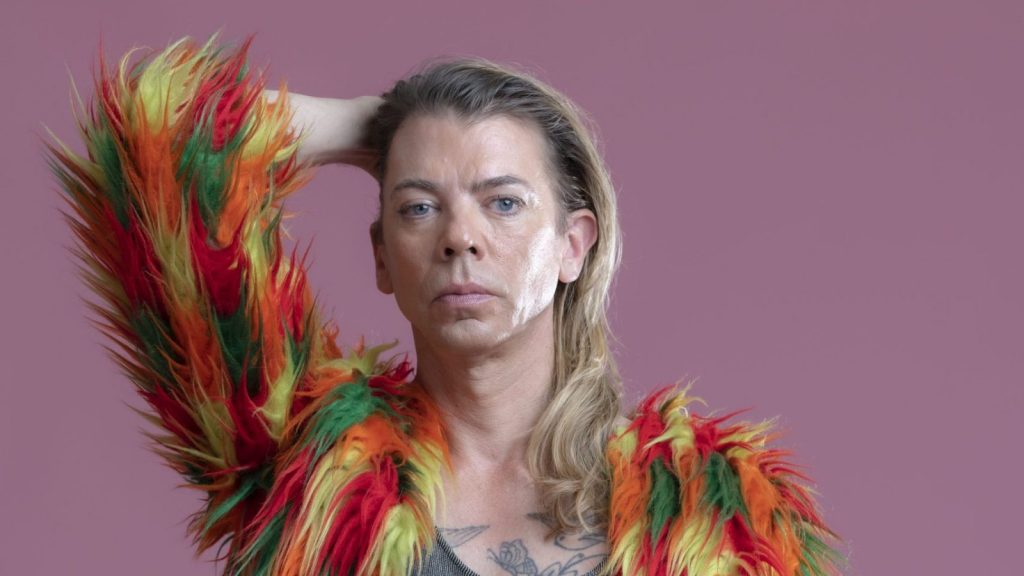
Tom Marshman

Tom Marshman, winner of this year’s Performing Arts Legend Award in Bristol and currently making his new show Queer Glitches, is telling queer stories of digital intimacy and reflecting on how platforms like Grindr sit between liberation and disillusionment. “It offers visibility and play,” he says, “while quietly policing who belongs.”

Manchester performance legend and HIV+ activist Nathaniel J Hall is embarking on his third autobiographical solo show A-Hole to explore how queer men find pride and sex positivity after trauma. It follows First Time and Toxic, his latest explosive tale of two love junkies born into Margaret Thatcher’s Britain during the AIDS crisis and Section 28.  “I’m telling stories of shame and pride, played out over more than a hundred years of queer history,” said Nathaniel. “I feel an urgent need to tell stories that encourage radical collectivism and community, even when doing so might cause discomfort or challenge existing views.”
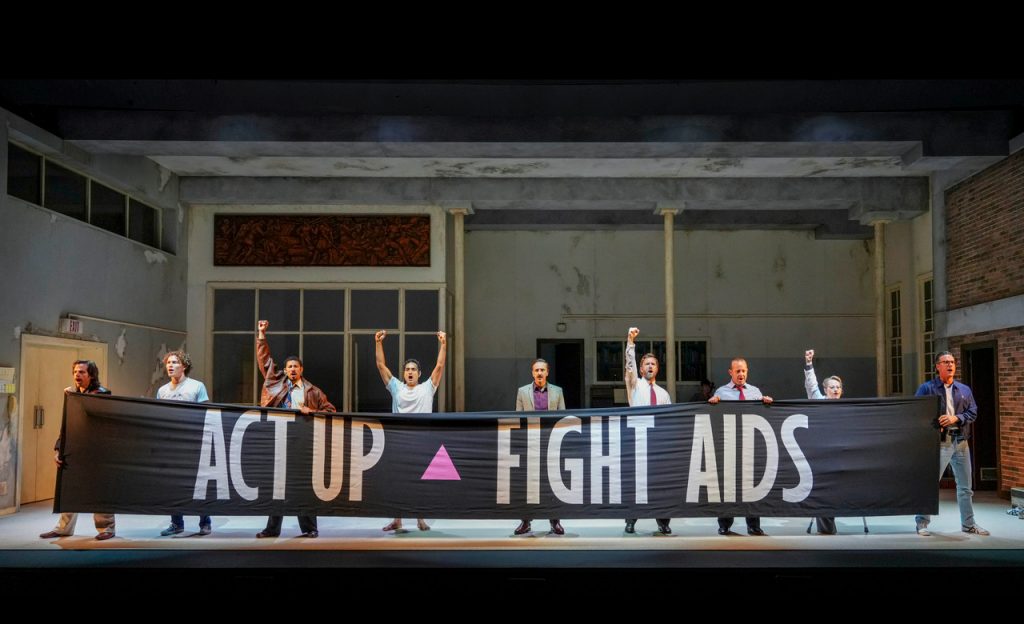
Sydney Theatre Company’:The Normal Heart.. Photot Neil Bennett

I found that same sense of collectivism in Sydney Theatre Company’s recent production of Larry Kramer’s The Normal Heart. Set in 1980s New York, the play, now celebrating its 40th anniversary, traces the early years of the AIDS crisis in New York, and the formation of the ACT UP (AIDS Coalition to Unleash Power) movement and the activists who fought to be heard. At a time of renewed threats to public health funding and HIV treatments, The Normal Heart speaks directly to the present, and to the enduring power of community, embodied by internationally acclaimed performance artists Tim Miller and Paul Capsis. 

“For me right now,” says Tim, “in this moment of crisis it feels purposeful to use our platforms and pulpits to focus our high beams on injustices and make theatre and storytelling that can help us through this terrible time in the USA.” Paul, speaking from Australia, says that queer theatre must continue to give voice to communities under threat. “We must learn from history,” he says, “and record these times honestly.” 

For some it’s about showcasing artists from countries where queerness is criminalised or censored, and for others the answer lies in archives and memory. 

This year’s National Queer Theatre Criminal Queerness Festival opens at HERE Arts Centre in New York in June. Adam Odsess-Rubin who founded the Festival in 2019, says, “sharing stories from Syria, Egypt, and Palestine from artists E. Zaalan, Bazeed and Lour allows us to use comedy, music and satire to fight oppression and censorship. It creates space for queer Arab communities to flourish, laugh and dance together.”

Ana de Matos founder of the women-led Cameye Arts and creator of Footprints of Love, an LGBTQ+ living archive in East London, shares the story of Kathryn Bell, a 91-year-old woman whose home contained the complete archive of GEMMA – a magazine and social group for disabled lesbians founded in 1976. “Until we knocked on her door, no one had asked about it,” Ana said. “We’re not rescuing the past – we’re finally showing up for it.”  

Penny Arcade and company: Bitch! Dyke! Faghag! Whore! 

Few artists speak so truthfully of our queer lived experience as Penny Arcade – New York’s reigning queen of the underground, and an oracle of queer theatre. Producing the 20th and 25th anniversary productions of Bitch! Dyke! Faghag! Whore! at Arcola Theatre and Adelaide Fringe, and Longing Lasts Longer at Soho Theatre and St Ann’s Warehouse are among LAP’s proudest achievements. Now a Guggenheim Fellow writing her memoir,Penny’s focus on the creation of community and inclusion as the goals of queer performance and archives mark her out as a true original. “True power comes from knowing the absolute truth about ourselves, and that takes ruthless honesty,” said Penny.  “As I reflecton the street queens, the mad figures of downtown New York, and the old working class,telling the story of how I became myself over seventy-five years, I must reveal what made me different from other people. The landscape between these two realities is my memoir.”

Over sixty years, queer theatre has evolved into a constellation of fluidity, protest, politics, care, and play. Like CP Cavafy’s Ithaka, we continue our lifelong journey toward truth and becoming, sustained by our collective queer consciousness of hope, love, and liberation.
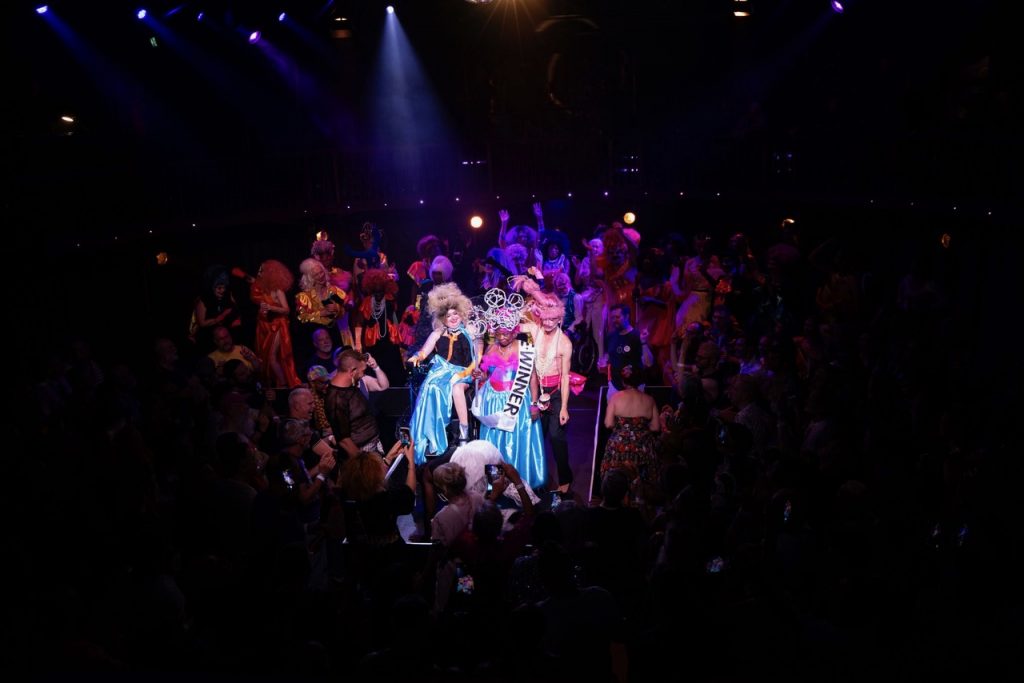
Duckie. Photo Christa Holka

Featured image (top of page): Nathaniel J Hall: Toxic. Photo Rosie Powell

For more on Jeremy Goldstein’s work with London Artists Projects, Truth to Power Café, and This Is Who I Am see LAP

For more info on Duckie’s upcoming events see Duckie

To book tickets to Cruise 9-31 October 2026 see Sydney Seymour Centre

To book tickets to Mrs Dalloway May-September 2026 see Storyhouse Chester, Harlow Playhouse, Wiltons Music Hall, HOME Manchester

To book tickets to National Queer Theatre Criminal Queerness Festival 9-27 June 2026 see HERE Arts Centre New York 
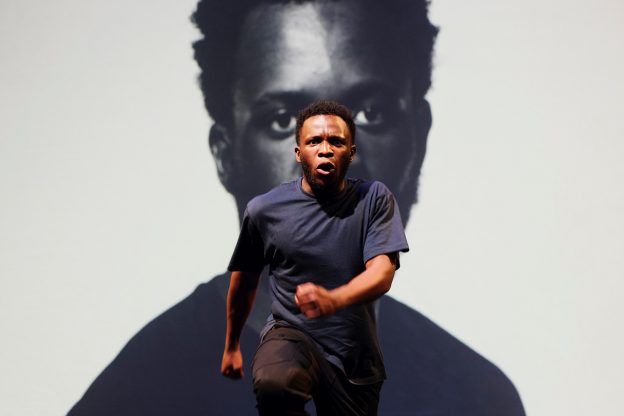
This Is Who I Am – Postcards from South Africa

Writer, director, performer, producer! Jeremy Goldstein’s latest project, This Is Who I Am, follows the enormous success worldwide of his Truth to Power Café. Here, he tells us about the show’s latest edition at The Market Theatre in Johannesburg.

I’m going to start by recalling how I came to discover the world-famous home of protest theatre, The Market Theatre in Johannesburg. 

I first came across The Market Theatre at London International Festival of Theatre (LIFT) in 1999 – less than six years after Nelson Mandela and the African National Congress (ANC) toppled apartheid and came to power. Back then, I was LIFT’s fundraiser, working on a trilogy of productions from South Africa which in their very different ways dealt with the toxins of apartheid. There was Project Phakama, a new participatory arts project; William Kentridge and the Handspring Puppet Company’s production of Ubu and The Truth Commission, and Mehlo Players with The Khulmani Support Group in The Story I’m About to Tell at Tricycle Theatre (now Kiln Theatre) in northwest London. 

Jump forward to 2022 and I’m mentoring Congolese theatre maker Eliezer Kasereka as part of the Total Theatre Artists as Writers project. We invited all twenty artists taking part in the project to write one hundred words in response to the title of my new show, This Is Who I Am

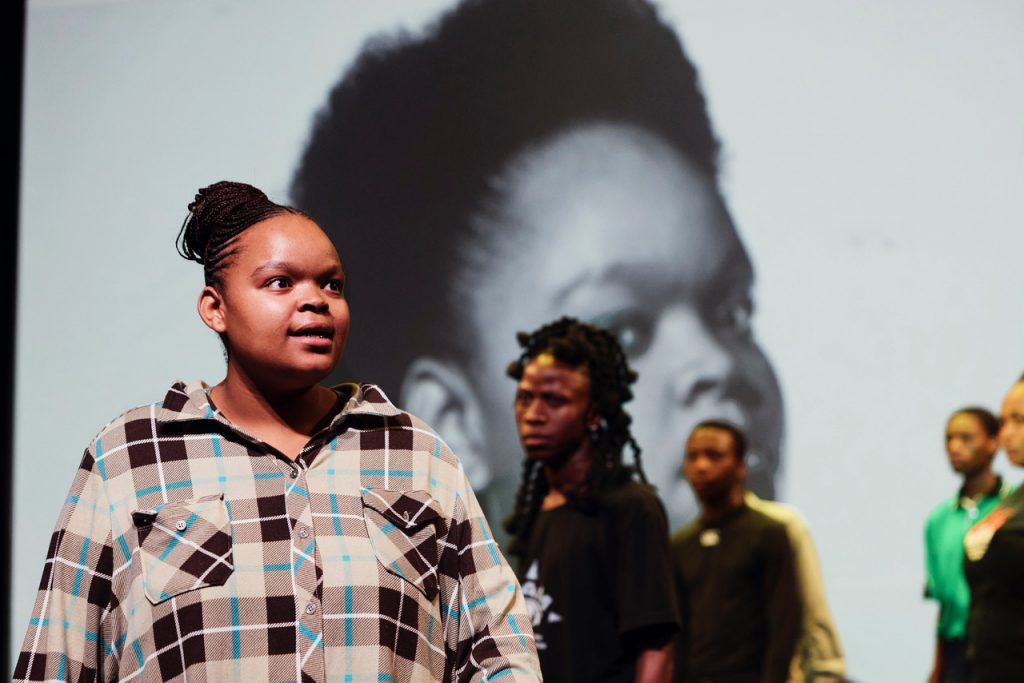
Gcebile Dlamini and other cast members This Is Who I Am Johannesburg. Photo Roger Machin

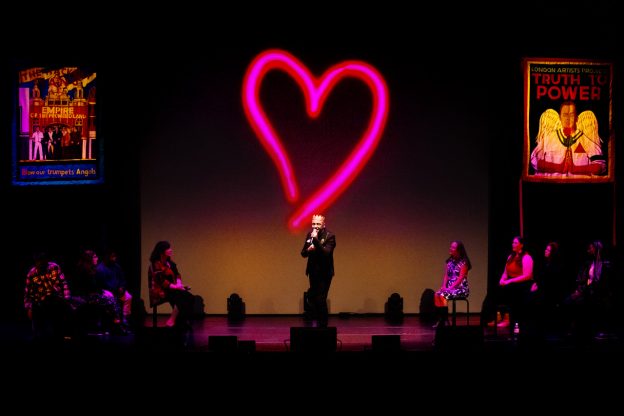
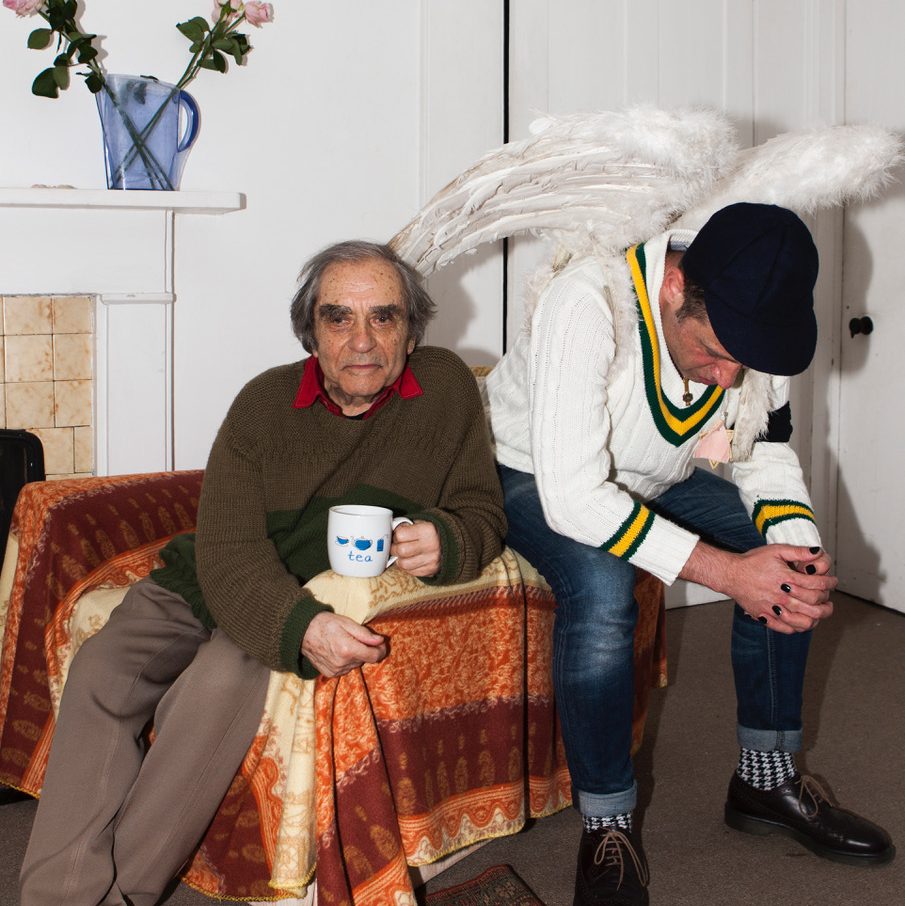
Conceived as a companion work to Truth to Power Café, This Is Who I Am is the younger sibling of a long-term theatre project inspired by the political and philosophical beliefs of Nobel Prize winning playwright Harold Pinter and his inner circle The Hackney Gang, who included my late father Mick Goldstein, and poet and actor Henry Woolf. For sixty years, The Hackney Gang remained firmly on the side of the occupied and the disempowered, believing in an independent media, and speaking their truth to power.

I didn’t plan it like this, but both projects have become my path towards truth and reconciliation marked by twenty-five years of AIDS/HIV activism and the very difficult relationship I had with my father. These are the stories I started telling in 2016 when I began working with Henry Woolf on Truth to Power Cafe – directed and developed by Jen Heyes. 

Ten years into the work, over a thousand revealing portraits of identity have emerged, proving who we are is inseparable from trust, reliance, jealousy, and betrayal – themes which run through both Pinter’s writings and the real-life stories from participants that express the truth of their lived experience, in their own five-hundred-word-monologue.

Minenhle Masina in This Is Who I Am Johannesburg. Photo Roger Machin

In Truth to Power Café participants write their monologue in response to the question: “Who has power over you and what do you want to say to them?” and in This Is Who I Am, monologues are written in response to the show’s title. From eyewitness accounts of the 1936 Battle of Cable of Street in London’s East End, to the 1984 Battle of Orgreave in South Yorkshire, to queer stories in the Australian outback, to our most recent theatrical journey into Hillbrow in inner-city Johannesburg – here, private memory meets public performance. Personal testimony and cultural history intertwine to create a living dialogue and an act of remembrance – an intersectional conversation across generations between the living and the dead.  

I make multiple editions of both projects in the belief that the real power within the work is in the accumulation of untold stories and the compassionate truth-telling from those taking part.

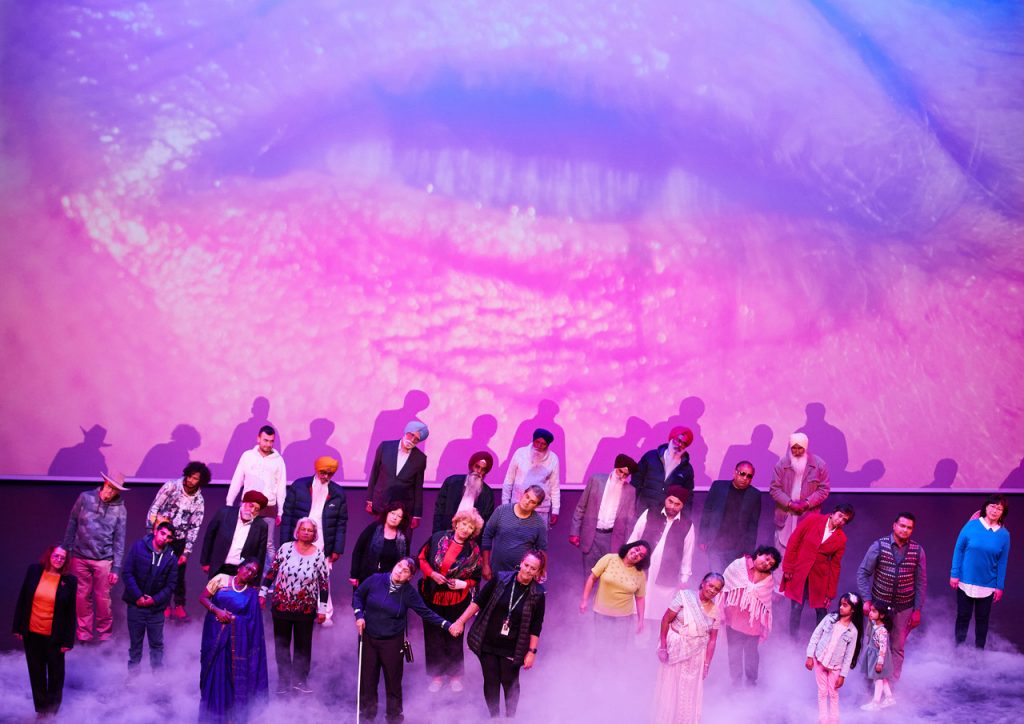
Since its Singaporean premiere in 2022, I’ve re-created This Is Who I Am with older people at my mother’s aged care centre in Sydney, with queer identifying participants at Broken Hill City Art Gallery in the Australian outback, and at the mighty Queer Zagreb in Croatia.

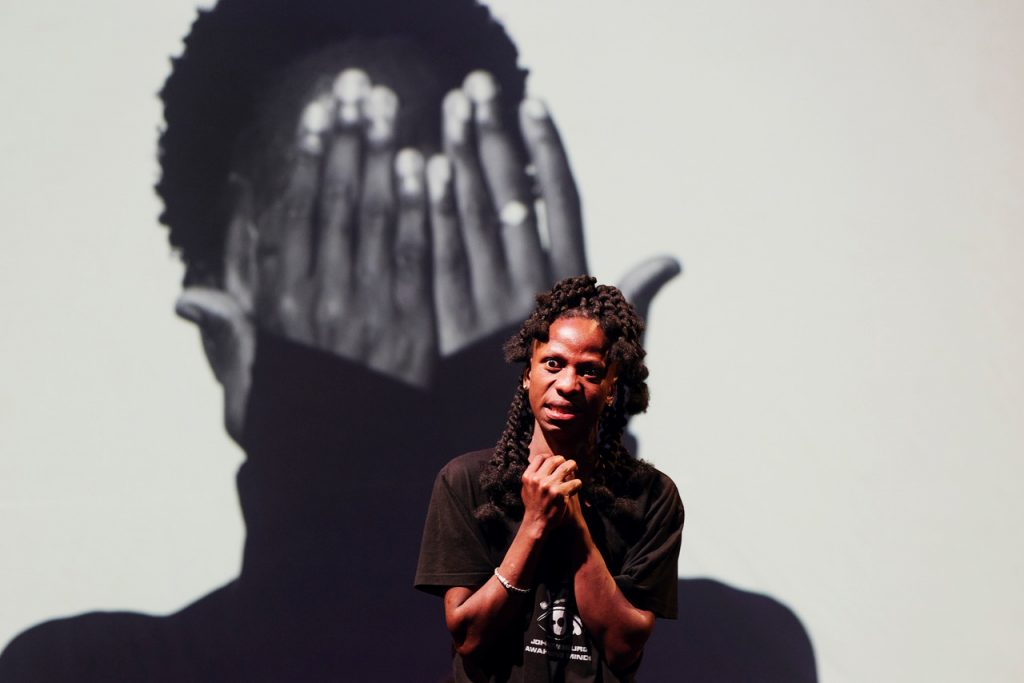
Tshiyeya Kalombo and other cast members in This Is Who I Am Johannesburg. Photo Roger Machin

The fifth edition of This Is Who I Am is set in Johannesburg. Described by Nadia Virasmy as “a recalibration of time, space, experience and truth”, the work is a theatrical journey into Hillbrow and beyond; a place where history and present collide with contradictory illusions and dreams of a mercurial South Africa. A storied, yet troubled inner-city area of Johannesburg, Hillbrow remains a safe harbour for an ever-changing mix of iconoclasts.

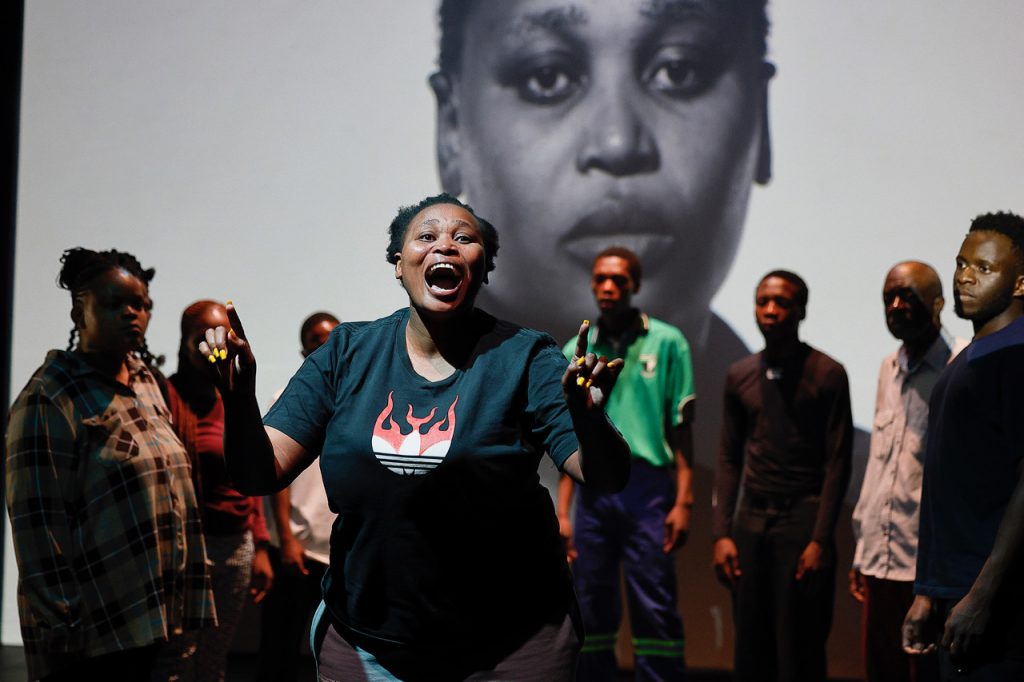
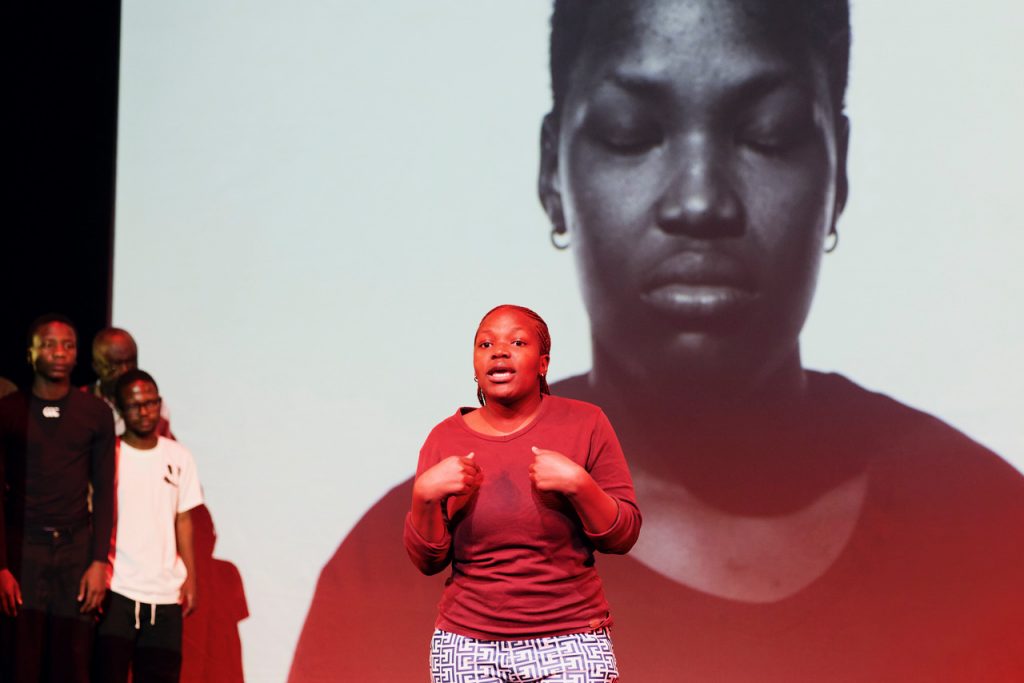
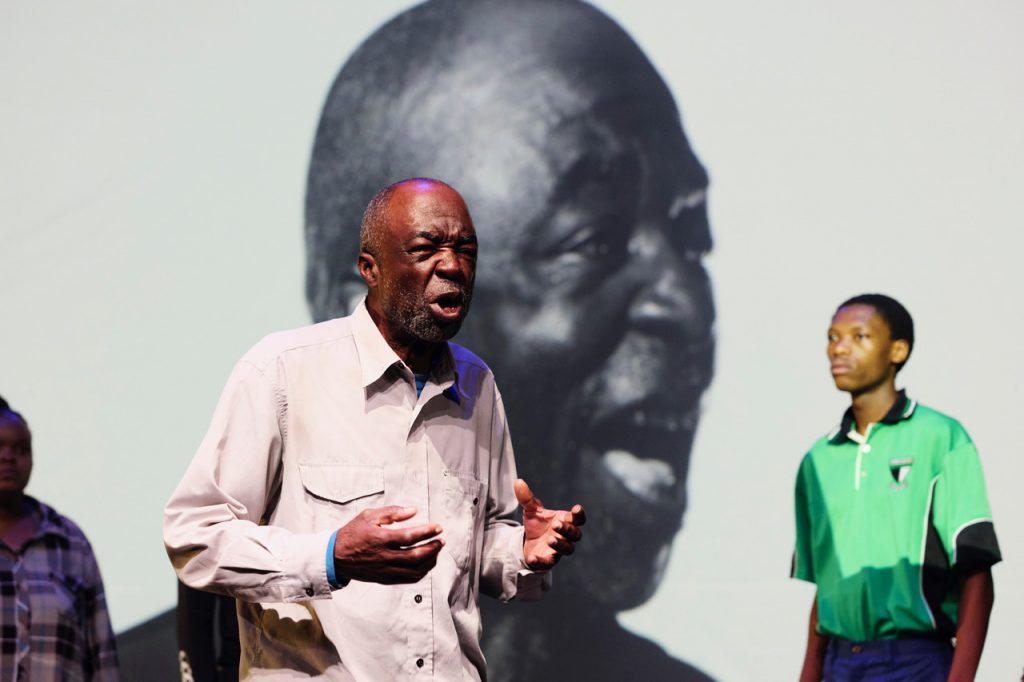
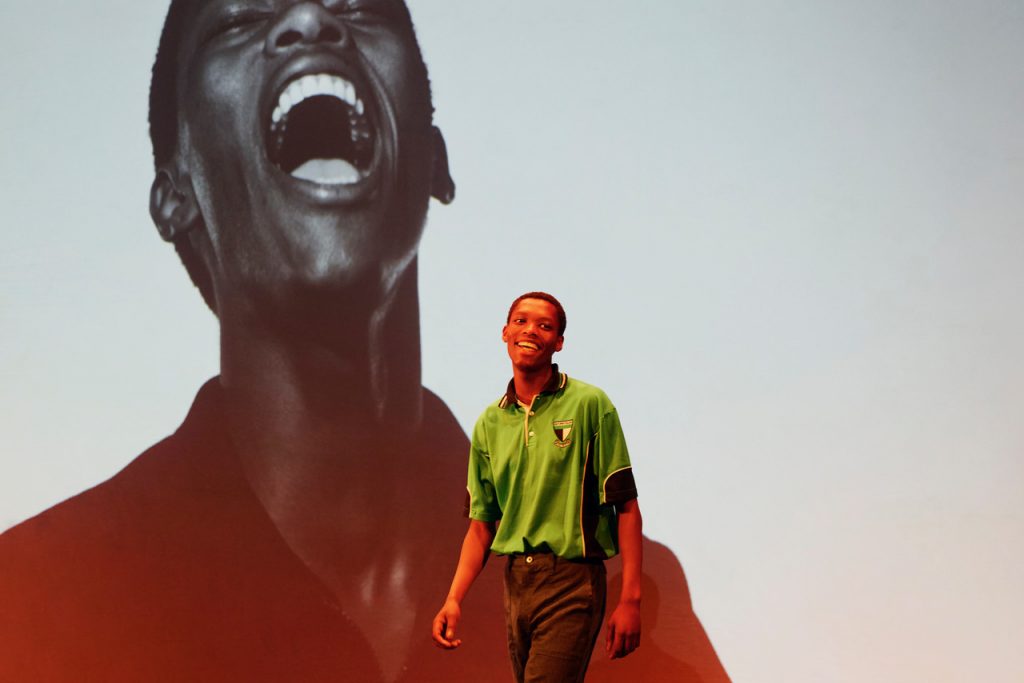
Imbued with all the passion and power of ten deeply personal real-life stories driven by memory and desire, participant monologues – each one a play in waiting – were developed by Windybrow Arts Centre (a division of The Market Theatre Foundation) and Stacy M Hardy, Head of Creative Writing at Wits University. All ten monologues are co-directed for the stage and digital theatre screens by me and emerging independent Johannesburg based theatre-maker Jaden Mosadi. They have been created in collaboration with media editor Flick Harrison and photographers Roger Machin and Quintin Mills; and are individually scored by radically inclusive UK music makers Kris and Nicci Halpin of Dyskinetic, whose meditative rock ’n’ roll / trip hop /electronica soundscapes merge seamlessly with participants’ texts and glorious a-cappella South African song.

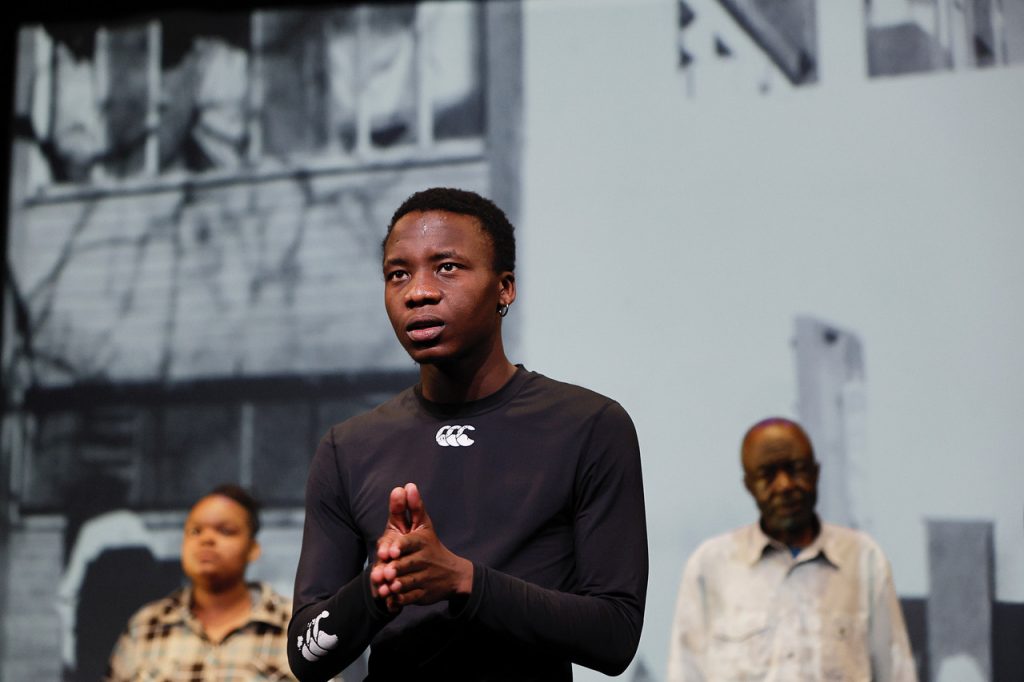
Sandiso Mbatha in This Is Who I Am Johannesburg. Photo Roger Machin

“I face life head-on to reclaim what was taken from me,” says Caleb Nyanguila from the Democratic Republic of Congo, recalling a traumatised childhood. Sandiso Mbatha is a schoolboy who longs for a big brother, and to rebuild the home of his grandmother, “the home that doesn’t feel like home anymore”.  Reneilwe Leopeng, a first-year student at The Market Theatre Laboratory, says “hold your breath and gaze upon my imperfections for you will see what death looks like”; as Minenhle Masina, a young student, struggles to come to terms with her upbringing “blaming no one but myself for not speaking up”.  And Gcebile Dlamini, an award-winning theatre activist and an alumnus of Arts & Culture Trust in Johannesburg, returns to the stage to disclose an intimacy story she was forbidden to tell her father when he was alive. 

Reneilwe Leopeng and other cast members in This Is Who I Am Johannesburg. Photo Roger Machin

Participants from the homeless theatre company Johannesburg, Awakening Minds, resident at Windybrow Arts Centre, include writer Teshiyaya Kalombo, and non-binary  storyteller Tyson Nkala. Tyson, who grew up in Hillbrow, talks about their life as a “shattered illusion” while desperately seeking the warmth of a happy family, which they found in homeless shelters with Tshiyeya Kalombo. Writing from a park where they sometimes sleep, Tshiyeya’s epic state of the nation address about homelessness demands justice and dignity and the right to a better future.

Hlengiwe Masonda and Simphiwe Dube are both members of the Johannesburg Society for the Blind: “Although my eyes cannot see,” says Hlengiwe, “in the darkness I find my way with all the world’s delight”; and Simphiwe, a sporting champion, tells us that “playing blind soccer is how I learned to see through sound”. 

Tyson Nkala in This Is Who I Am Johannesburg. Photo Roger Machin

Thabang Lucky Matsaung’s monologue traces his disillusionment through the burial of his two favourite childhood action figures, and ends with a re-enactment of his grandmother’s pep talk:

1      “If it bleeds it can be killed”

2     “Don’t ever let a man belittle you to feel manlier”

3     “Polish your school shoes and wash your uniform every day”

4     “Wash the chicken before you season it”

5     “Don’t you dare shed a tear”

6     “If I catch you in front of the mirror or touching water during a storm, you’ll wish the lightning struck you before I did”

7     “God can only do so much. Protect yourself and meet him halfway”

8     “Swim in the waters like you’ve been there before”

9     “Take off your hat in the house when you eat”

10  “You don’t have roll-on? Okay dip the soap bar into water and rub it on your armpits”

“These are the words from my guardians,” says Thabang, “words that build me” – words of wisdom and defiance.

Thabang Matsuang and other cast members in This Is Who I Am Johannesburg. Photo Roger Machin

At the end of the show a chorus of “THIS IS WHO WE ARE” rings out from the stage as rose petals drop from the rig. The fourth wall breaks as the audience storm the stage and become one with the participants. It’s a moment of liberation and defiance that only live theatre can do. 

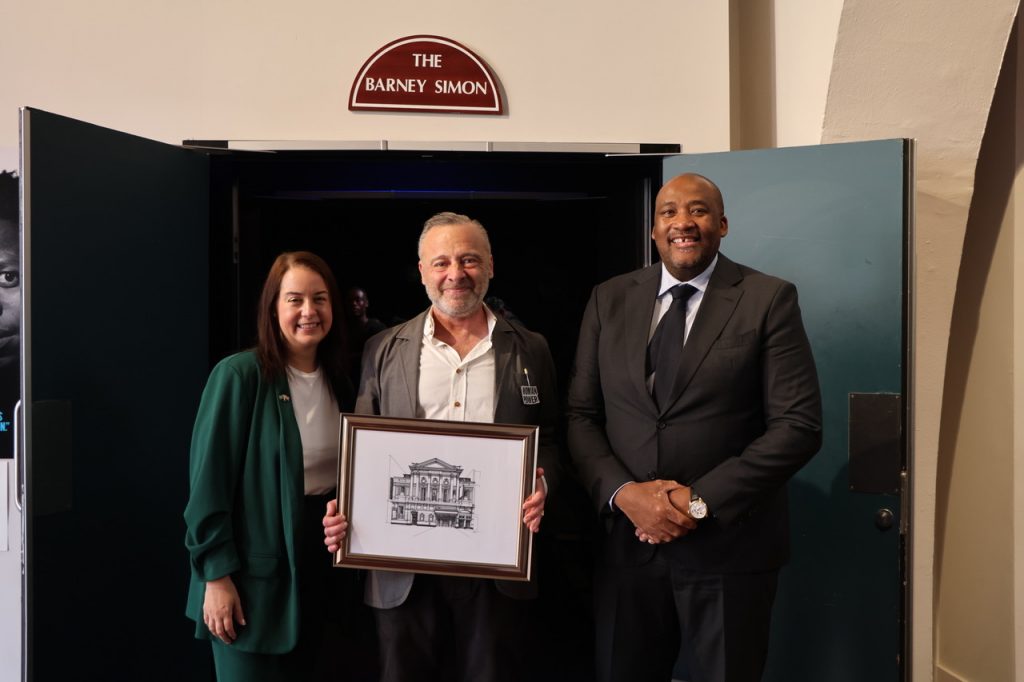
In South Africa we played The Barney Simon Theatre which was named after one of The Market Theatre’s first artistic directors, and one of South Africa’s most courageous and innovative playwrights and directors.


Telling my story, as I did in 2016, has enabled me to connect with over a thousand other stories of loss, hope and resistance from people all over the world. Arguably, these stories would have never been told from our stages, so as 2026 comes into view, I realise the work is as much about me remembering the legacy of my father and his chums in The Hackney Gang, as it is about challenging the status quo of societal systems of oppression and power structures controlling our theatre

As our artistic freedoms and hard-won battles over diversity, equity and inclusion come under attack, our conversations between the living and the dead continue. Now more than ever we need to be controlling our own narratives, and holding space for others to do the same.

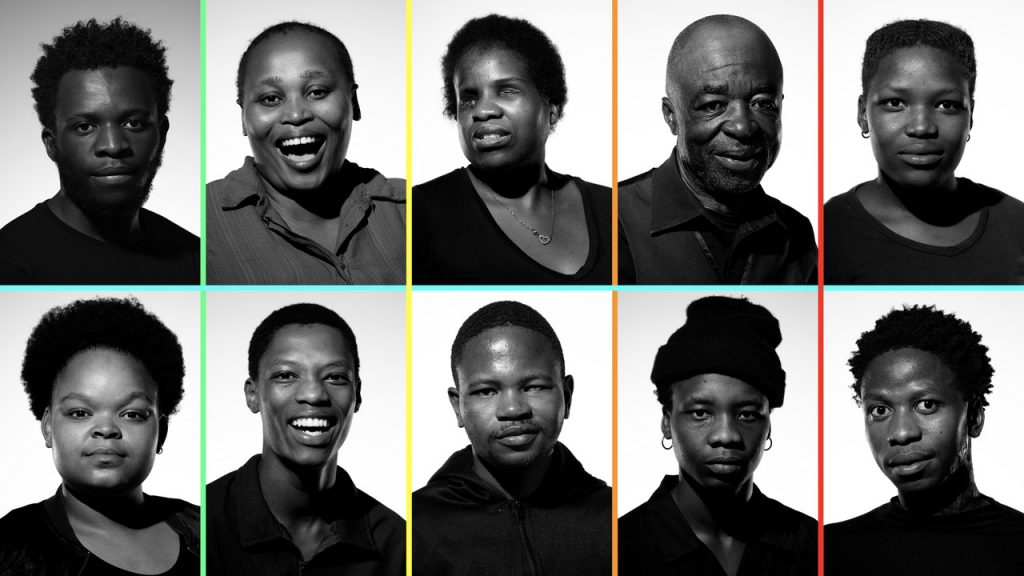
Portraits of cast members for This Is Who I Am Johannesburg. Photos Roger Machin and Quintin Mills

This Is Who I Am Johannesburg cast members: Caleb Nyanguila, Gcebile Dlamini, Tyson Nkala, Tshiyeya Kalombo, Sandiso Mbatha, Reneilwe Leopeng, Thabang Lucky Matsaung, Hlengiwe Masondo, Simphiwe Dube, and Minenhhle Masina.

Featured image (top): Caleb Nyanguila in This Is Who I Am Johannesburg. Photo Roger Machin.

For more on This Is Who I Am, Truth to Power Café, and other work by Jeremy Goldstein see London Artists Projects.

This Is Who I am Johannesburg digital theatre monologues will premiere at Johannesburg Film Festival 3-8 March 2026, followed by We The People Human Rights Festival on Constitution Hill at the end of March 

This Is Who I Am Johannesburg is presented by British High Commission as an ongoing multidisciplinary, intercultural arts platform, and UK / South Africa cultural exchange. Launched at The Market Theatre as part of the G20 Culture Ministerial, the project is a London Artists Projects and Windybrow Arts Centre co-production supported by Canon South Africa. 

 Stephanie Peacock MP, UK Parliamentary Under-Secretary of State for Sport, Media, Civil Society and Youth; Jeremy Goldstein; Gayton McKenzie MP, South African Minister for Sports, Arts and Culture

Speaking Truth to Power

Jeremy Goldstein of London Artists Projects reflects on how exploring his personal biography and family history led to the creation of an internationally lauded project, Truth to Power Café, and then to the newly launched venture, This Is Who I Am

Seven years ago I ventured forth into the Harold Pinter Archive at the British Library in London to read private letters between my late father Mick Goldstein and his best friends, poet Henry Woolf and Nobel Prize winning playwright Harold Pinter – who with Jimmy Law, Moishe Wernick and Ron Percival became known as the Hackney Gang.  

Spurred on by theatre director Jen Heyes, I began a life-changing journey that would eventually result in the creation of our internationally acclaimed interdisciplinary performance event Truth to Power Café, and a new digital theatre project This Is Who I Am, which will open at the end of this month (April 2022) with British Council at the National Libraries in Singapore.

At the time I had no idea what I might find in those letters, and nor did I know that they would pave the way for my transition from producer to writer, performer, and artist.  

I knew of their existence because my father had shown them to me with pride on a trip to Australia in 2012. Perfectly preserved in their original envelopes, stamps from the 1950s intact, these were long letters bound by their love of Beckett and passion for cricket. They were acquired by the British Library just before my father died in 2013, and remain on public record as part of the Pinter Archive.

Jump forward to 2015 and I had just re-established my long-time production company London Artists Projects (LAP) which I’d set up in 2002. The company, which folded for a time in 2010 due to a lack of funds, is now celebrating its twentieth anniversary. Genre-busting work which I’d struggled to produce for over a decade had finally come home to roost under the umbrella of LAP. Past lives and experiences – the people, places, projects, and memories that made up LAP’s back catalogue of artist projects – had finally been laid to rest. For the first time in my life, I was debt free. I didn’t owe anything to anyone, and the coast was clear for a new theatrical adventure, which I wanted to produce under the aegis of LAP mark II. 

Poet Henry Woolf of the Hackney Gang and Jeremy Goldstein, 2016, London.
Photo: Darren Black

I remember my first official day at the British Library only too well. I arrived, like an immigrant at what felt like the border to an uncharted land. I was greeted by a lovely old queen from Brazil, and with a wink and a smile I was through and began to make my way to the Manuscripts Room.  

On my way I stumbled upon the Treasures of the British Library exhibition. To my left were original scores from Handel, Beethoven, Elgar, and Debussy. In the corner was Jane Austen’s writing desk and next to that was the original manuscript for Nicholas Nickleby by Charles Dickens, and handwritten poems by Oscar Wilde. But the real find was exhibit No.19. Situated in a glass case in amongst handwritten lyrics by Lennon and McCartney (to ‘Help’, ‘Ticket to Ride’ and ‘A Hard Day’s Night’) lay a single letter with its own plaque:

No.19: Letter from Harold Pinter to Mick Goldstein, 1955:

‘In 2014, the British Library announced the acquisition of a collection of over 100 letters from Harold Pinter to two of his childhood friends, Mick Goldstein, and Henry Woolf. Written in Pinter’s late teens and twenties, the letters candidly discuss his early playwriting… and his interest in a new unknown writer – Samuel Beckett.’

The letter on display began and ended as their letters always did: ‘Dear Mick… love Harold’. Four words, written countless times, which now frame a sixty-year friendship defined by an enduring capacity for mateship, during which they maintained the intellectual excitement of their youth, and shared discoveries. In their later politically active years, they maintained their belief in speaking truth to power, and remained firmly on the side of the occupied and the disempowered and their allies. They also believed passionately in the existence of an independent media.

As I began to comb through the archive, I discovered the original typescript of Pinter’s one and only novel, The Dwarfs. The novel, which was written in the 1950s and eventually published in the 1990s, was described by Pinter’s biographer and former Guardian theatre critic Michael Billington as holding the key to all Pinter’s later plays. The protagonist, Len, is based on my father Mick. In one scene Len says, ‘I’ve never been able to look in the mirror and say this is who I am’. When I read that line for the first time, I couldn’t get it out of my head. It was all the evidence I needed of my father’s insecurities and lack of fulfilment that got expressed through our difficult relationship, in the form of the power he held over me for so long. There it was laid bare, the truth of his lived experience captured with pinpoint accuracy by his best friend, Harold Pinter.

Truth to Power Café, digital theatre edition for Bunjil Place, 2021, Melbourne, Australia. Photo by Graham Denholm

It’s an insight which did not escape the view of Sarah Schulman, celebrated US novelist and founder of the ACT UP Oral History Project in New York. I had brought Sarah to London in 2015 as part of a series of talks I curated for Penny Arcade’s Longing Lasts Longer at Soho Theatre, and again in 2019 with Dan Glass and ACT UP London (AIDS Coalition to Unleash Power). I had also attended the early meetings of the Melbourne chapter of ACT UP in the 1980s, and saw first-hand how the movement, which changed the world, made everyday people feel like heroes in their own lives.

Sarah, with her characteristic rigour, was able to take these insights one step further with an acute observation of the work, describing it as ‘a conscious transformation of history into opportunity’. In those few words Sarah enabled me to see that in the benevolent shadows of the Hackney Gang and ACT UP, I was using the truth and the pain of my lived experience, to enable others to express theirs. The cycle of my inherited trauma had been broken forever and now, seven years on, LAP and its signature project Truth to Power Café, developed and directed by Jen Heyes – who is Liverpool based and working-class – has become the crucible for nearly six hundred stories from people of all ages, experiences, and backgrounds in six different countries, to talk back to those that try to stop them. 

The question at the heart of the project – ‘who has power over you and what do you want to say to them?’ – is conceived to challenge notions of power and give a voice to people who don’t normally have a chance to speak out. People from marginalised communities tend to want to talk about progressive change, whereas those with privilege and power want to maintain the status quo and have more power. For me personally, it’s often the most personal stories that I find the most effecting, especially from first-time speakers and those who are potentially the more vulnerable voices from within our midst. But above and beyond the politics, we at LAP remain resolute in our belief that everyone has their own unique story to tell, and all are plays-in-waiting.

In the UK alone, Jen and I have toured the show all through the north of England. We’ve gone out of our way to reach people and participants we often only ever see depicted in the films of Ken Loach. We find our participants in close collaboration with each of our venues. It’s a process which normally takes about three months to realise, and even then, with resources as they are, we only ever meet our participants on the day of each performance as part of a 90-minute photo call and rehearsal in advance of the 60-minute show.

Jeremy Goldstein performing in Truth to Power Café as part of the arts and culture programme for the 2018 Gold Coast Commonwealth Games, Australia.  Photo: Kate Holmes

I’m also cast as a participant. I tell my story through a combination of memoir, image, film, music, and art. My story begins with the tale of the Hackney Gang, a celebration of Harold Pinter, Henry Woolf, and my father Mick Goldstein.  

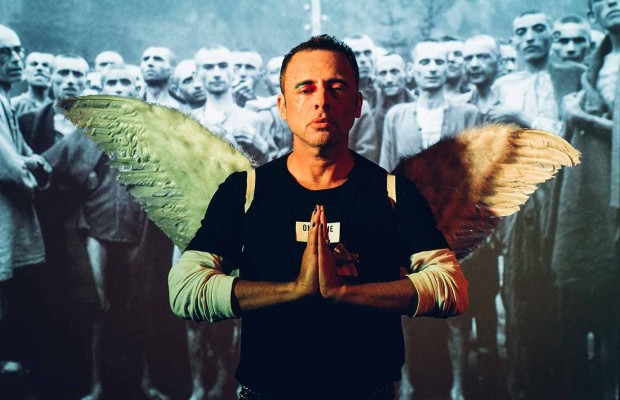
Bejewelled with the original poetry of Henry Woolf himself, the show opens in a post-war East London at a time when the Jewish avant-garde of the Hackney Gang discovered artists like Samuel Beckett and Louis Buñuel; and physically fought with fascists as the Holocaust still loomed, whilst those bombs that had eviscerated Nagasaki and Hiroshima seemed as present as if it were yesterday.  

As my story unravels, we travel through time and space into a world of HIV+ and AIDS, and where I’m finally able to make sense of that power my father had over me when he was alive. The point at which love and empathy meets truth and reconciliation is the point at which I call our participants to the stage, some of whom have never spoken up in public before, let alone under lights in their local theatre. Participants’ voices are heard and understood through the political and philosophical beliefs of Harold Pinter and his Hackney Gang. In the eyes of our audiences – who largely comprise friends, family, and allies – they have become empowered experts on their own lives, and people to look up to in their own communities.  

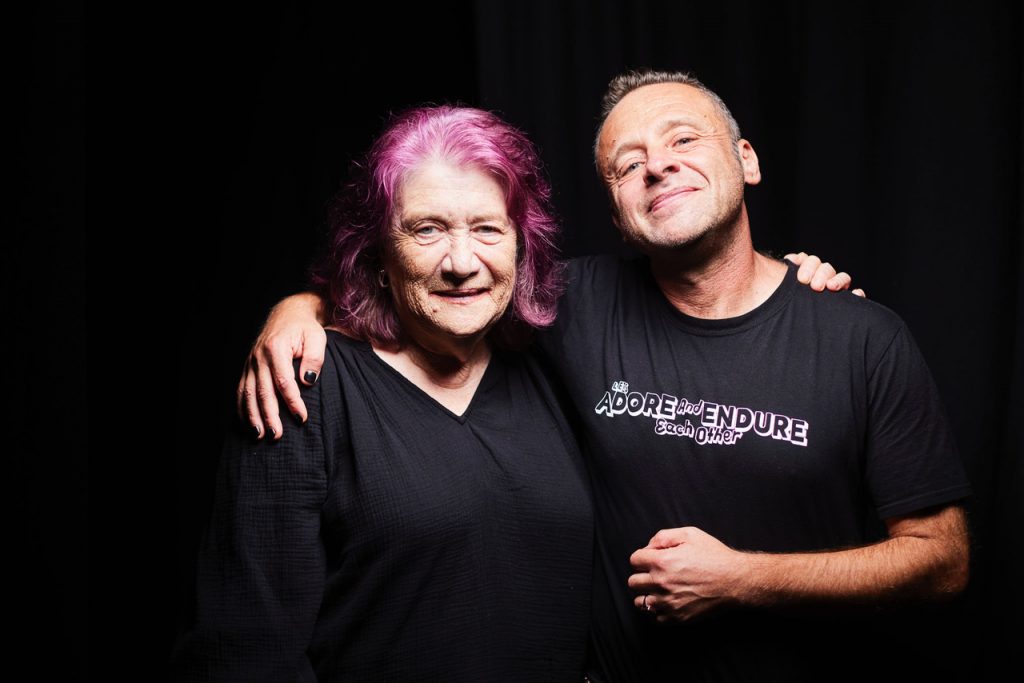
Mother and sons: Jeremy Goldstein and his mother Beverley Burlakov taking part in Truth to Power Café at Riverside Theatres, 2021, Sydney, Australia Photo: Ken Leanfore

In October 2020, as the Covid-19 pandemic once again worsened in the UK, I flew myself to Sydney to be with my mother, Beverley. On arrival, I was in hotel quarantine for two weeks. It was here I oversaw the Singapore premiere of our digital theatre adaptation as part of the city’s new Power Play Festival. The film, which had been co-created with Montgomery College Cultural Arts Centre in USA, was one of four finalists for the 2021 Offie Award for Innovation. In Singapore it was seen by Dr Sarah Meisch Lionetto, Director of Arts and Creative Industries for British Council, who would later commission our new digital theatre project, This Is Who I Am. Set in a world beyond our own, eight differently abled artists in the UK and Singapore imagine a world designed for everyone, from the truth of their lived experience.

Also, during quarantine, I contacted Robert Love, the legendary Australian producer and former artistic director of Riverside Theatres in Western Sydney. Robert championed the project in Australia with three performances at Riverside followed by a fantastically successful tour during which we opened MELT Festival of Queer Arts and Culture at Brisbane Powerhouse, celebrated our fortieth performance event in style at Adelaide Festival Centre, and presented short digital seasons at Blacktown Arts in Sydney, and at Bunjil Place in Melbourne as part of City of Casey Ageing Positive Festival.

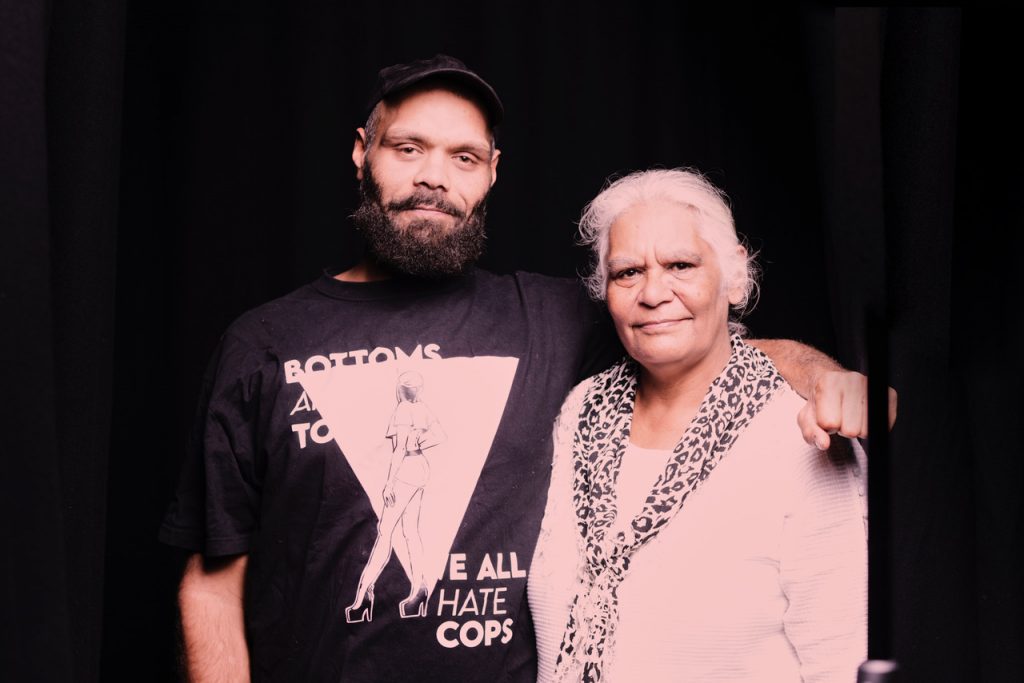
The Australian tour brought into focus the project’s capacity to capture social history and gave poignant political expression to lived experiences in ways I hadn’t seen before. The Riverside Theatres season opened with our first ever indigenous theatre event curated with Steven Ross. The event included Maljangapa mother and son participants Keith and Cleonie Quayle, speaking passionately from the truth of their lived experience. Cleonie spoke as a member of Australia’s stolen generation, and her son Keith’s unforgettable speech addressed Aboriginal deaths in custody, envisioning ‘a future without bars, and a world where we take ownership over societal wrong doings’. The following night, my own mother Beverley took part as a participant, recounting her life through the power of music.  

Mothers and sons: Keith and Cleonie Quayle taking part in Truth to Power Café at Riverside Theatres, 2021, Sydney Australia. Photo Ken Leanfore

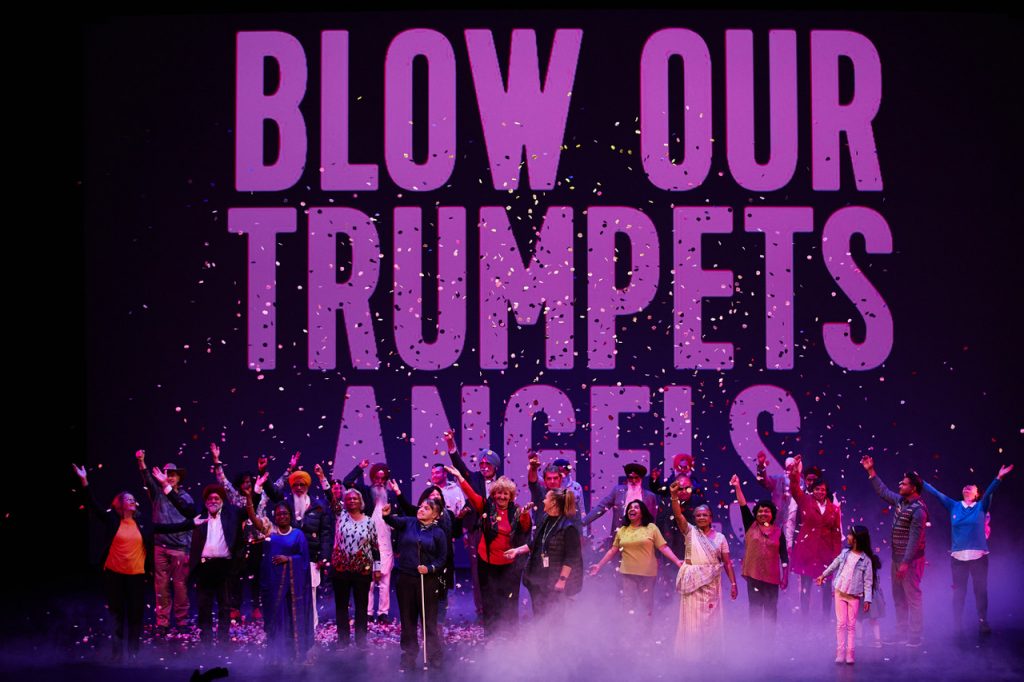
In Brisbane, we heard from Brian Day OAM. Brian was one of Australia’s earliest campaigners for LGBTQ+ rights, co-founding the Brisbane branch of Camp (Campaign Against Moral Persecution) in 1971, and in 1984, at a time when HIV+ and AIDS first hit the community, he was vice-president and spokesman for the Queensland AIDS Committee. In Adelaide, Kyron Weetra, who has Narrungan ancestry, gave an impassioned takedown of colonialism, and the gaping wound at the heart of Australian national identity. Kyron was followed by Tom Webster and Anjali Beames, two young climate activists named in a class action suing the federal Environment Minister over ‘duty of care’ to block the approval of a coal mine. To thunderous applause, from a packed Adelaide Festival Centre theatre, they urgently proclaimed ‘We tell those in power, they will be held accountable’. At the newly built arts centre Bunjil Place in Melbourne, I met a community of forty everyday people eager to tell their emotive stories of displacement and migration. In the 800-seat state-of-the-art Lyric Theatre, I was able to direct my own filmic scenes for the first time. This included a spectacular rose petal drop, which I conceived to elicit authentic feelings of freedom and liberation.

However, during the making of these events, Covid had come to badly bite Australia, and we were thrown into a 100-day Sydney lockdown with less than a day’s notice. How we managed to dodge those bullets I will never know, but despite the upheavals, the Australian tour remains a highlight of the project to-date. Our Adelaide Festival Centre show and digital theatre events in Blacktown opened the British Council UK/Australia Season, and our Bunjil Place digital theatre edition – rose petal drop and all – is to my mind the definitive digital theatre edition of the show, and was critically acclaimed as part of Melbourne Fringe Arts Festival. 

By October 2021, the Sydney lockdown had ended and I was back in London. Soon after, Henry Woolf died, aged 91. In his last years, we had become great friends, and like my own father Mick, he was full of pride for their Hackney Gang and the love they shared for their great friend Harold. I know for a fact Henry was thrilled with the global success of Truth to Power Café, and so it was from the heart that we were able to dedicate our most recent performances to him as part of the launch event (in February 2022) for Rotherham Children’s Capital of Culture 2025. These events were commissioned by The Space who live-streamed the show with young participants from Rotherham. Working with them, and the dedication to Henry, filled me with optimism and hope for the future. If only our politicians could do the same!

Seven years an immigrant into this uncharted land, I am broke but happy, in the knowledge the journey has been worth it.

Such is the power of art, I have learnt that the dead may well be invisible, but they are not absent – they live on, inside of us. It’s a life lesson which enabled me to repair the damaged relationship between my father and me, and I am liberated as a result. As Dr Robert Reid said of our Bunjil Place edition in Melbourne, ‘it’s not just the memories, but the legacy they leave us with, which is alive and powerful, consciously and unconsciously giving shape to who we are, and what we think we can be’.

Despite our meagre resources, I look on in wonder at what LAP has achieved in its 20-year history. As the founder of an artist-led company, I have finally created our own unique theatrical genre of ‘truth to power theatre’ from the truth of my lived experience. For LAP to be doing what Dr Reid describes as ‘the most important work that theatre can – giving voice to those who are expected, and expect too, remain silent’  is incredibly exciting.

In the words of Mark Taylor-Batty, Senior Lecturer in Theatre Studies at University of Leeds, and Leader of the AHRC Harold Pinter: Histories and Legacies Project:

‘What connects Truth to Power Café and This Is Who I Am is an ambition to understand and project not just what tears people apart, but what energies and self-awareness might finally bind them back together. Where Pinter’s work presented rigorous warnings of how our tendencies to betrayal and personal isolation cause rifts between friends, lovers, and communities, Truth to Power Café, and This Is Who I Am, seek to offer audiences a sense of their own agencies in repairing and recovering loss and identity. Ultimately, these two works are about love – which though never easy, is ultimately our only answer.’

Or, as Pinter himself once wrote in a letter to Henry Woolf: ‘The theatre is one of the good things of civilisation.’

Truth to Power Café, digital theatre edition for Bunjil Place, 2021, Melbourne, Australia. Photo by Graham Denholm

Featured image (top of page): Jeremy Goldstein performing in Truth to Power Café as it opens 2021 MELT Festival of Queer Arts and Culture at Brisbane Powerhouse, Australia.  Photo: Kate Holmes

Jeremy Goldstein is the founder and director of London Artists Projects and an HIV+ activist with ACT UP London. He is the creator of Truth to Power Café and, with Jen Heyes, co-creator of This Is Who I Am.

www.londonartistsprojects.co.uk

This Is Who I Am will be screened in person at selected National Libraries in Singapore with British Council and be available to view online for free from 1 June 2022. thisiswhoiam.online   

To mark the opening of This Is Who I Am, all digital theatre editions of Truth to Power Café, including the recent live streamed event commissioned by The Space, will become available to watch free at the point of access from truthtopower.co.uk  

Follow British Council Singapore or London Artists Projects socials for the release date of This Is Who I Am

Facebook: @BritishCouncilSingapore or @londonartistsprojects.thisiswhoiam

Twitter: @sgBritish

Youtube: britishcouncilsg 

Vimeo: londonartistsprojects

Websites: www.britishcouncil.org  | www.londonartistsprojects.co.uk