Author Archives: Dorothy Max Prior

Dorothy Max Prior

About Dorothy Max Prior

Dorothy Max Prior is the editor of Total Theatre Magazine, and is also a performer, writer, dramaturg and choreographer/director working in theatre, dance, installation and outdoor arts. Much of her work is sited in public spaces or in venues other than regular theatres. She also writes essays and stories, some of which are published and some of which languish in bottom drawers – and she teaches drama, dance and creative non-fiction writing. www.dorothymaxprior.com

Attention! Colonel Quince is in the house

Dorothy Max Prior profiles actor-creator Andres Aguirre, whose one-man show Lorcuedus is a physical theatre tour-de-force

Ra-ta-tat tat. Ra ta tat. Poom. Poom. Poom-poom. A wild-eyed figure is regaling us from a balcony, his arms gesticulating, onomatopoeic outbursts fired from his mouth with automatic-rifle power and precision. After a few minutes we start to hear the sounds form into recognisable words: Trump Trump Trump TRUMP, Putin Putin Putin PUTIN. It’s a perfect play on the nonsense of political and military rhetoric.

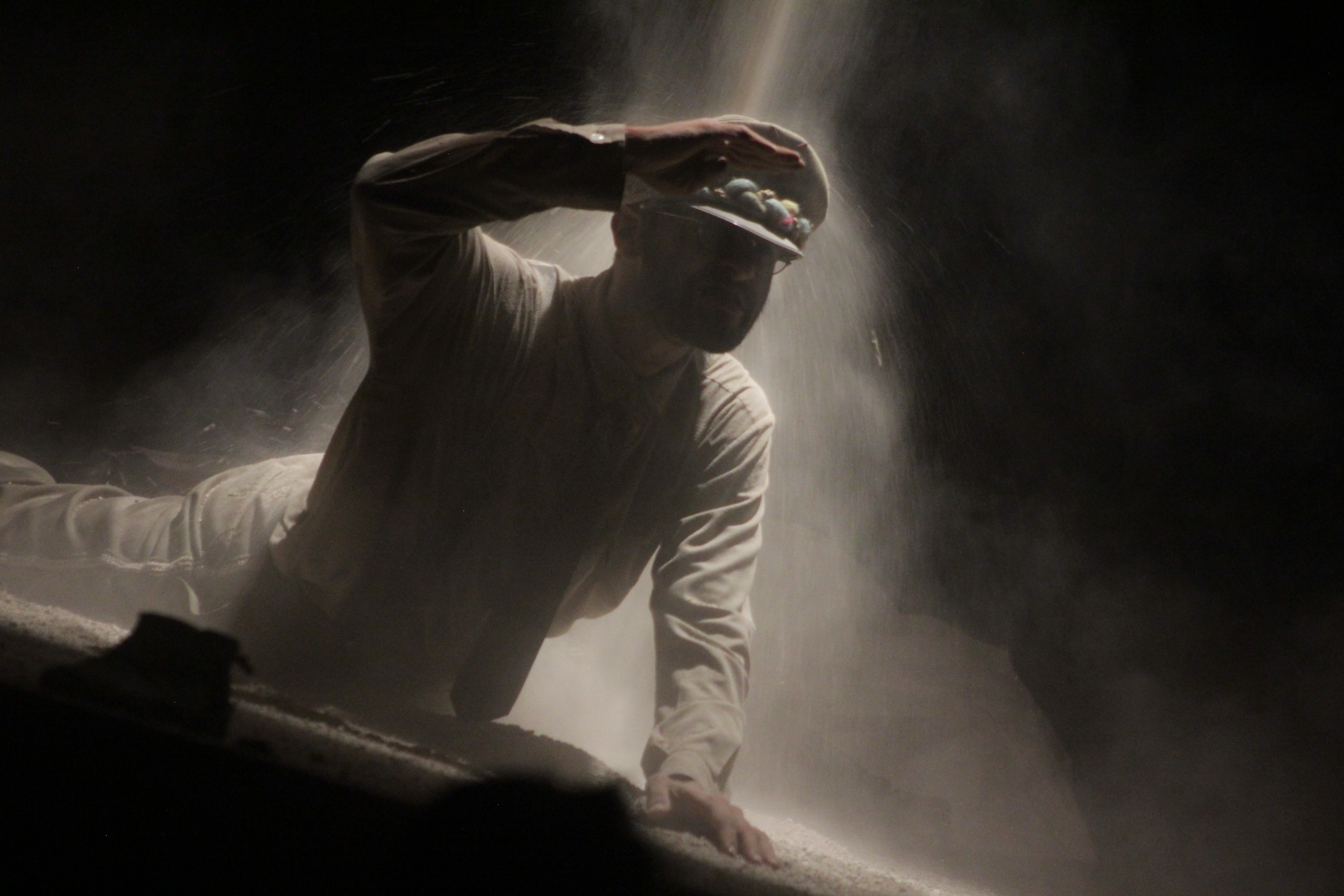
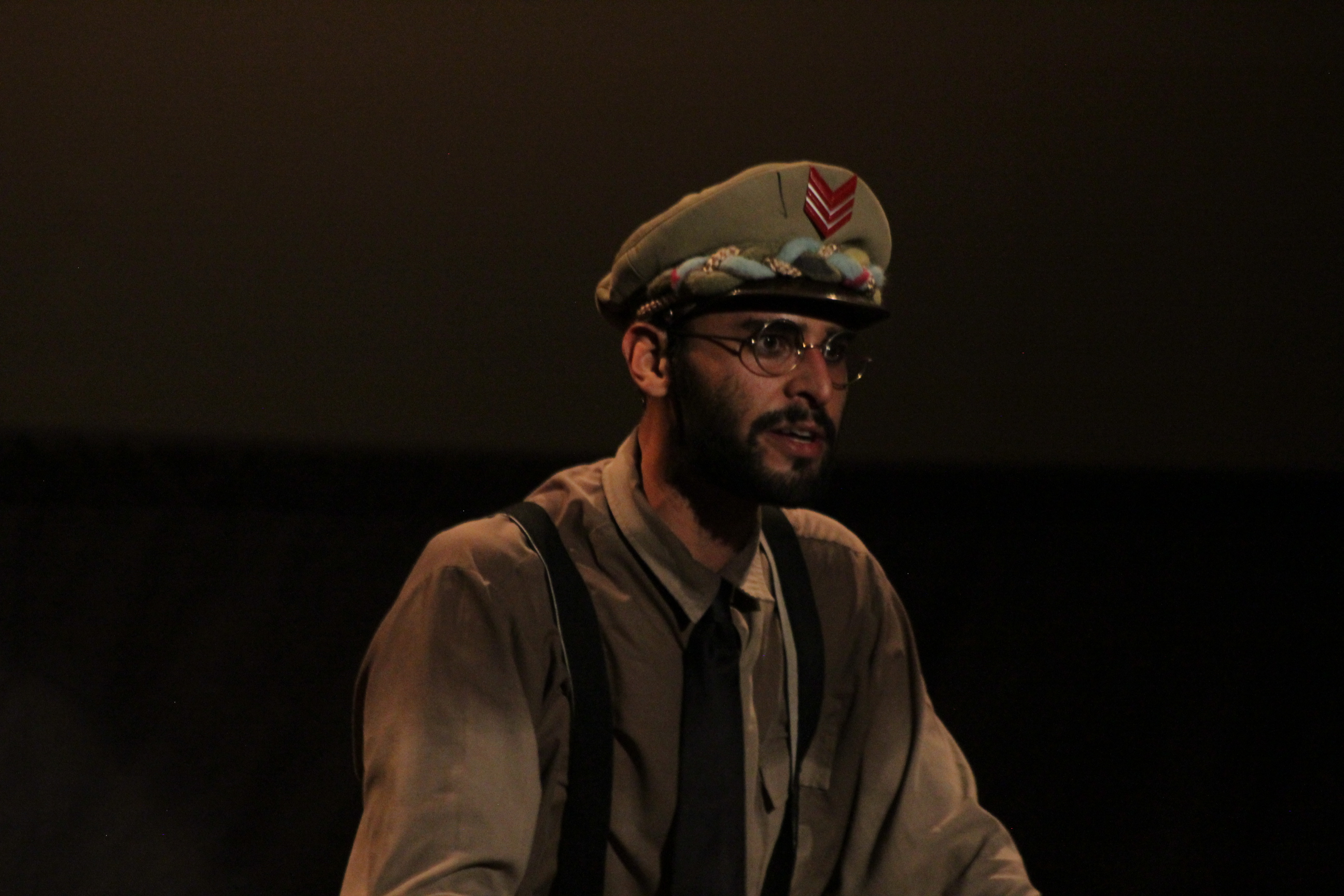
Colonel Quince is the creation of Andres Aguirre, a Mexican physical theatre actor who for a number of years has been based in Italy. The Colonel wears the uniform of an indeterminate country: braided khaki, with leather jackboots, and a cap. He sports fifteen (quince) medals: he is the medals – Colonel Quince. He marches, he goose-steps, he ducks and dives, and he returns regularly to his balcony to berate the crowd. Are we with him? Of course we are. Do we love him? Of course we do.

Lorcuedus, Aguirre’s breathtakingly brilliant one-man show, takes us on a theatrical roller-coaster ride, exploring the archetypal figure of The Colonel. He is everyone you might imagine him to be, or none of them: it depends on your viewpoint. In his extremely long and thorough creation process, Andres Aguirre has researched the obvious European candidates – Hitler, Mussolini – but has also taken a good look at Russia and the Americas, from Chile’s Pinochet in recent history, back further in time to the dictators of his own country – the Caudillos or self-appointed political-military leaders emerging in Mexico in the 19th century, in the years after Spanish rule.

The show, Aguirre’s first full-length solo, and the Colonel character it revolves around, have been a long time in the making…
 

IMG_3585


Andres Aguirre grew up in Guadalajara where, as a hyperactive child who could be a bit of a problem in school, he was sensibly guided towards physical activities such as martial arts, boxing, dance and gymnastics. And as if that was not enough, he also competed in swimming and cycling! Watching him onstage, the legacy of this impossibly physical regime is in evidence – the man has seemingly endless strength and energy. He was, for many years, one of the core team members of circus-theatre troupe Les Cabaret Capricho, encouraged by company co-founder Cesar Omar Barrios to learn circus skills and create a ‘numero’. Acrobatics, hand-to-hand and slackwire were all part of his repertoire. He trained mostly through short-form workshops and YouTube clips – with one unproductive term at Guadalajara University studying dance – but got to a point where he felt that he needed to engage in intensive, full-time physical performance training. ‘I started to ask myself why something sometimes works, and sometimes doesn’t, and the voice in my head said: it’s because you haven’t studied…’ Time for a change! On the advice of clown Anna Cetti, he took himself off to Italy, where he felt the quality of training would be higher than in Mexico, and presented himself to master teacher Philip Radice at the Atelier Teatro Fisico in Turin – offering to teach yoga in exchange for a place at his school. This was in 2010. Four years of serious training later, he started work on the Colonel character. He had previously met, and spent a lot of time as a companion, with the grandmother of a friend. He heard first-hand stories about the Second World War, which led him to further study of both European and Latin American histories, and to explore the way war was represented in literature and the arts. Writers he cites as influences include Uruguayan journalist Eduardo Galeano (author of Las venas abiertas de América Latina / Open Veins of Latin America); and Viennese satirist Karl Kraus, author of Last Days of Mankind, which he loves for its absurd humour. An exploration of the relationship between visual arts and war/fascism led him to Picasso’s Guernica on one hand, and the Futurist Manifestos on the other. He also immersed himself in films, factual or fiction, about World War Two.

Meanwhile, Andres worked in the rehearsal room on transforming ideas and images into physical motifs. Military walks, for example: 300 observed and copied got reduced down to seven that eventually made it into the show! Photographs of soldiers with amputated limbs inspired a darkly funny and grotesque scene of ever-diminishing body parts. He put together the Colonel’s uniform, and working with the possibilities of that costume inspired the body language of the character. In 2014, he showed some early work in progress scenes at Philip Radice’s Atelier, then continued with the the slow but steady work of creating a full-length show.

And what a show! Every scene has been worked on with military precision until it is ship-shape and ready for action. The extensive physical training – from childhood dance and gymnastics to circus and then theatre – shows in every move. Of course, it is upfront in the Colonel’s eccentric dances, and his military take on the Ministry of Silly Walks, or in that extraordinary ‘walking wounded’ scene, or an equally fantastic ‘ostrich with its head in the sand’ scene that is all chest and sex and puffed-up stupidity; but it is there too in every single small action or point of stillness: here is a performer who knows how to be onstage.
 

IMG_3689


Throughout the creation process, Andres has worked without a director, filming himself and studying the results carefully to see what needs to be improved. ‘You have to sift and sift to find gold,’ he says – taking the analogy further by saying that the process is like alchemy: a constant reducing down to the essence. Aware that he needed an audience response, he tried scenes in a cabaret setting, or in public spaces. In the middle of the process, he realised that he was interested not just in war but in peace – in what dictatorships and oppressive regimes do to the soul of a people. And not only dictatorships, but life in supposedly ‘free’ countries: personal histories of race, economics and politics entered the picture. John Berger’s A Seventh Man, a book exploring migrant labour in words and images, influenced the work, as did a growing awareness of the plight of toxic masculinity – not just the worst-case scenarios of machismo in the Mexican and world psyche, but what he describes as the ‘tiny moments of machismo in the joking and teasing of everyday life’, and the use of language like ‘man up’. Now approaching 30, he started to re-evaluate his younger self and look to where he might make positive changes in his attitudes towards gender – and all this too entered the work. The show is a satirical reflection on war and politics, but more, it asks: where are we placed in all this? How easily are we swayed? How readily do we follow orders? Do we turn a blind eye to oppression if it suits us? As for the Colonel, the epitome of toxic masculinity: every day he’s at war with himself; every day he invents a new battle, and makes enemies of those around him. It’s no way to live. The notion of the destructive internal dictator – what Andres calls ‘the dictator of the self’ – started to inform the process.
 

IMG_3665


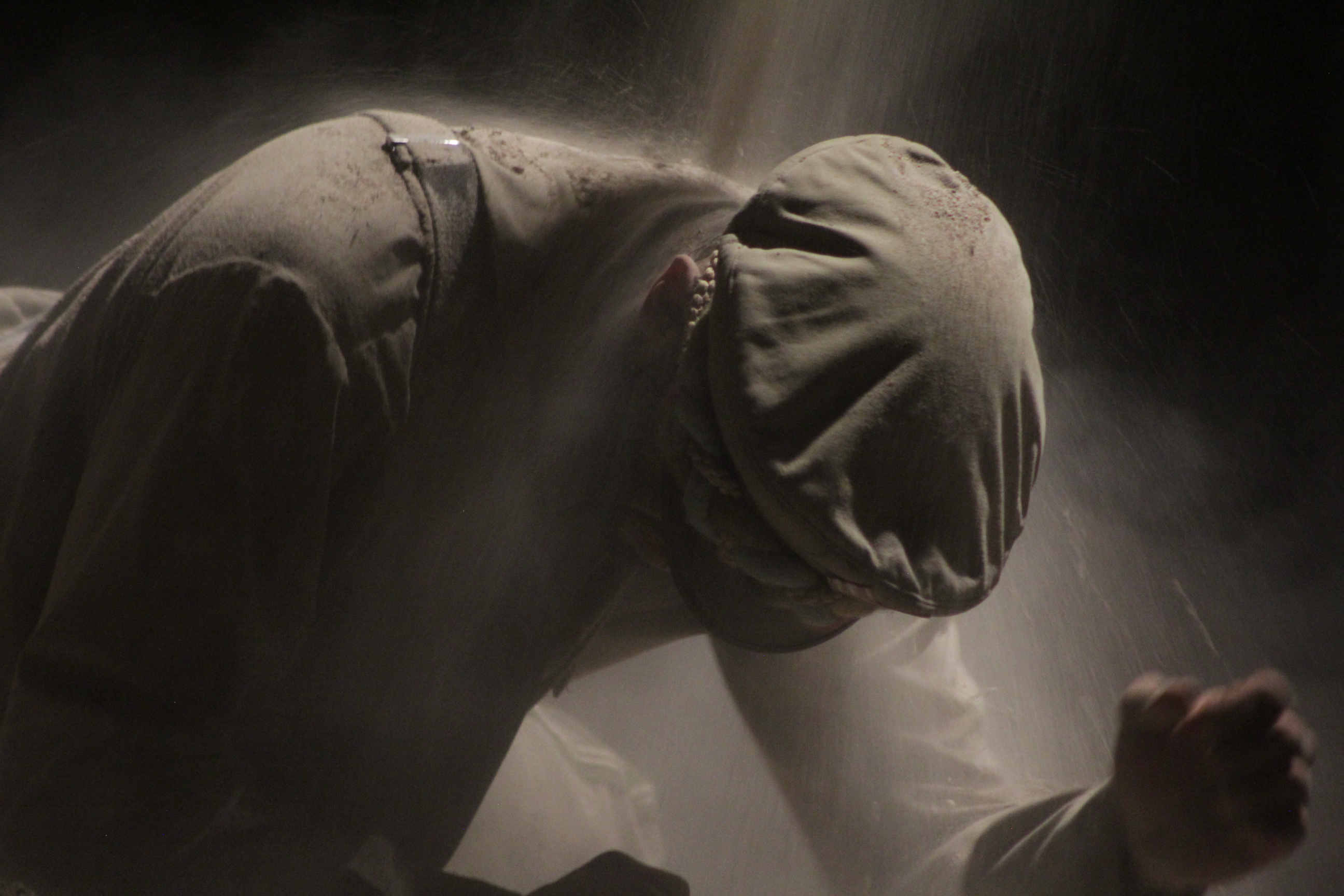
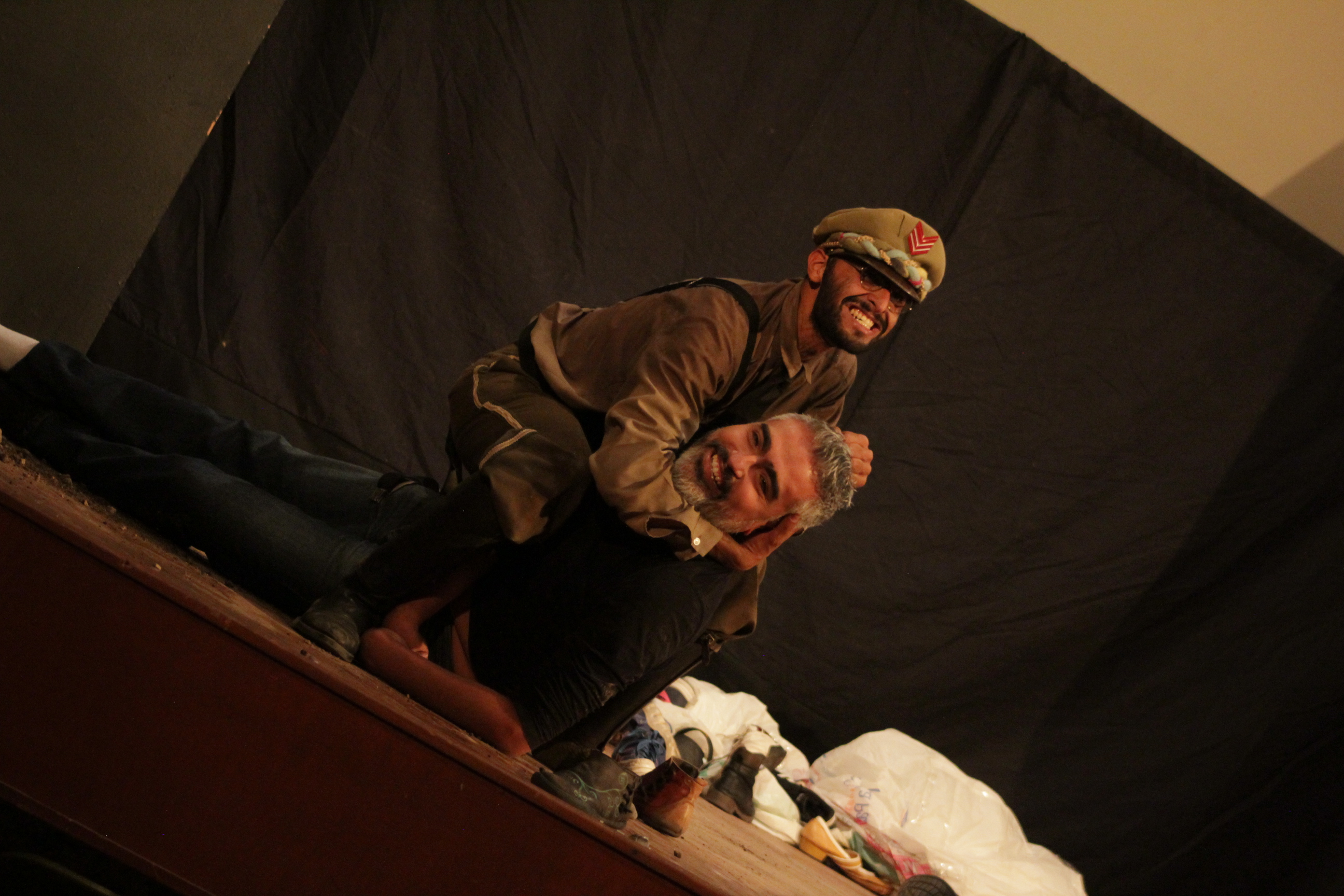
Eventually, of course, you have to stop the researching and experimenting, accept that the process could be limitless but must be limited, and get the work out there. Then comes the Kool Aid Acid Test: the audience. Always a vital part of the equation, but in Lorcuedus the fourth wall is frequently broken through, and the Colonel’s engagement with his public – his pueblo – is vital to the success of the piece. When seen at the Ficho Festival in Aguirre’s hometown of Guadalajara, he does not fail the test. The audience are with Colonel Quince for the journey: from the first, surreal image – the Colonel upside-down, head literally in the sand, as if rocketed into the space – through to the numerous gobbledegook calls-to-arms from his balcony; the contorted dances and mimes; and eventually to the extraordinary last scenes where he orchestrates us flinging our shoes on to a stage filled with earth, a humorous moment that suddenly changes tone when we view the bombsite that we’ve created…

There are some people who may well have created three or four or more pieces of theatre in the same timespan – five years – that Andres Aguirre has taken to make Lorcuedus, but the ‘slow art’ approach has really paid off here. Physical theatre of the highest order. Congratulations, Colonel Quince – the first battle is won.


Lorcuedus was presented at the Alianza Francesca theatre in Guadalajara, as part of Ficho Festival, on 19 November 2017.

Dorothy Max Prior spoke to Andres Aguirre at Caligari Cafe, during the Ficho Festival 2017. www.fichofest.com

For more on Atelier Teatro Fisico di Philip Radice see http://www.teatrofisico.com/


Nigel Barrett & Louise Mari with Abigail Conway: Party Skills for the End of the World

Skills. It’s all about skills. Party skills. Survival skills. Party Skills for the End of the World:

How to mix a martini – shaken not stirred, naturally. How to play a record – yes, there are people in this world old enough to drink alcohol who do not know how a turntable works. How to make a balloon animal. How to make a light bulb. How to tie a knot. How to pick a lock. How to use a knife – it needs to be sharp, and best to go for arterial points on the body that are low in fat, like behind the knees. How to turn your trousers into a float that can save you from drowning – come on, you did this at school, surely? Or scouts. Lifesaving badge. How to signal to a landing aircraft – you never know when that might come in handy. How to walk in high heels – heel, then toe, not toe first. How to dance. How to dance like all those people we see on YouTube, in all those clips we cheerily share on Facebook, to brighten up our workdays.

Party Skills for the End of the World takes us on an exhilarating journey: lambasting us with survival information (surviving life, surviving war and terror, surviving parties); embroiling us in party games (musical chairs, hurrah!); and showing us that there is nothing to fear except fear itself. Yes, bad things happen. It’s how we respond to them that matters. Do we grow ever more timid, terrified to walk the streets, or to talk to strangers? Or do we feel the fear and do it anyway? Yes, let’s dance, we have nothing to lose. We are all going to die, one way or another.

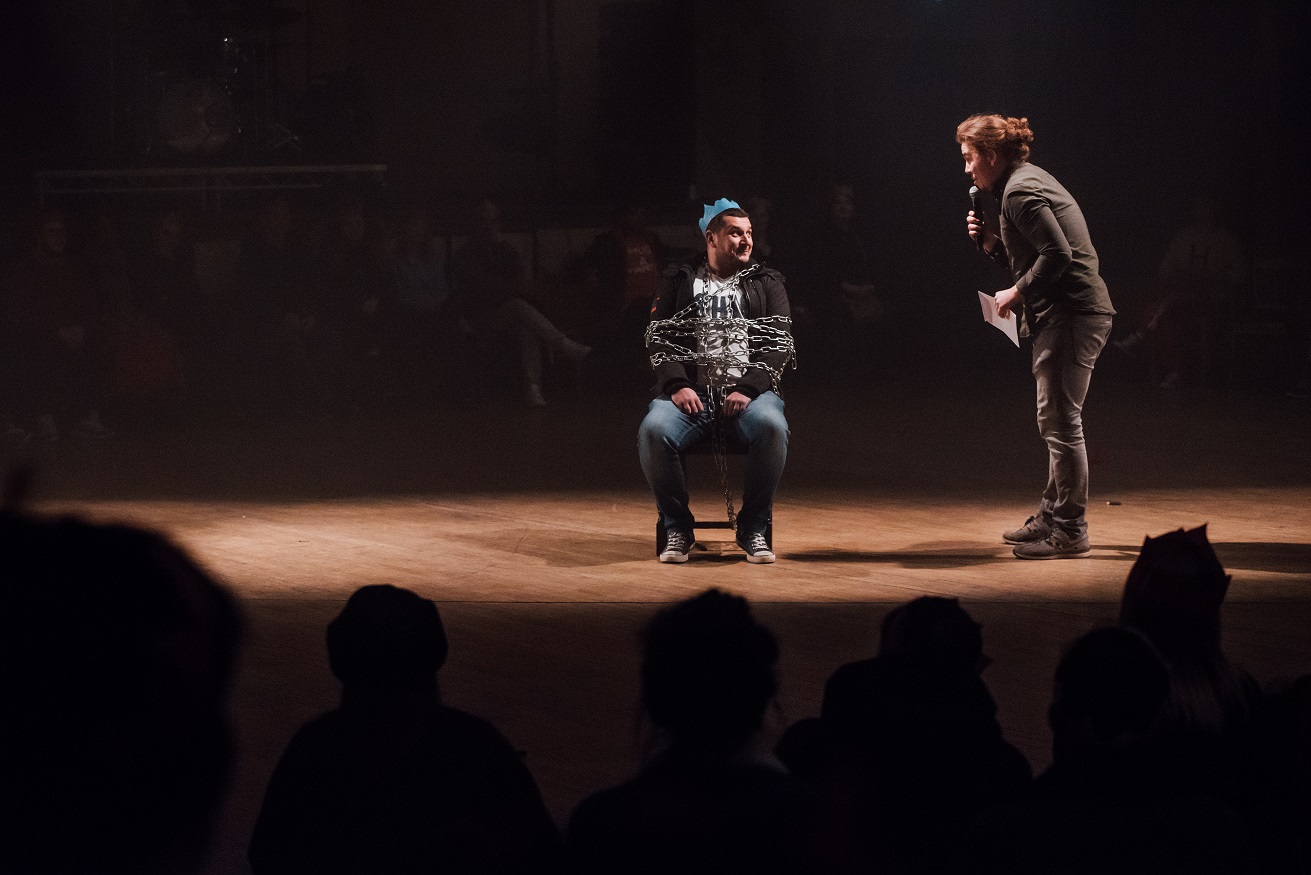
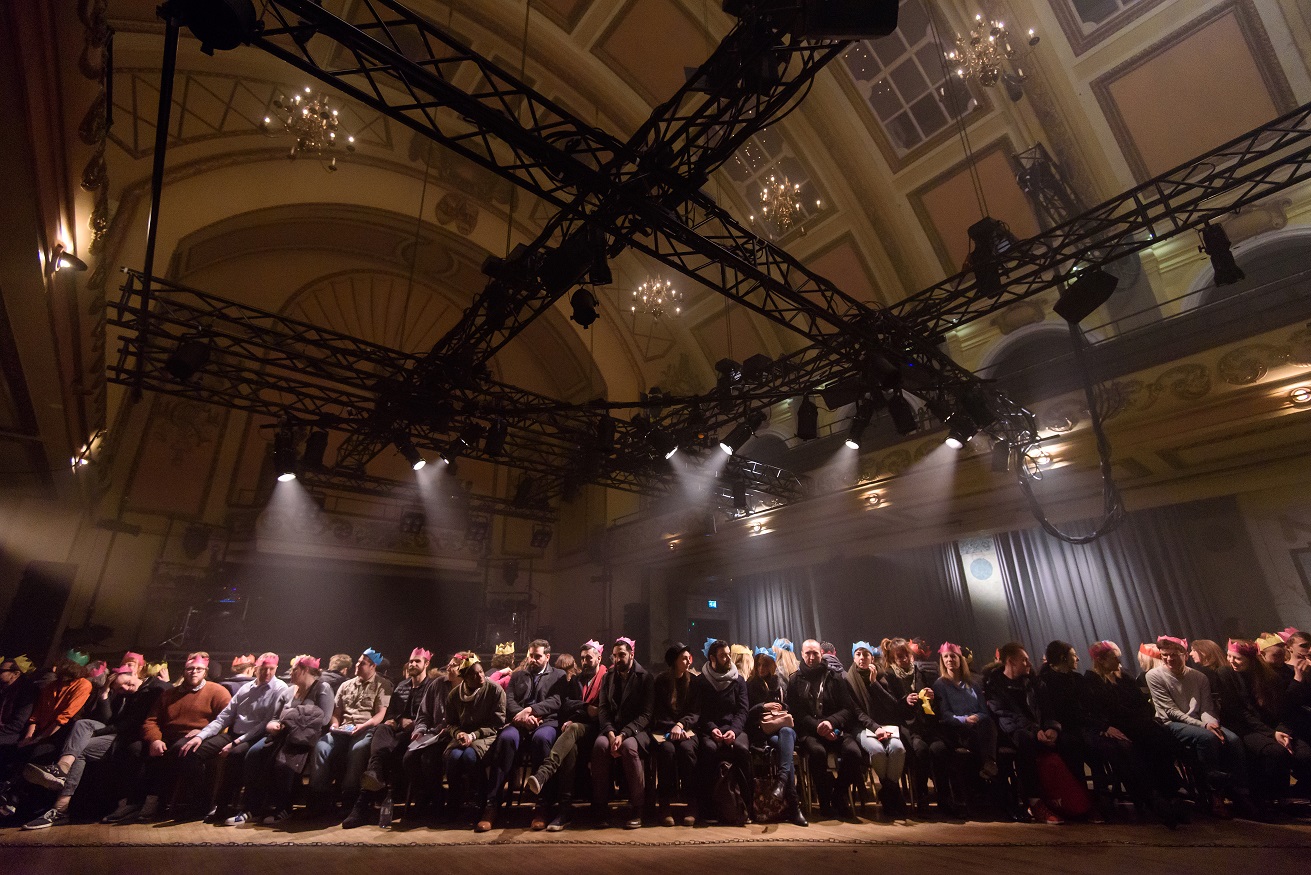
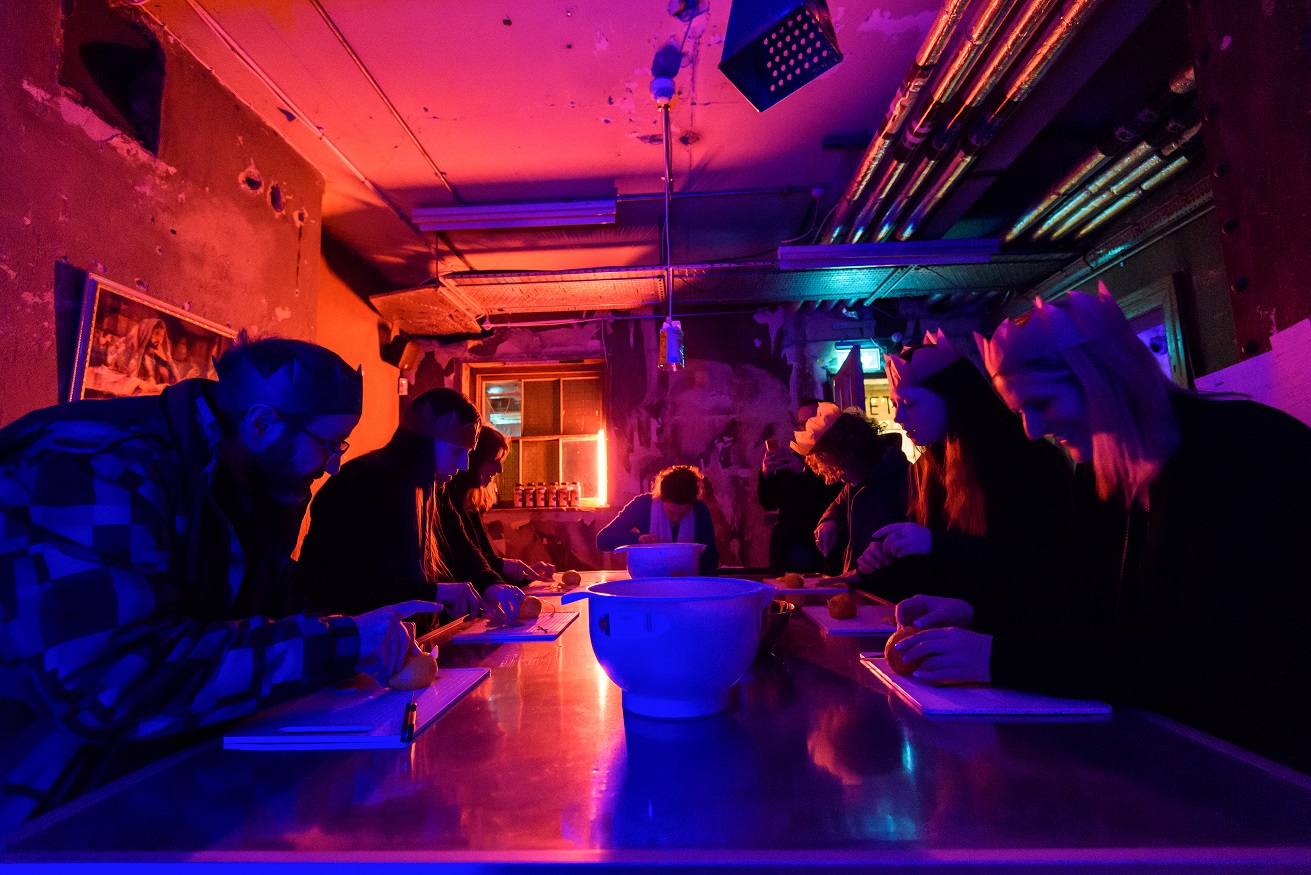
We are all going to die. Nigel Barrett – tall, broad, dressed in dusty jeans and a white T shirt stretched across his belly, a commanding presence yet vulnerable, his body still, his head face-on – stands on stage and says these words, looking out at a sea of young faces looking up at him. Are we afraid? Are we afraid of dying too quickly, without saying goodbye? Are we afraid of dying too slowly, in pain? We are all going to die. This bald statement – the only thing that we all know for sure – comes a good way into the show. We’ve supped cocktails, we’ve donned paper party hats, we’ve heard about the 32 things you need to teach your children, we’ve learnt that buttercups are poisonous, and that we should avoid furry caterpillars. We’ve seen two teams of people dressed in a hotch-potch of charity shop clothes dance a lackadaisical Macarena. We’ve peeled oranges and sewn their skin back together: ‘This is how to sew skin together. Imagine it is your neighbour, or your mother’. We’ve seen the space transform from a catwalk for survivors in evermore bedraggled and surreal garments to an arena rock gig, as two kit drummers (from the magnificent experimental music group AKDK) battle it out.

Ah yes, an arena, where there is live music, and young people enjoying a night out…


Party Skills for the End of the World.


Party Skills for the End of the World is created, written and directed by Nigel Barrett and Louise Mari of the Shunt collective, and produced and co-commissioned by Manchester International Festival and Shoreditch Town Hall. It was originally made as a celebration of the people of Manchester. The artists worked in the city for months ahead of the Manchester International Festival 2017 premiere, engaging scores of people in the local community, creating and joining in with ‘skills’ workshops, and starting the process of occupying a large and complex site. On 22 May 2017, in the middle of the devising process, a shrapnel-laden homemade bomb was detonated as people were leaving Manchester Arena following a concert by the American singer Ariana Grande. Twenty-three people were killed, many of them young people, and over 500 were injured. In a country used to regular terror attacks, this one was particularly harrowing and terrible because so many of the victims were children and young adults on a night out. Now they’re coming for our children? The worst nightmare of all. This event didn’t alter the content of Party Skills: it placed the content within a particularly poignant context. Here were Nigel and Louise, working with dozens of young community performers and students from Manchester, when suddenly the very essence of the show they were all working on – how we brave the onslaught of fears the modern world throws at us – seemed suddenly to be about the current moment.

Now the show is being remounted at Shoreditch Town Hall, where a small R&D showing took place a few years ago. They have made the show in collaboration with visual artist/designer Abigail Conway. For this leg of the journey, Nigel and Louise are continuing to work with the core Manchester team, with additional participants and backstage helpers drawn from drama colleges such as the Royal Central School of Speech and Drama (where Shunt formed almost 20 years ago).


Party Skills for the End of the World.


When I see Party Skills on the opening night of its London run, I go in unaware of how and when it was made, which is good as its powerful message of the power of life over death (until we die, anyway!) and facing up to fear comes through loud and clear as something with universal meaning. The Manchester arena bombing, the war in Syria, the Cuban Missile Crisis, the 1970s IRA campaign of terror on the British mainland, the rise (then fall then rise again) in knife crime, the rise in gun crime, the Blitz, the refugee crisis after the Second World War, the current refugee crisis, school shootings in the USA – depending on your age, and where you live, any one of these could have sparked the same anguished soul-searching about fear, survival, and the need to party on, regardless.

It asks us – sometimes obliquely, sometimes directly – what we feel about fear and survival.  How much time and energy do we give to our nightmares? One by one, people emerge from the audience to take the performance space, stating their name, age, address, where their parents are from. They offer us helpful or humorous or disconcerting or downright ludicrous information and advice. You suspect that every single thing we hear is true, and features in some government pamphlet or other, somewhere in the world. We are bombarded with this stuff throughout our lives, and we have to judge, on a daily basis, how to respond. Perhaps we might be better off worrying less about our news-media-induced nightmares and fears, and more about the things we can change. We can choose to be kind, to help other people. We can choose how much to consume, and what resources to use. We can choose to party, rather than cower in the bunker. Yeah, let’s dance. Let’s dance like there’s no tomorrow.

There’s a robust mix of professional and community performers in the show – a marvellous mish-mash of humanity of different ages, genders, cultures, and yes – skills. I especially like the way the young people taking part are honoured and profiled. In one scene, the performers and participants walk on a diagonal across the room, making numerous transits, the lighting creating a corridor to walk along until they reach the silver slash of the exit curtain. We watch this seemingly endless river of humanity flow past, and marvel at just how beautiful and strong and watchable all human beings are.


Party Skills for the End of the World.


Party Skills, perhaps because of the scale, feels more like a Shunt show than some of the previous work Nigel & Louise have made together. When we end in the Shoreditch Town Hall basement, invited to drink and play in a number of delightful cellar rooms, each hosted by a performer, it feels almost as if we are back at a Lounge night in the Shunt Vaults underneath London Bridge station. But this is no bad thing. Shunt have been the leaders and innovators in the field of immersive, site responsive theatre over the past two decades, and there is no reason at all why the company members should not continue to use the tropes and devices of their past successes. But it is also very much a Nigel and Louise show, and like previous work is tightly written and artfully directed, the dramaturgical purpose of every word, action, sound and image carefully thought through.

It’s a clever and thought-provoking show, and it’s a very loveable show. I love the site and set-up. And who doesn’t love a show with free cocktails at the start? I love the performers, and I love the audience. It’s a show in which the two can’t be separated. None of us are passive in this experience. We move around, we play games, we learn skills, we dance. Some of the actors/participants are ‘in performance mode’ from the off; others emerge throughout the evening – and in some cases we are never totally sure who is and who isn’t, as there are ‘returners’ to the show who know the score and join in with authority.

But despite – no, because of – the fun elements it is also a show unafraid to broach the most serious questions we face. Questions that human beings have been facing forever: look around you, look at the people in the room with you. We are all afraid. We all want to be loved. We are all going to die. We are all here to dance. Dance, dance, dance – for the world might end tomorrow.

Photos by James Berry. 

Party Skills for the End of the World is produced and co-commissioned by Manchester International Festival and Shoreditch Town Hall

Book here.


Dress Rehearsal. Shoreditch Town Hall. Monday 12 February 2018.


Mother, Lover, Hero, Dreamer

Dorothy Max Prior discovers a world of age-old archetypes and new mythologies in a diverse selection of work seen at the London International Mime Festival 2018

If there’s one defining characteristic of work presented at the London International Mime Festival, it is that the work is hard to define; slipping and sliding as it does between artforms and modus operandi. But diverse though the work that makes up its component parts might be, a curated festival inevitably takes on a personality of its own. Two strands that struck me when viewing, and musing on, the body of work presented in this year’s Festival is that it felt particularly strong in women theatre-makers; and that there were many shows that seemed, in various and diverse ways, to be investigating the lure of the mythological and archetypal.


Peeping Tom: Mother (Moeder)

Peeping Tom: Mother (Moeder)


Peeping Tom’s Mother (Moeder) ticks both boxes. The lead creative force on this show is director-choreographer Gabriela Carrizo, working alongside assistant director and dramaturg Franck Chartier (the two are joint co-directors of Peeping Tom). And Gabriela Carrizo is completely upfront about her desire to explore the Mother archetype, saying: ‘[The show] is not about one mother, but about several mothers. We talk about motherhood, and the absence of it [searching] the subconscious to reveal what the mother carries as desires, fears, suffering or violence.’

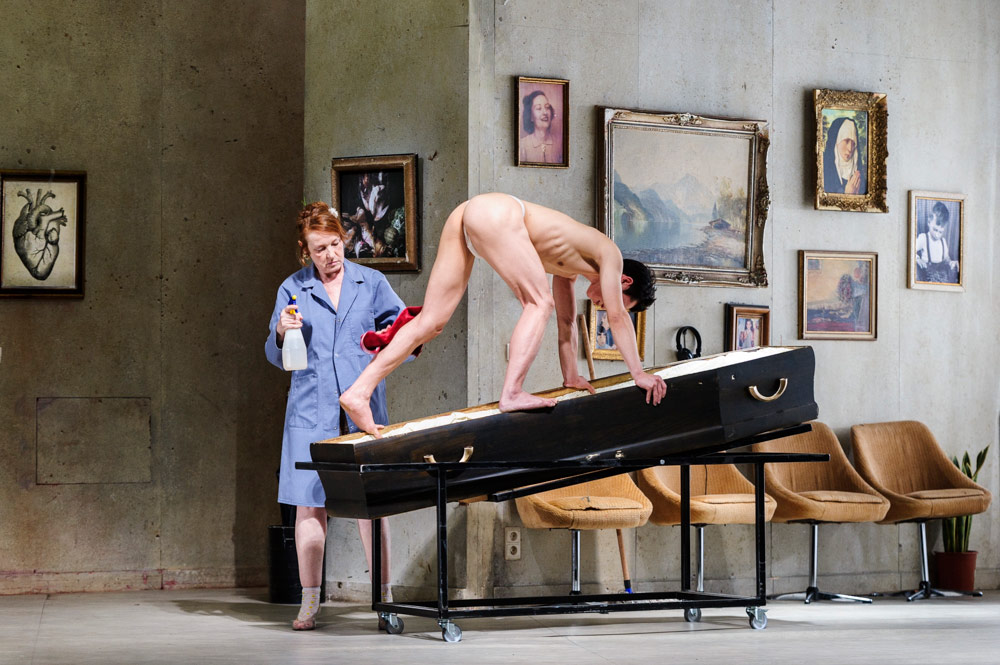
Moreover, this show gives us a fragmented, dreamlike narrative that explores attitudes not only to motherhood, but also to family dynamics, history and heritage. We meet, amongst many other characters, a matriarch at her funeral, a woman giving birth, a curator, a cleaner, a living museum exhibit, a patriarch who has outlived both of his wives, and a couple whose baby never made it out of the incubator – grotesquely, growing to adulthood in this contained environment. Amber Vandenhoeck’s set is a marvellous thing to behold, morphing as it does from museum/art gallery to labour room to recording studio to funeral parlour. These changes are enacted by switching our point of view from one part of the stage to another, or by changing our perception of the space, using light and sound. As, for example, when we see a glass-sided booth at the rear of the stage lit in the cold blue light of a hospital, suddenly (with the birth of the baby) morphing into a red-lit recording studio, the mother now a diva howling ‘Oh baby, baby…’ into a mic. Sound is often used as a dramaturgical driver of the piece. There is a quite extraordinary scene exploring the archetypal feminine element, water, in which not a drop is seen but we hear the constant splashing and slurping of water filling the stage, the performer responding to this with an exquisite choreography of twists and turns and backward falls, flailing around in an imaginary pool like Alice in Wonderland. Elsewhere, family portraits come to life, revealing bloody guts within, and a coffee machine takes on a persona of its own, a motherly figure dispensing solace  in the form of espresso – or is that expresso? – to all the family. It is a magnificently slick and clever show, with tremendous performances given by actor-dancers with exceptional physical skills: Mother is an enormously intelligent work, its images deep and resonant, coming back to haunt you long after the show. I felt something of a lack of emotional engagement, but there was so much to occupy my mind that this didn’t bother me too much.


Gabriela Munoz: Perhaps Perhaps Quizas

Gabriela Munoz: Perhaps Perhaps Quizas


From the Mother to the Bride (the female manifestation of Jungian archetype The Lover). Gabriela Muñoz’ Perhaps Perhaps Quizas is a very different kettle of fish: where Mother is epic, distanced, cinematic, cool, exploring and presenting us with a million and one ideas and images,  Perhaps Perhaps Quizas (featuring Gabriela Muñoz, aka Chula the Clown) gives us the perfect example of the intimate, one-woman, ‘one idea beautifully executed’ show. As we arrive in the auditorium, we see a simple set depicting an old-fashioned drawing room, with a little table sporting a lacy cloth and cake-stand, a chintzy sofa, and a coat-stand. We see a woman onstage, behind a net veil which is draped from the ceiling. She’s in a bridal dress, and sits quietly writing letters, like a Victorian heroine. She comes out, and it becomes clear that she is preparing for her wedding day. But where is the groom? He is there, but he needs to be discovered. After some playful exploration of the men on offer in the audience, one is picked, and invited on stage. He is flirted with, and put through a wedding ceremony (priest and bridesmaid also picked from the audience); and then comes the cake, and the champagne, and the wedding dance, and first kiss…

It is an enormous risk, to share your stage with an audience member as your leading man for almost your whole show. But Gabriela Muñoz knows what she’s doing. The encounters with the ‘groom’, and indeed with all of her chosen accomplices, demonstrate her exquisite sense of timing, and her feeling for how far you can push someone in the moment. We never feel worried for the audience members on stage – they are handled with care and love in every moment, even when (especially when) they are being teased. The play with objects is also superb: the way the strawberry on top of the cake is thrown away with a wrinkle of the nose; the gentle handling and fondling of the man’s jacket on the coat stand; the champagne ‘accidentally’ poured down her front; the endless rolls of toilet paper unwound to become aisle or priestly dog-collar or bridesmaid’s fascinator gone awry.

Like all good clown shows, the laugh-out-loud humour is balanced with pathos – moments of ludicrous bathos taking us from one to the other. The archetypal event that is the wedding offers a lot for a clown to play with, and  expectation, desire and disappointment are all portrayed cleverly. The Lover is the archetype of play and sensual pleasure: living in the moment and tuned into her physical environment. Gabi Muñoz captures her perfectly.


L'Insolite Mecanique: Lift Off

L’Insolite Mecanique: Lift Off


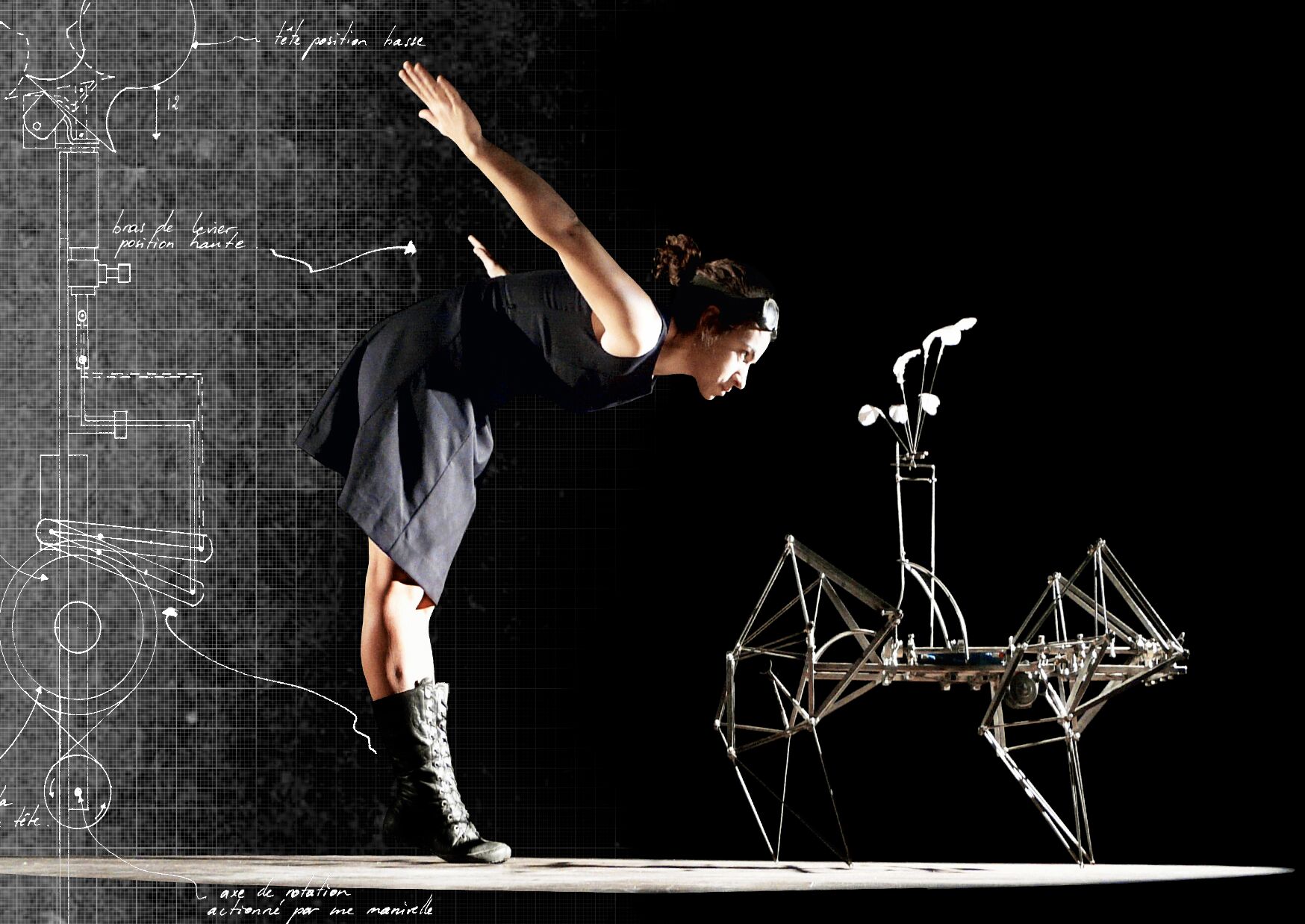
Compagnie L’Insolite Mecanique’s promenade show Lift Off is a beautiful exploration of the Child archetype, and particularly the Innocent or Magical Child, whose qualities are an optimistic desire for freedom. ‘Let’s open my cage and see what happens!’ says creator and performer Magali Rousseau. The show is a heartwarming exploration of playfulness and the world of the child, enacted by Magali Rousseau, a musician on laptop and clarinet, and a roomful of little machines operated by cranks and pulleys, designed and made by Rousseau herself.

The audience processes through a room filled with these extraordinary automata whilst the performers animate each structure in turn; ambient music, poetic text, and simple, stylised physical action lending weight to the images and bringing us stories of family life and heritage. We learn about the girl’s mother, grandmother, grandfather, and a great many great-greats in this family of fishermen and farmers. The room plan of a house is drawn with chalk on a revolving turntable, as Magali Rousseaux says: ‘Always leave the house with a clean sink, little girl – a clean sink and clean knickers…’ As the girl-child learns to spread her wings and fly – a recurring image throughout the piece, expressed in the performer’s body, and with beautifully-crafted metal figures zipping along wires – she wonders: ’What happens to the air I’m stirring with my wings? ’and ‘If I fall, will you catch me?’ In the yard are chickens with clipped wings – represented by a whirring and spinning contraption in which little feathers flutter up and down without ever going anywhere. The element of air, the lyrical element of the child, balances with the motherly element of water: one of the more complex of these beautiful machines gives us a revolving metal ball heating water to produce a hiss of steam; and another features a goldfish in a glass bulb orbiting slowly around within a solar system. Listen closely and you can hear the song of the mermaids… A truly beautiful show that left me humming with delight.


Yasmine Hugonnet: Le recital des postures

Yasmine Hugonnet: Le recital des postures


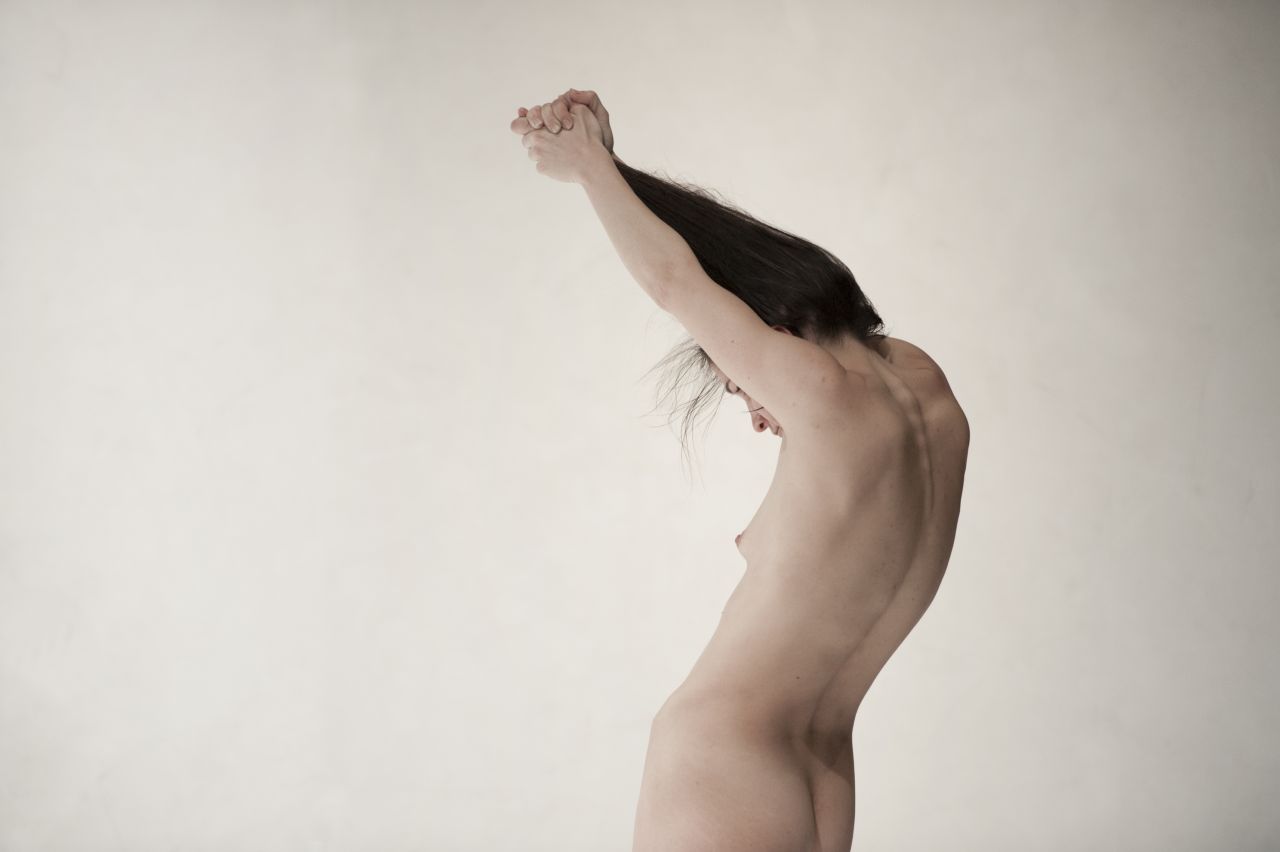
If there is an archetype that we might align to Yasmine Hugonnet’s Le Recital des Postures, it would probably be the Empress, who represents the physical body and material world; worldly power and earthly pleasure. Hugonnet presents us first with a clothed body, then with a naked body, which is placed sculpturally in the space (a bare white stage, the only adornment being in the excellent lighting design by Dominique Dardant). The gaze is all: she is there to be seen, we are there to see – but what are we seeing? Hugonnet says in her programme note: ‘it is a symbolic body, archetypal, social, as well as a place of communication.’ As the piece progresses, we become ever-aware of the archetypal images of the sexually mature female body. Here, a Geisha pose; there, an image from an Egyptian frieze or a Grecian urn. Hugonnet is a very able performer (in every sense of that word) and the poses she creates through almost imperceptible movement from one state to another are indeed visually beautiful and evocative. Her control of her body’s movement is exceptional, although for much of the hour, delivered in silence with just the squeaks or thuds of her flesh on the floor’s surface as accompaniment, I feel that I am watching an exercise in the physical capabilities of the artists’s body, rather than a show. In the final section, in which Hugonnet allows her voice to enter the space, the hair that she has been teasing and playing with as a sculptural object throughout the piece is pulled up into a kind of beehive formed around a plastic drinks bottle. With the arrival of the voice, and with a hint of humour and idiosyncratic humanity, I become far more interested in the body on stage. Suddenly the object of our gaze seems to be addressing her own part in all this in a way that I felt was previously lacking. Yes, there are beautiful evocations of a whole history of representation of the naked female form in art, culture and mythology; and I am aware that a woman presenting her naked body (whether onstage or in a gallery) is different to a man presenting a woman’s naked body, and that everyone should be free to perform in whatever state of dress or undress they wish to – yet I find myself musing that in this day and age, placing a young, fit, naked female body in a space and inviting the audience’s gaze just doesn’t feel enough. I want some sort of challenge or commentary from the artist, and this only begins to emerge in the last five minutes. I think comparatively of the work of La Ribot, and feel that Hugonnet has a lot yet to learn, beautiful though her Recital des Postures might be.


FC Bergman: 300el x 50el x 30el

FC Bergman: 300el x 50el x 30el


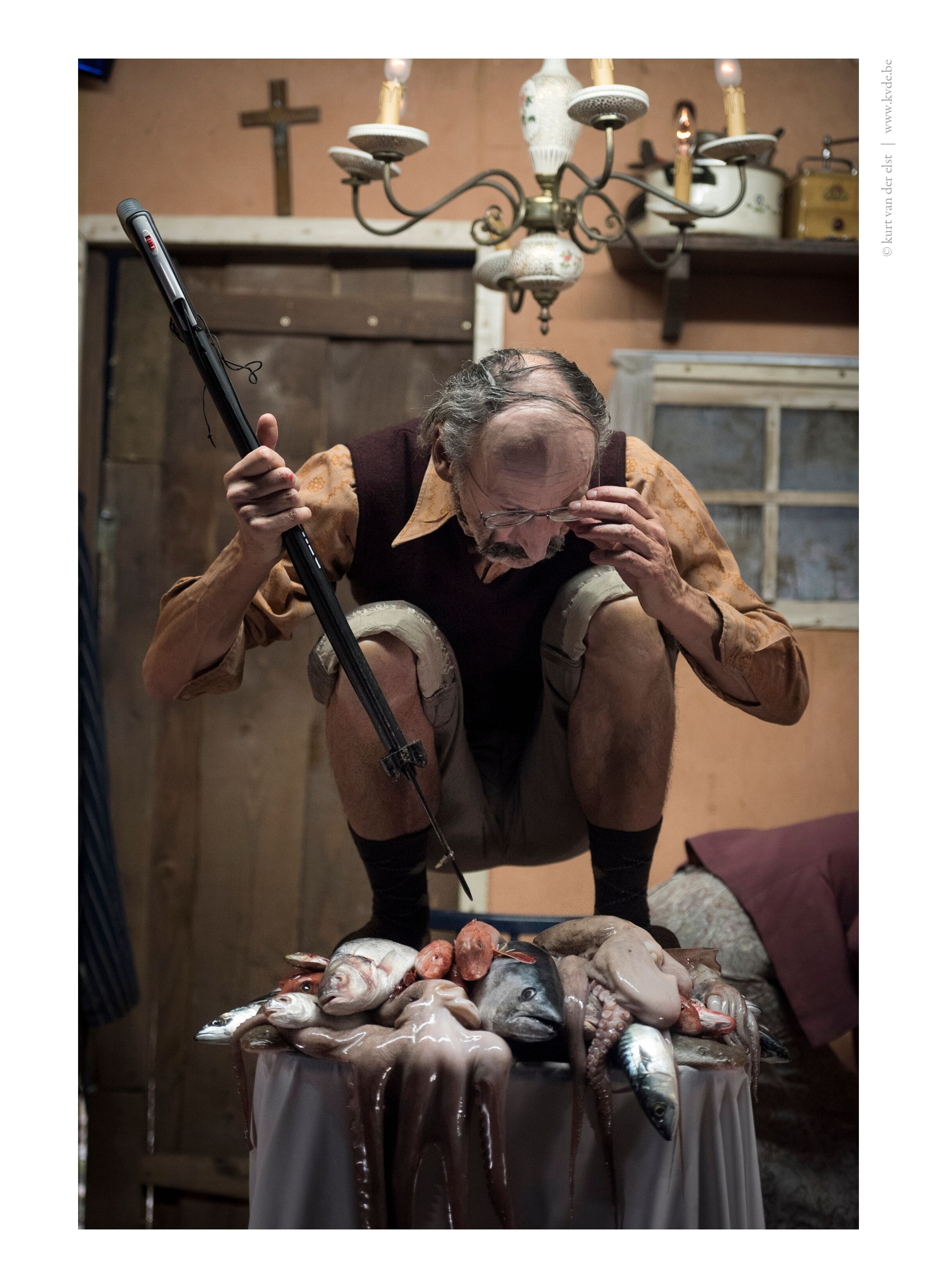
 300 el x 50 el x 30 el is an epic production, both in its subject matter and its execution. It takes as its starting point one of the most archetypal stories of all, a version of the Noah’s Ark myth of natural disaster and salvation, and it explores this through a delightful interplay of live action and live-feed video enacted on an ambitious film-set-on-stage, comprising a village made up of six wooden shacks, a forest, a clearing, and a pond. In the clearing, by the pond, sits an angler, biding his time, seemingly at peace. In each wooden shack, a different surreal scene unfolds, as people play a waiting game, knowing that a disaster is imminent; that only some will be saved; and that nobody quite knows exactly when this will occur. Meanwhile, three men with a camera on a dolly track work their way around the village, filming the shacks through the open fourth walls, so that we get to see what’s happening inside. Or do we? There is of course the possibility that some scenes might be pre-filmed – we assume not, but how are we to know? The fact that we only see the inside of the shacks onscreen, never in the flesh (so to speak) offers us the opportunity to reflect on the ‘real’ versus the mediated image: just when and why do we believe the evidence of our own eyes? Is it true that the camera never lies? What we see is the stuff of dreams – or nightmares, more like. Images dredged from the collective unconscious  Jung’s primordial soup of innate archetypes, which turn up in religions and mythologies worldwide, pass by in quick succession, framed by the ever-faster moving camera lens. Sacrificed beasts, people who grow bird heads or morph into fish, people who watch other people gorging while they go hungry. With each camera circuit round the space, the scenes become more bizarre and darkly humorous: a darts match turns into a William Tell act gone wrong, a wild-eyed boy blows up toy villages with fireworks, and a limp-dicked masturbator watches his wife give birth to a conch shell. There’s an Hallelujah moment as a dead sheep is dredged up from the pond, and the energy of the piece shifts, with a sense of  waiting growing more intense, occasional forays outdoors by the villagers, who gather to gaze dumbly at the sheep swinging above them. Our focus now moves to a young couple who venture out into the woods to consummate their love, with a sense of living for the moment, as time might be about to run out. A grand finale sees all of the cast of fifteen actors joined by a horde of extras in a glorious shamanic shake-out to Nina Simone’s Oh Sinnerman. There is nowhere to run to, nowhere to hide – let’s surrender and await our fate joyfully…

The show is rough at the edges, a little raw and wild, which only adds to its appeal. It is great to learn afterwards that this highly ambitious piece of work was created a few years ago by a group of young artists, theatre-makers and film-makers with very little resources. FC Bergman, as they are collectively known, literally made it themselves – building the shacks, gathering together the excessive amount of props, roping in actor friends. They had no idea then that their one-off creation – envisioned more like the making of an independent arthouse film or a site-specific show rather than a regular touring theatre piece – would still be on the road many years later, now supported by Toneelhuis in Antwerp, where the company are resident artists.

There is a lesson here: don’t shy away from making work of scale, step beyond perceived limitations and see what happens. To evoke the archetypes one last time: be a Dreamer; be a Hero.


Peeping Tom: Mother (Moeder)

Peeping Tom: Mother (Moeder)


Featured image (top): Toneelhus/ FC Bergman: 300el x50el x 30el


Peeping Tom: Mother (Moeder) was seen at Barbican Theatre, 24–27 January 2018

Gabriel Muñoz: Perhaps, Perhaps, Quizas at Jacksons Lane, 19–21 January 2018

Compagnie L’Insolite Mecanique: Lift Off at Barbican Pit, 23–27 January 2018

Yasmine Hugonnet: Le Recital des Postures at Lilian Baylis Studio, Sadler’s Wells, 19–20 January 2018

Toneelhuis/ FC Bergman: 300 el x 50 el x 30 el at Barbican Theatre, 31 January–3 February 2018

All shows were presented as part of the London International Mime Festival which ran at various venues from 10 January to 3 February 2018. www.mimelondon.com


Betes de Foire – Petit theatre de gestes

Roll up, roll up! We may be in a black box studio theatre, but let’s imagine for a moment that we are inside un petit chapiteau – a little circus tent. What we encounter in this delightful show is un vrai cirque aux proportions reduites – everything you’d expect to see at the circus, but in smaller measures.

So, let’s get this show on the road – send in the clowns! Well, the clown… the magnificently long-faced and loose-limbed Laurent Cabrol is clown, and acrobat, and animal trainer. Except the only animal in this circus is a sweet little dog called Sokha who only obeys her mistress. Enter the no-nonsense Elsa de Witte who, when she is not teasing Sokha into action, is ‘offstage’ (that is, in view, behind the tiny circus ring) whizzing up costumes on her trusty Singer sewing machine. Cue some magnificent duets for sewing machine and juggler –  yes, Laurent Cabrol again. In fact, juggling is clearly his prime skill – and what a delight it is to see all the classic tricks (which he can clearly do very well) deconstructed and replayed to us with knowing humour: a hat juggling sequence in which the hats take off on their own trajectory; a mouth-juggling sequence in which he seems to be gobbling up balls into ever-puffing hamster cheeks; a magnificent eight-ball sequence with diminishing returns, that ends with Laurent juggling invisible balls completely convincingly. He is also an ace eccentric dancer, following in the noble tradition of silent movie stars such as Keaton or Chaplin. Meanwhile the backstage bric-a-brac of costumes and props is gently animated by Elsa, including a gorgeous scene in which a coat on a tailor’s dummy turns into an invisible man moving mannequin. This onstage-offstage play throughout is really lovely. Sokha the dog can play this game too: we see her dozing ‘offstage’, and seemingly reluctantly peeping through the doorway at the top of the steps before a very slow entrance ‘onstage’ to take up position as a sleepy sea-lion, head on paws on the podium. What a clown!

The three live performers are complemented by a number of gorgeously wonky puppets and automata. There’s the life sized one-man-band, which is like one of those lovely tin toys that bangs a drum with its rapid arm movements – only 100 times bigger, and additionally playing a concertina. At one point, a high wire is set up, and a puppet trick-cyclist whirs along it to the accompaniment of Elsa de Witte’s musical saw. Here and throughout the show, the relationship between sound and action is forged with great skill and inventiveness – a mix of interesting instrumentation (such as the saw!), Foley, and odd-bod sampling. There’s a marvellous visual and musical rhythm to the piece: every physical action from human, dog, puppet, or object is complemented beautifully by the composed music, found sound, or silence.

The pace of the piece is well measured for the most part, although there is a flurry of activity at the end of the show that feels a little odd. In particular, a beautifully executed waltzing puppets scene (Elsa inside an extraordinary costume that morphs into the two dancing figures) comes slightly late in the running order. But this is a minor gripe – all in all, this is a delightful show, playing with the tropes of circus with wit and intelligence, beautifully conceived and executed. One of the highlights of my Mime Festival 2018.


Kalle Nio/WHS: Lähtö | Departure

Lähtö  is a cool show. Its colour palette is soft greys and ice blues. Its two performers, a man and a woman, are forever poised in beautiful shapes – held back, restrained, even when in the throes of passion. They take their time, they repeat, they are not afraid to stop, to create the image – or perhaps we should say, the shot. For Lähtö is a cinematic show, set on a big, broad stage, with a deep multi-layered set that eloquently moves us from 2D to 3D perception from scene to scene. It features larger-than-life projected monochrome images of faces that gaze nonchalantly away from each other; or melancholy sheets of rain tumbling down; or the rolling waves of a seascape peeked through a raised drape. As well as using moving image as a theatrical element, it also – knowingly, teasingly – constantly references the world of cinema. Not only the Michelangelo Antonioni movies cited as influences (most notably L’Eclisse and Blow Up), but also the Nouvelle Vague films of Truffaut and Goddard, and the Noir tradition. Ingmar Bergman is never too far away, either. Cigarettes are smoked, wine glasses drained, high heels kicked off, overcoats shrugged into then discarded, drapes pulled open and closed. And still the rain falls, the wind sighs, and the waves roll on.

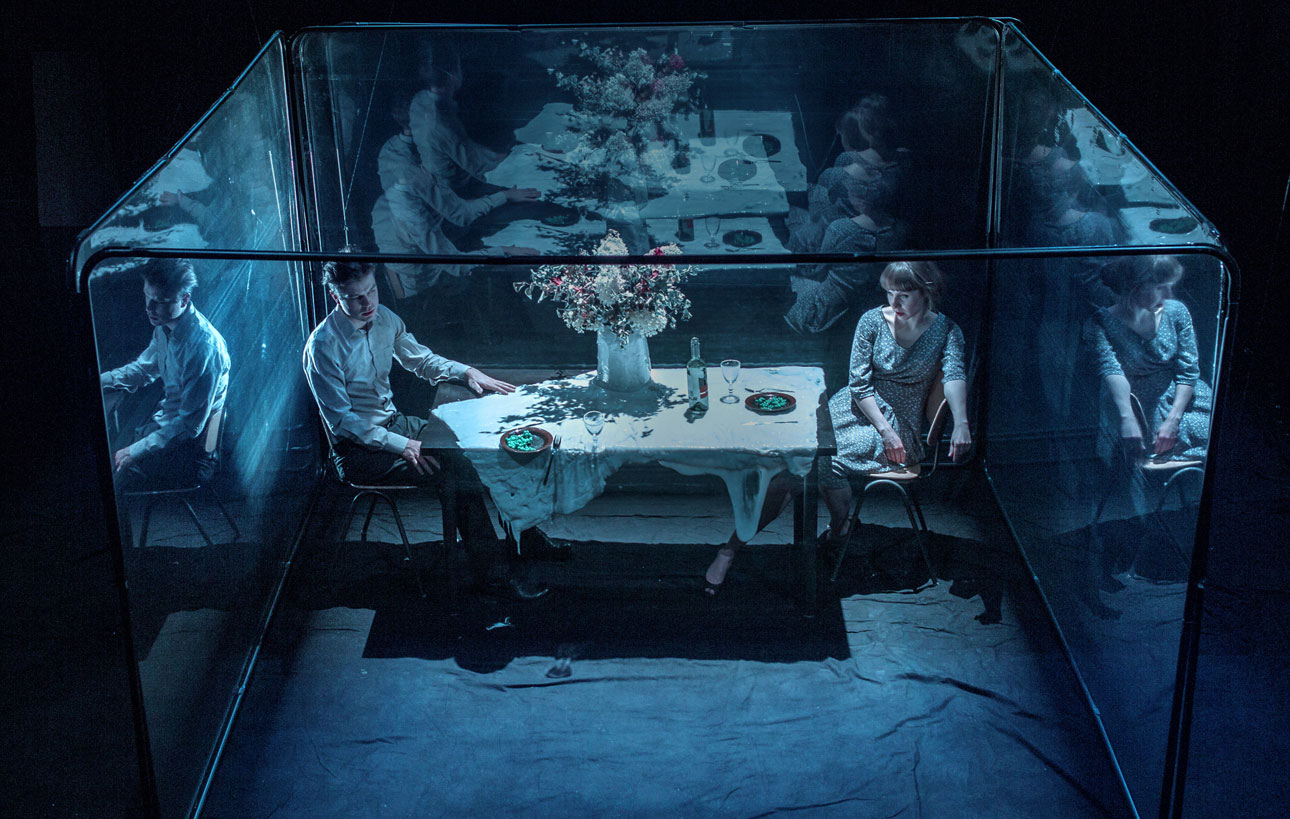
Our two performers, Kalle Nio (visual artist and magician, and founder and director of the company) and Vera Selene Tegelman (dancer and co-choreographer of the piece) play a couple in a disintegrating relationship – or perhaps, reevaluating the relationship after the death (literal or metaphorical) of their love. We are in a Bardo, a limbo world, where memory and imagination, dream and reality, play out. We witness the age-old tussle between Eros and Thanatos, love and death – the tug-of-war played out by the bodies on stage in interaction with the very many objects employed. An elaborate system of drapes and pulleys transform prissy living room curtains into the billowing sails of a ship. A great big perspex box cleverly explodes out into a variety of geometric shapes, providing the canvas for a cleverly reworked version of the classic Pepper’s Ghost trick, in which performers and their ‘ghosts’ dance an intensely melancholy choreography, and we lose track of which is real human figure and which is illusion. The couple, embracing on a table-top, find themselves trying to pull themselves clear of gluey threads of cloth that cling to their bodies. The classic Lecoq/Decroux ‘overcoat-wearing body with many hands’ scene makes an appearance, all done very eloquently. In a rare moment of light relief, Kalle Nio wrestles with a seemingly self-animating shirt that fights back as he tries to iron it. Lovely and wonderfully well executed though this scene is, it has a very different tone to the rest of the piece, and I’m not sure it belongs…

The performances can’t be faulted, the visual imagery is gorgeous, the ideas beautifully executed, and yet – I never fully warm to the show. I like it, I admire it, but I don’t absolutely love it. The glacial cool is just a little too – chilly – for me. It is also that some of the power and magic – the actual magic tricks and the theatrical magic – is lost by being too close to the action. (The show is set at floor-level in the Platform Theatre’s malleable space, with raked seats going up from a point very close to the edge of the performance space. I’m in the second row, and feel practically on top of the show.) I find myself longing to see this show on a great big, deep, proscenium arch stage, the performers distanced from us for the full cinematic effect. It is a dilemma, because London – despite being a capital city in a country of theatre lovers – doesn’t actually have very many suitable spaces for epic visual theatre work of this nature.

There are some odd lighting design choices: in particular, one ice-white light, on-high, upstage right (which may have been intended to represent the moon or perhaps the North Star, who knows?), shines continuously – not only a distraction, but also disrupting the projected images. The sound design, on the other hand, is excellent. Composer Samuli Kosminem (who is known for his collaborations with the Kronos Quartet) weaves together the sampled sounds of sea and rain and footsteps and clinked glasses with girl-group pop candy and moody electronica to create a soundscape that beautifully complements and interacts with the visual imagery and live action. The opening section of the piece, in which our couple monotonously enact and re-enact a terse dinner together, is a wonderful example: the performers and the exaggerated Foley style sound effects (a knife scraped on a plate, a bottle emptied into a glass, a pair of heels clicking across the floor, a set of keys thrown onto the table) start off in perfect synchronicity, then the sequence disintegrates just enough to put it uncomfortably out-of-synch. It is one of many beautifully enacted scenes in which sound, physical action, object animation, and film all blend together harmoniously in service of the themes of the show.

Ultimately, Lähtö is a series of scenes that, taken individually, can’t be faulted –  but the show never becomes more than the sum of its beautifully crafted parts.


Lähtö is presented at the London International Mime Festival 2018 in partnership with Jacksons Lane, and supported by the Finnish Institute in London / TelePART. For information and bookings for all the shows and workshops in LIMF 2018, see www.mimelondon.com

Featured image (top): Lähtö | Departure, photo Tom Hakala