Author Archives: Dorothy Max Prior

Dorothy Max Prior

About Dorothy Max Prior

Dorothy Max Prior is the editor of Total Theatre Magazine, and is also a performer, writer, dramaturg and choreographer/director working in theatre, dance, installation and outdoor arts. Much of her work is sited in public spaces or in venues other than regular theatres. She also writes essays and stories, some of which are published and some of which languish in bottom drawers – and she teaches drama, dance and creative non-fiction writing. www.dorothymaxprior.com

Mabou Mines: Lucia’s Chapters of Coming Forth by Day

‘Bad news – I’m dead.’ says Lucia Joyce.

Viewed by the world as the mad daughter of the genius writer James Joyce, Lucia is here to tell us her version of her life story, as we watch her moving from earthly existence to afterlife – a true bardo of becoming.

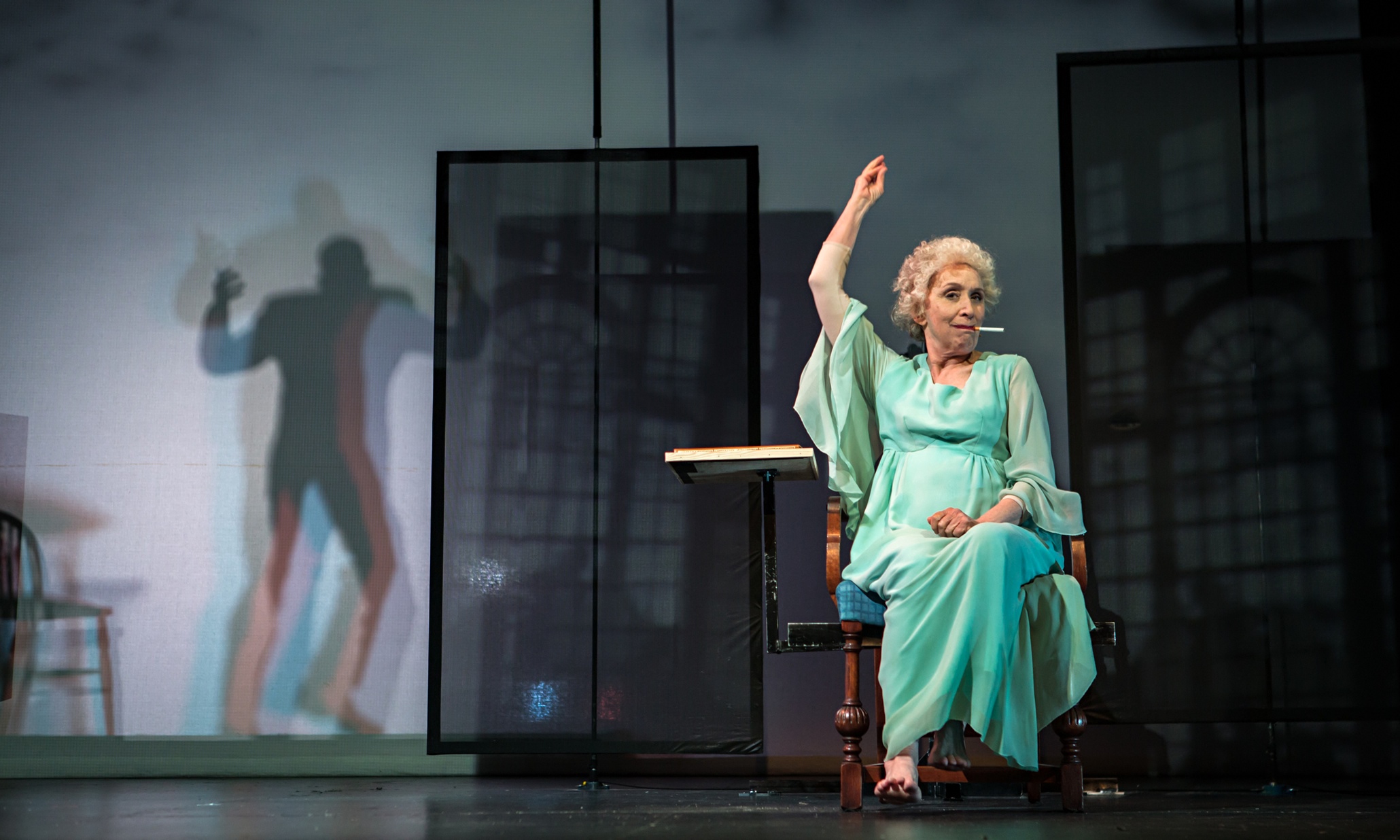
The scenography of the piece is stunning (this is the legendary Mabou Mines, so no surprises there). Lucia, dressed in a duck-egg-blue wafty-sleeved negligee, is seated centre-stage on a large chair, which has a long metal attachment coming out of the back, manipulated by a man in puppeteer blacks and hood, the chair moving up and down and side to side, like a strange cross between a visit to the dentist and a fairground ride. As she speaks of dancing in Paris with Isadora Duncan’s brother Duncan, and falling in love with Samuel Beckett and Alexander Calder, she soars and flies. ‘I was born to dance’ she says, and a crackly recording of I’m Forever Blowing Bubbles plays. She remembers Ireland too – balmy Bray where she kissed a priest and kicked a nun. She was always happy to sit on Ezra Pound’s knee, we learn.

At other points in the piece, the chair is still, and as she speaks of the more troubling aspects of her life – her fights with her mother, the commitment to institutions, the medical investigations and medications – the shadow of a man is seen sitting behind her taking notes. Who is this man, and what does he want of me, she wonders. As she talks, she both demonstrates and explains her strange way with the English language – one of four languages she speaks fluently – which often follows its own trains of thought. ‘Insex – incest – insects’ is one; and, ‘I’d like to be buried not incriminated,’ she announces at another point. Her immediate experience of death is that it is boring. ‘When will it end?’ she says, looking around at the same old hospital room she has been stuck in for so many years whilst alive. Now she’s dead she’s hoping for something better. But for now, she could really do with a cigarette…

The back wall upstage has a number of frames that can revolve, and as still images are projected over the whole stage a kind of 3D video-mapping effect is created. The film imagery echoes the references Lucia makes to cities lived in or visited: Paris, Zurich, Dublin – although often not the glorious sights that she is remembering but the insides of the institutions she has been confined in. Now, we learn, she is in somewhere called St Andrews. She’s been here for 40 years, and now it’s time to go. But who will come to collect her?

The answer, inevitably, is that it will be her father James Joyce. As her body seemingly grows more transparent by the minute (more clever video-mapping as images of Arcadian idylls merge her with the background) she is joined onstage by a debonair man in a cream linen suit and Panama hat. By now, we’ve heard how he had her locked away, spent visiting time with her taking copious notes, then using her portmanteau language as his inspiration in Finnegan’s Wake. But that’s all forgiven and forgotten as the strains of You’re the Cream in My Coffee kick in, and she is united once again with her dear father. All is milk and honey.

Shadowy manly appearances aside, this is mostly a one-woman show delivered with extraordinary skill. It is written and directed by Sharon Fogarty, co-artistic director of Mabou Mines; with Maria Tucci, a very talented actor tackling this meaty role with gusto, as Lucia Joyce; and Paul Kandel as James Joyce, playing his supporting role with panache. The lift-chair is a great device for literal and metaphorical flying, and the visuals are gorgeous. The lighting design is innovative, with the tiny side-lamps in this red plush theatre used cleverly. It is, in essence, a text-based piece with a beautiful design, rather than a piece of visual theatre – the storytelling is carried by the words, and everything else is for the most part illustrative (in the best possible way).

The title of the show refers to the writings that Lucia left behind – usually only of interest to Joyce scholars, used to fill in biographical detail of his life. The play is many things – a harrowing portrait of what it is to be the child of a famous artist, an indictment of the terrible waste of life brought about by incarceration in mental hospitals (she was locked up for 47 years, despite at least one medical opinion stating that she was ‘neurotic not lunatic’), and a criticism of her family – James Joyce in his use of his daughter’s way with words as material to plunder, Nora for her jealous oppression of her daughter’s enthusiasms, and brother Giorgio for his role in having her locked up at the age of 28.

But more than any of those things, it is a joyous celebration of Lucia Joyce, as envisioned by Fogarty – a chain-smoking life-loving multi-lingual dancing girl whose wings were clipped at a tragically young age.


The Spalding Suite. Photo Helen Maybanks

Fuel/Inua Ellams/Benji Reid: The Spalding Suite

A theatre show about boys playing basketball: I’m not drawn to the subject, but I like  previous work by performance poet and writer Inua Ellams and physical theatre director Benji Reid (who haven’t to my knowledge previously collaborated), and I’m interested to see what they’ll do together. I leave the theatre on a high, delighted to have been invited into this world, enriched by the eloquent stories told and the vibrant sounds and images created. We are asked to consider why ‘…those who  kick / are always championed over those who catch, those / who row over those who throw, those who bat / over those who bounce past.’ By the time we leave, we’re all fans of the sport that is shown to be such a life-saver for so many lost boys, summed up beautifully in one of the poems that comes early in the play: ‘This is a about a boy who wished to be a man. / This is about a man who wished to be a king. / This is about a king who wished to be a god. / This is about a god who found his humanity.’ (Poems used in The Spalding Suite are by Inua Ellams, Jacob Sam-La Rose, and Nii Ayikwei Parkes.)

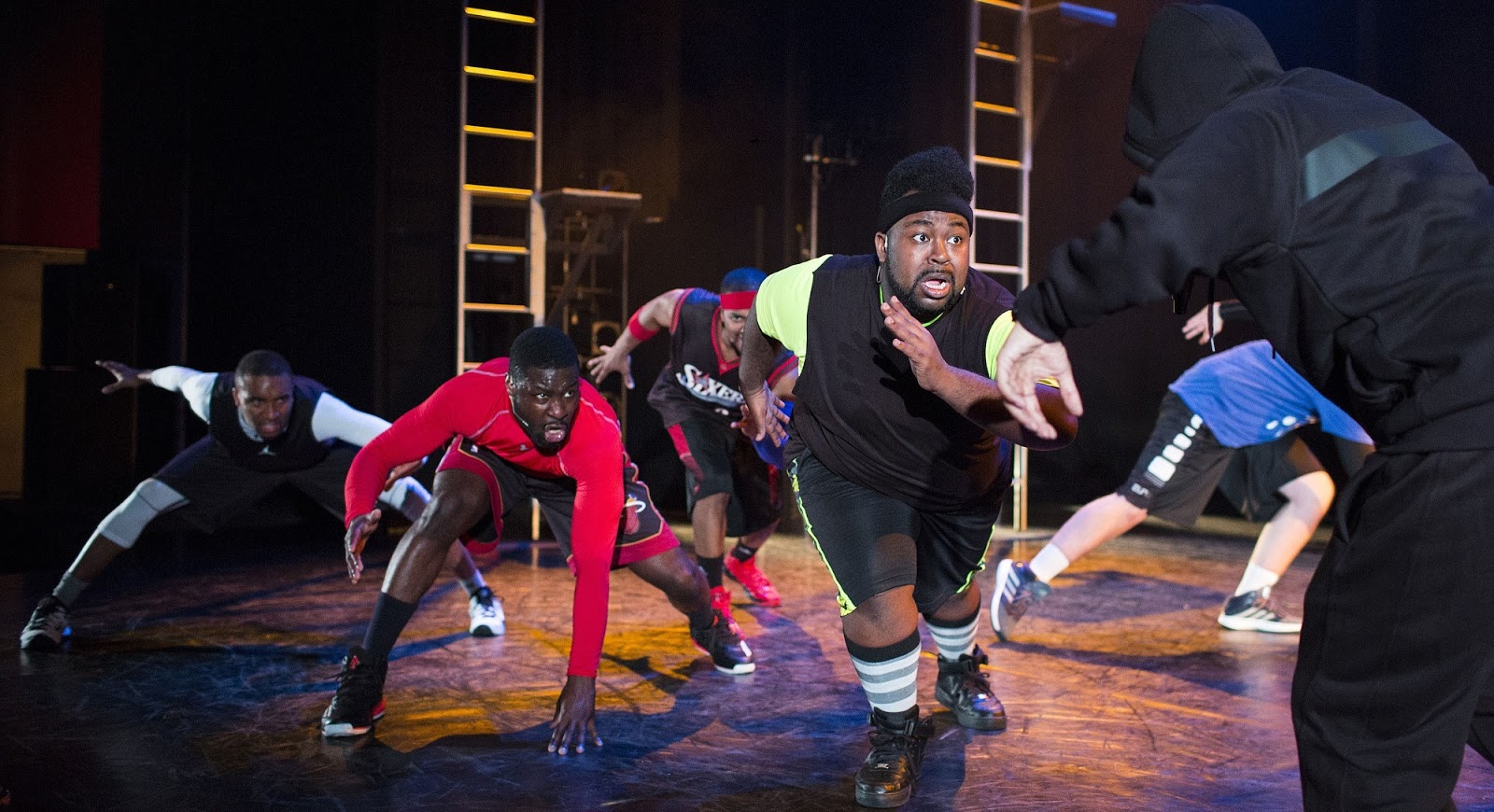
The show gives us five actor-dancers, each portraying a member of a team of guys who play ball together, as well as providing an ensemble of physical action that supports the stories told through verse – yes, just  like Shakespeare! There’s also beatboxer MC Zani, who stands by the side of the stage with his laptop and mic providing an elegant and fresh live-mixed soundscape that integrates his live sound with pre-recorded music/sound by producer Eric Lau. Sometimes Zani enters the stage action. With his black hoodie pulled down to cover his face, he’s a kind of ‘spirit of the game’ presence – there but not there, weaving through the players but staying apart.

The staging is simple but effective, a strong scenographic statement: tall silver ladders to each side, providing a space for players off-stage to become gods of the game, observing the action below; and a big square frame on the back wall, which in one beautiful image provides the setting for a fresco of human figures ‘pinned’ to the wall. A series of different-sized wooden frames, brought on for various scenes, are less effective as their manipulation seems to dominate the stage action, taking too much attention away from the performers. A harness that allows the character at the heart of the story to twist and spin above the ground works well as a symbolic tool for the ‘finding your wings and flying’ central metaphor of the play.

There are no basketball nets, which is a great dramaturgical decision. The focus stays on the words, and the fluid physical dance of the performers, who sometimes have real balls and sometimes weave amazing patterns with imaginary balls (the bounces, boings and creaks of the game sounded by MC Zani).

The five characters win our hearts. Some right from the start: Jay (played by Emmanuel Akwafo) is the clown of the team; the chubby boy who is delighted to get a look-in with the ball, and cheerfully puts up with the wrath of his colleagues when he misses a pass. His rendition of a poem about his mum in a scene called The Summit of Flight is both heartwarming and heartbreaking: ‘Mother means well but I wring the neck / of my water bottle when she yells / Even rugby is better than throwing / a large onion into a basket like a girl / in a market, it’s a game for girls.’ Others, like Yawo (Jason York) are rather more prickly – his troubled past, and mental health issues that manifest as anger, make him less likeable than some other characters, but by the end of the play we’ve seen him rise above his difficult past, finding salvation in the game and with the ‘band of brothers’ who play it.

The other cast members are KM Drew Boateng as natural team leader Archie, Marcquelle Ward as vain but lovable Matt, and George Bray as the ernest outsider, Tom. All six performers are excellent, bringing a range of skills from very different professional backgrounds that include theatre, street dance, beatboxing, musical theatre, sport, and TV. We learn in the post-show discussion that some of them met playing basketball, whilst others had never thrown a ball in their life before auditioning for the show. (Spalding, for the record, is a famous brand of basketball.) The ensemble make a great team – truly a band of brothers.

The Spalding Suite is a great success, being both populist and intelligent. And it’s fantastic to see a packed house with such a diverse audience: basketball and beatboxing fans, performance poetry enthusiasts, and regular Brighton Festival-goer dance and theatre aficionados all equally happy with what’s being presented, giving the cast a well-deserved standing ovation at the end of the show. For just a short time we too had wings and were free to fly.

Burn Baby Burn: Periplum’s 451

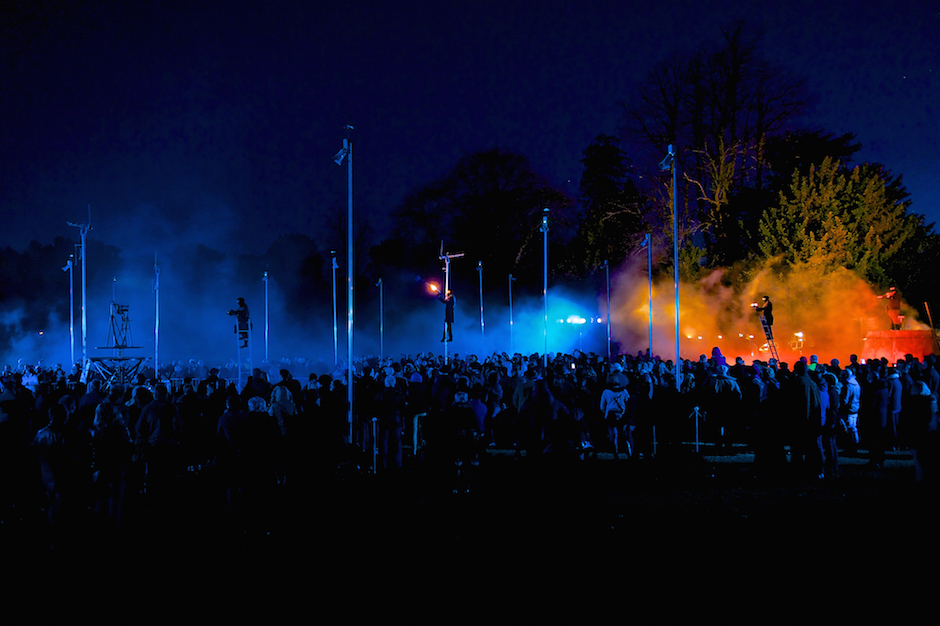
It’s 8.30pm on a cool and breezy, but thankfully dry, evening in April. A crowd is gathering in the grounds of Shaw House in Berkshire. The house itself is an Elizabethan mansion, providing a moody backdrop to the cluster of structures standing in the gardens. Furthest away from the house is a grouping of tall metal scaffolds and ladders, bookended by a couple of wheeled segways (ominous looking giant metal tripods). Nearest to the house is a built structure that looks like a small, many-sided wooden house. In between these two stations is a circle of metal fences containing an odd kind of seat fixed on to a pole, like a one-man fairground ride. All around the space are ‘lamposts’ with tannoy speakers topping them – lots of them, making the space an unnerving futuristic forest of dead white trees. From these posts come constant and relentless announcements, in a babel of languages. English, French, Spanish, German – and perhaps others I can’t identify. As we walk around the space we are subjected to a constant bombardment of sound – the endless announcements mixed with the drone of whirring helicopters and jet planes flying low. The lighting is cold and blue, the atmosphere eery.


Periplum 451 photo 1 Ray Gibson


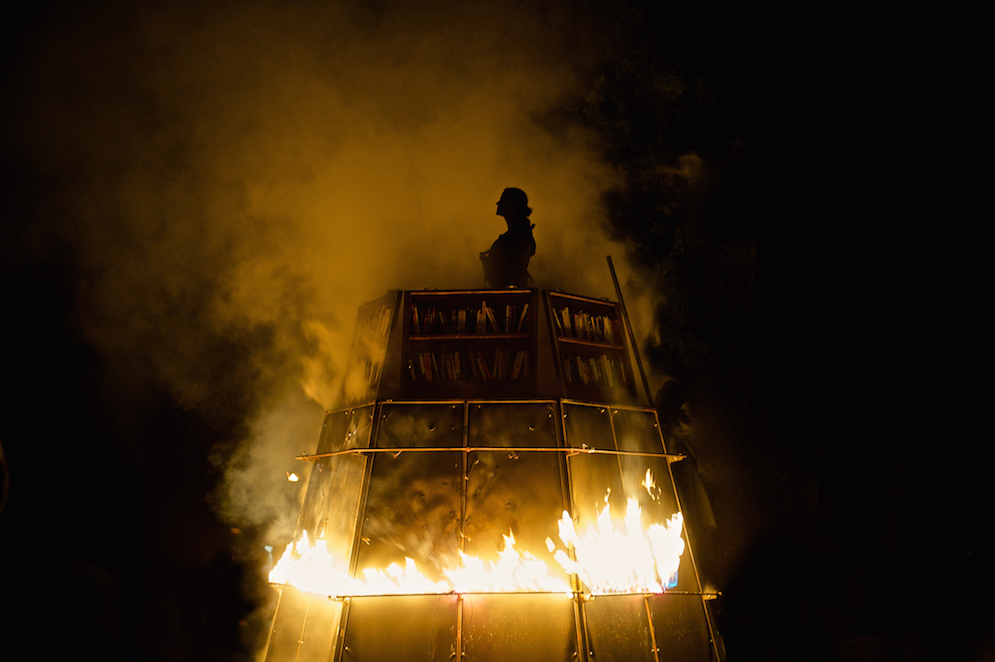
This is the pre-show setting for Periplum’s 451, the company’s latest large-scale outdoor show, created in collaboration with the Corn Exchange and New Greenham Arts in Newbury – hence this preview show in Berkshire, just down the road from the 101 Creation Centre at Greenham Common, where the show was made and rehearsed. It is inspired by Ray Bradbury’s dystopian near-future novel, Fahrenheit 451, which was published in 1953 (just five years after George Orwell’s 1984). In the novel, firemen are no longer needed to put out house fires, as technology has evolved to make houses fireproof. Instead, they are employed to start fires with kerosene in their hoses in place of water. They are called upon to seek out and destroy the agents of rebellion – those few people left in this disturbed world who are free-thinkers, preferring the now-banned books to the constant wall-to-wall onslaught of drivel dished out to them by an ever-encroaching media. (Yes, it’s prophetic, although like all such dystopias it is as much about the society the writer lives in – in this case consumerist 1950s America – as the future.) Occasionally, a fireman wavers in his resolve and finds himself stealing a book to read rather than burning it. Such a man is Guy Montag. Although most then see the error of their ways, Fireman Montag realises that there is no going back…

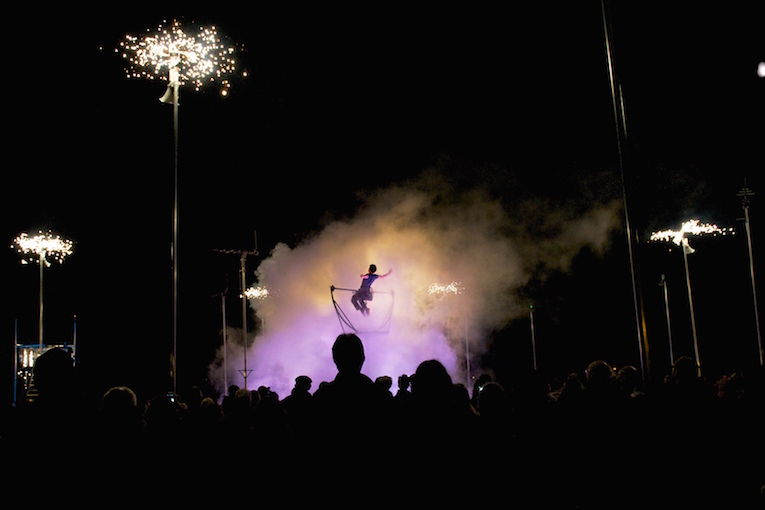
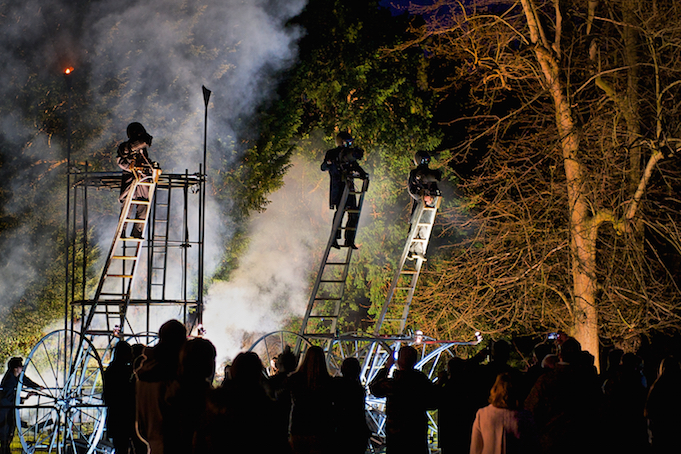
The show plays out with the expected flurry of fiery action, as resisters are rounded up and literary masterpieces destroyed – in this world, anything other than an instruction manual is seen as subversive. The bible, fiction, poetry, philosophy – it is all denounced as dangerous nonsense. A particularly beautiful and disturbing recurring motif in the show is the fluttering of book leaves in the night air. There’s plenty of noise and bluster as fire-engines (those three-wheeled segways) roar through the crowd and blazing flame-throwers apparently lay to waste undesirable printed matter and (even more disturbingly) people, including a brave woman who refuses to leave her precious books and thus burns with them.

What I’m pleased to see, though, is that the many quieter moments of the story are given attention, in darker, slower scenes in the show that contrast well with the bombastic burnings. Much of Bradbury’s novel features scenes of Montag walking alone in dark streets, or sitting quietly at home ignoring the constant onslaught of soap operas and government-controlled news broadcasts – desperately seeking peace, and trying to learn how to think for himself. That central ‘seat’ structure becomes Montag’s literal and metaphorical home, and the way it is used portrays the journey he takes: from frozen resistance, to disturbed confusion, to active rejection of the system. The inner voice – and the power of words (thought, written, spoken) over relentless screen images – is a crucial element of Fahrenheit 451, and that is reflected in this production.


Periplum 451 photo 4 Ray Ginson


This is the first show of a major outdoor work using a very complex array of technical equipment, featuring demanding physical performance on and off the equipment, live and recorded music and text, an inventive lighting and sound design, and pyrotechnics of all sorts, and the cast have had only limited time to work with this complexity of structures and forms – so there is inevitably something of a tentative feel about some scenes. But this of course will change as the show tours, and it is necessary to see it as what it is – a preview of a piece of work that is still evolving. It is worth acknowledging here that major large-scale outdoor shows of this sort can’t actually be fully realised until show time – partly because of the cost of pyrotechnic and other materials, and partly because the way that the audience moves in the space and responds to the cast and equipment helps determines the pace and rhythm of the show. The previous night had seen a technical ‘dress rehearsal’ in front of an invited audience – tonight is the first public outing. And although there is work still to be done, what we see presented here is a fantastic achievement – a rich mix of spectacular visual imagery, stunning sound installation, and thought-provoking storytelling.

So what has been the process bringing us to this point?

451 is an idea that has been incubating for quite a while. Periplum’s co-directors Claire Raftery and Damian Wright tell me that producer Simon Chatterton first approached them with the idea in 2009, as it had long been an idea of his that an outdoor version of Bradbury’s novel would be an interesting project. They agreed that the book had elements that would make a good visual outdoor show, and enough prophetic content about modern-day living to interest them.

The company have built their reputation by presenting a broad variety of work within the context of ‘outdoor arts’ (essentially, work presented free to audience in a public space). As with previous large-scale shows Arquiem and The Bell, in developing 451 Periplum have resisted the notion that work presented outdoors has to be mere entertainment.

‘We firmly believe that audiences do not need to be spoon-fed easy narratives all of the time, and that a rich variation of content and artforms can easily be presented outdoors’ says Claire. ‘Restrictions to content on the assumption that simple narrative is the only thing that works, or is allowed to work, means that artists are restricted to basing works solely on simplistic subject matter. Restrictions like these do not allow the huge variation in content that you normally see across the indoor arts. If we are free to take chances and to stretch the boundaries, audiences may indeed like to be challenged a bit more.’

For this new show, the company worked in a new way, in collaboration with Corn Exchange: ‘We used the book as a starting point to create a visual storyboard for the outdoor show. We don’t usually work with storyboards, as we usually create from multi-sensory worlds, where sound and atmosphere work at the same time as the visual element.’ In this case, storyboarded ideas were then shared with their production collaborators, who took on responsibilities that Periplum usually manage internally themselves.


Periplum 451 photo 2 by Ray Gibson


I ask Claire and Damian about the creation of the structures that are such an intrinsic part of the work, and learn that some of the set is adapted from previous Periplum shows (made by Mike Pattison), and some designed by Martin West, resident maker at 101. ‘The first image I brought to Martin was of the North Korean Police on segways’ says Claire.’The image showed man and machine merging – I was interested in how this would have looked to someone 50 years ago. The idea came to use old-style and modern together – so Martin designed and made three giant segway fire engines.’ Apparently these were originally motorised and operated by one person, but during the development stage they removed the motorisation. Which is probably all for the good as they are quite frightening enough hurtling through the space without motors!

Another feature of the set is the aerial ‘manlift’ in the central circle, which is mostly Montag’s terrain. ‘I originally drew a chair which raised up into the air on a long pole (mirroring the fire-fighters’ poles) – to show the isolation of each person in their home’ says Claire. ‘When the central character (renegade fireman Montag) reads for the first time, he would physically spin in mid-air to show the effect the words were having on him.’

After a long and troubled search, they found the ideal man-lift sitting in a Lewes makers’ workshop and this is now hired from another company. The chair feature was made by Tarn Aitken who works with No Fit State.

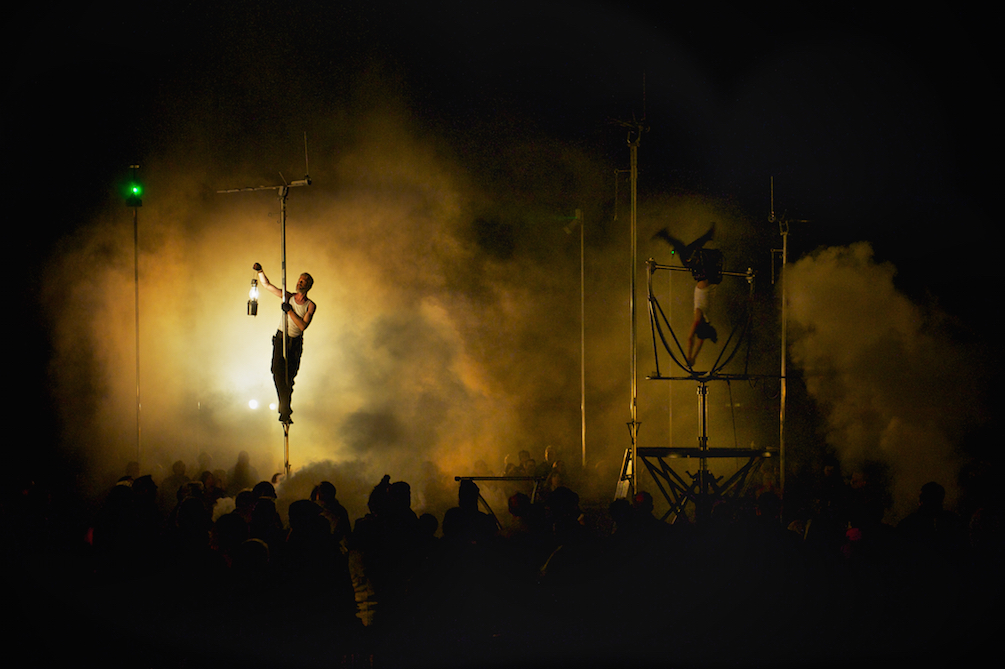
The climbing poles are a Periplum obsession, and have been used in their work in different forms for many years now. ‘We drew out a city landscape of poles, drawn from the electricity pylons they have across the river there’ says Claire. ‘Originally the idea was to have performers trapped on the wires between, but we have never had access to the kind of budget that would allow that! We have for many years wanted to use a series of poles for performers to create an immersive city landscape. 451 came along and the idea fit the narrative. The watchtower or fire station is designed by Mike Pattison for another Periplum show, and for this we added 2 firemen’s poles to slide down. We couldn’t resist that!’


Periplum 451 photo 5 Ray Gibson


Claire then goes on to discuss the Tannoy system used in the show: ‘We have been pushing experimentation with multi-sound systems and split harmonics for a few years and the Tannoy design in 451 is an extension of this – they’re spread out amongst the audience, another way of creating an immersive space in the challenging outdoors, and a risk for us to attempt a merger of sound installation with large-scale narrative work. These were made by Graeme Calvert.’

I’m interested to know how Damian’s process as writer has been on this show – the first time they’ve had a novel as a starting point (although in other work, texts in other forms, such as poems and song lyrics, have been an inspiration).

Damian says: ‘As with most of our work, in 451 there’s a lot of cross-over between Claire and myself in the writing and direction roles. Claire is very good at giving a motif or a concept for a speech. I come into a rehearsal process with lots of material, and this gets adapted, dropped, added to as the piece comes into reality. The main challenge and joy with exploring 451 was to make it resonate for people today, and there’s so much in the book that’s predictive of our modern, interactive world – as individuals and as a social collective we’ve chosen this digital hall of mirrors while other forces cook up chaos and strange order, adding to the confusion of our over-stimulated lives. By writing for outdoor arts, we’re trying to relate to the audience directly and in the moment; to bring them into this reality, but also to provoke questions about realities in their own lives.’

Claire corroborates this view of the writing/directing/designing process as intertwined: ‘Periplum itself is a series of collaborations, starting with Damian and myself collaborating at the heart of the company’ she says. ‘We create with individual makers, designers, composers, musicians, performers, and the pyrotechnic company Lightfires. We were grateful to be able to continue these trusted collaborations into the making of 451, and to make a few new ones.’

Although the showing in Berkshire is the culmination of one stage of this precious collaboration, in another way it is the start of the next phase. The elements are in place – now comes the bedding in. I’m excited to have witnessed this crucial moment in the development of the show. It’s an honour to be at any birth – and the birth of a major new outdoor arts show by Periplum is a fantastic addition to the world.

All photos are by Ray Gibson.

Footnotes:

Periplum’s 451 is co-produced by Corn Exchange Newbury and New Greenham Arts.

It is funded by Arts Council England, and built at 101 Outdoor Arts Creation Space. The show was commissioned by Without Walls Street Arts Consortium, Brighton Festival, Greenwich & Docklands Festival, and Norfolk & Norwich Festival.

451 will appear at:

Brighton Festival, Preston Barracks, 16 May 2015

Norfolk & Norwich Festival, 22 May 2015

Greenwich & Docklands International Festival, 27 June 2015

Stockton International Riverside Festival, 31 July 2015

Credits:

Design, adaptation, script and direction –Periplum (Claire Raftery & Damian Wright)

Music Composition – Mike Simmonds & Barry Han

Pyrotechnics by Lightfires

Set design engineering – Martin West, Mike Pattison, Tarn Aitken

Sound design – Aidan O Brien

Tannoy design – Graham Calvert

Performed by:

Danielle Corbishley 

Milo Foster-Prior

Steven Grainger

Florencia Leon

Ben Phillips

Mike Simmonds

Ali Sparror

Will Strange

 Voiceover: Aurelian Koch

Penny Arcade. Photo Jasmine Hirst

Penny Arcade: The Girl Who Knew Too Much

Penny Arcade is sitting on the edge of the stage as we enter, dressed in a short pleated skirt and T-shirt, dark tights and shiny black ankle boots, her magenta-coloured hair glowing under the lights. She swings her legs against the stage front, smiles at people she knows, returns greetings, waits for us all to get settled. Then it’s up and away and straight into the dominant mode of the evening – a confessional autobiographical monologue delivered with passionate force from the very front of the stage.

For those of us who know and love her, the stories are familiar. For those new to her, they’re a revelation. Either way, it’s rivetting stuff. So here in precis: a working-class small-town American upbringing in an immigrant Italian family, a life saved by the friendship of drag queens, a subsequent reign as the queen of New York City’s queer performance scene. Talking of her family’s arrival in the USA, she says, These people weren’t looking to broaden their horizons – these people HAD NO FOOD. Her early life as a daughter of low-paid manual labourers was pretty hellish, just trying to survive in a family in which girls were not supposed to be smart or talk back, they were supposed to just do as they were told. Wash this, clean that, shut your face. By age 13, she was in a borstal. On her weekend trips back home, she climbed out of her bedroom window and went off partying with a car full of drag queens. Life was bleak, but they wore glitter. One day she headed out of town with them and never came back…

The narrative skips all the stuff about her time at Andy Warhol’s Factory and the Playhouse of the Ridiculous in the 1960s and 1970s, or performing in Femme Fatale (where she shared a stage with Wayne County and Patti Smith) and only briefly mentions her seminal show, Bitch! Dyke! Faghag! Whore! which toured the world in the 1980s, and has recently been revived. She’s keen to move on to talking about one of her key themes for the evening: hyper-gentrification. She is livid about the damage done to her beloved Lower East Side (Manhattan) over the past quarter-century by the destruction of slum housing and subsequent moving out of the hobos and junkies and whores and rent boys to make way for the 2,000 dollar a month studios, the chi chi shops, and the pricey cappuccino bars. She tells us how lucky we are to live here in Brighton – but warns us that we are only an hour away from London, and look what’s happening there. Don’t we all know it…

Her other running theme for the night is age and ageing – and specifically how good it is to be over 50 (she’s 65, she tells us proudly), because there is no longer any need to be trapped by the failings of your past. And anyone who at 50 is still moaning that their life has been ruined by poverty, or a violent family, or a sexual molester, or whatever – well, get over yourself. If someone else were to say this, we’d perhaps see it as harsh or critical. But this is a girl who was beaten and molested and brought up poor and all the rest. The message here is: Look at me. Be a survivor not a victim. Don’t whinge. Stand up for yourself. Fight back.

So this is one big block of her onstage time this evening, the heart of The Girl Who Knew Too Much, all very warmly received by a packed house at the Marlborough, home of the Pink Fringe. The other block of material is in a different performance mode: a trio of character portraits from that lost Manhattan. The writing is good and Penny Arcade is a seasoned performer, but some of us are so enthralled by her personal stories that the sudden shift into dramatic set-pieces feels odd, as we suddenly seem to be watching a different show – one in which wigs and props and changing accents are the tools of the trade rather than direct address to the audience.

First up is the vignette of an ageing drag queen called Margot, retelling tales of her relationship with Harlem’s top drug dealer. There are some lovely moments – such as the drag queen slapping down the dealer for calling himself a ‘nigger’, and then the whole awkward moment in the bedroom when Margot’s masculine parts are tucked away neatly in her panty girdle, which gets enthusiastically whipped off. But as a whole the character doesn’t feel perfectly inhabited, on this occasion anyway. The second one is stronger: Penny’s Aunt Lucy, who she has hardly ever spent time with, sitting in her armchair shouting orders and enjoying the delights of a tub of Cool Whip. ‘Look at this – zero fat, zero protein, zero everything!’. Finally to the best of the three, a street-dwelling junkie girl, whose ticks and scratches and stutters and enthusiastic desperation Penny catches perfectly.

The end of the show sees the wigs off, and Ms Arcade returning to herself, delighting us with her witty, acerbic, astute commentaries on contemporary life, and her debunking of sacred cows. Inevitably, there’s warm appreciation from the audience at the end of the show. This is Penny Arcade’s first appearance in Brighton, and she’s made her mark – all praise to The Marlborough for bringing off this coup. Here’s to the next time…

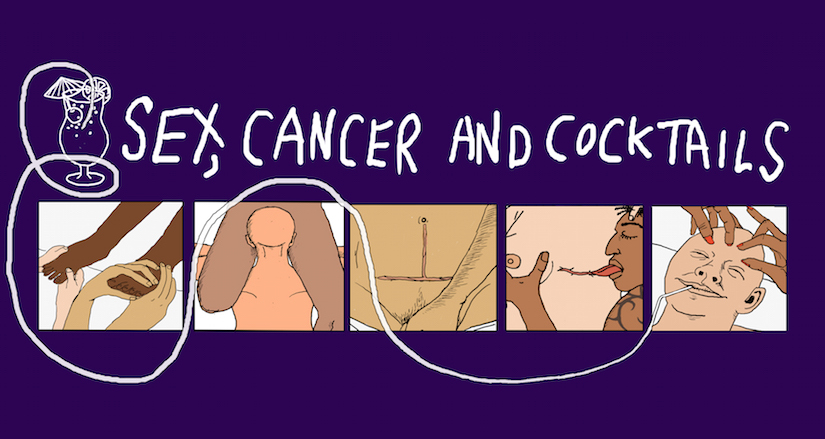
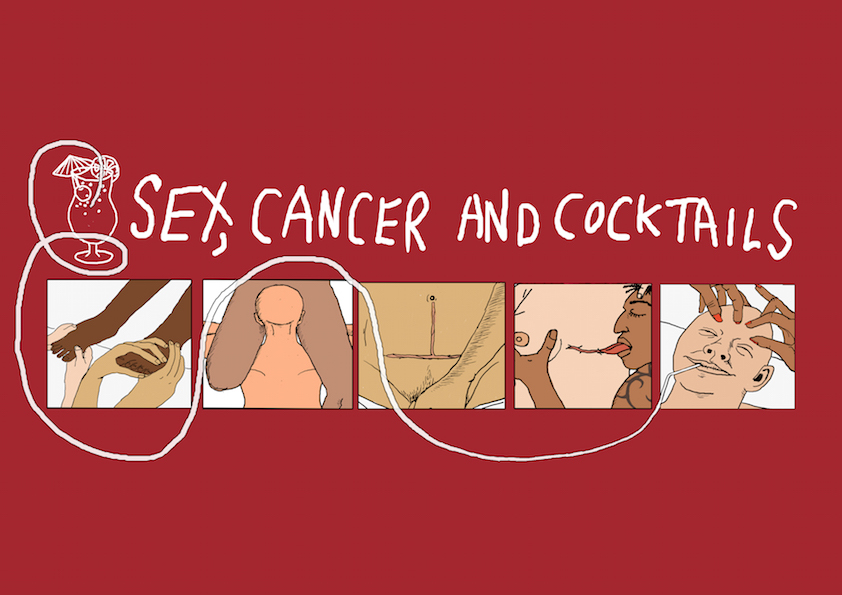
Brain Lobel: Sex, Cancer and Cocktails. Illustration by James Barker

Sex, Cancer and Cocktails – Points of View

Dorothy Max Prior weaves together reflections from Carran Waterfield in Manchester, Lisa Wolfe in Brighton, and artist/facilitator Brian Lobel to Sex, Cancer and Cocktails, an ‘in-home conversation about doing it during treatment’ which was presented at Sick! Festival 2015. 

SICK! Festival, which for its 2015 incarnation ran in both Brighton and Manchester, is dedicated to ‘revealing and debating our most urgent physical, mental and social challenges’; exploring the medical, mental and social challenges of life and death and how we survive them (or don’t).’ The festival seeks out new ways of talking about and dealing with the bad times that are ‘unflinching, informed, irreverent and humane’.

So that’s the theory: how was it in practice? You’ll have noted a number of reviews from the festival posted here on Total Theatre, as well as Shame Shame Shame, a feature reflecting on the two shows that opened the Brighton leg of Sick! 2015 – Peter Ampe’s So You Can Feel and Christopher Green’s Prurience.

Also presented in Sick! was Brian Lobel’s Sex, Cancer and Cocktails, which has the sub-title ‘an in-home conversation about doing it during treatment…’ Exploring the unlikely pairing of cancer and pleasure, Sex, Cancer and Cocktails promised ‘a performance event mixing Sex Toy and Tupperware parties with expert information, intimate sharings and a radical perspective on illness and feeling (or not feeling) sexy.’ The show was presented in both Manchester and Brighton, each time in ‘a real person’s home’. As this was a show with a difference, and as reviewing something that involves real people sharing true life stories around an oft-distressing subject, we decided to try to find a different way to report on it. Total Theatre thought it would be interesting to get two writers’ points of view, one attending the Manchester show, and one seeing the piece a week later in Brighton…

But back first of all to Prurience. Christopher Green’s show courted controversy by playing with the format of a forum or self-help group that was providing a means of exploring health issues – in this case, addiction. Addiction to porn, specifically – but the artists’ interest was broader, reflecting on addiction generally; in the issue of the medicalisation of sexual behaviour (asking the question: is there really a problem with people watching porn?); and in the growing epidemic of self-help groups that don’t necessarily provide the right sort of help. The show was a clever blend of the real and the fictional – but although it pushed the boundaries of theatre to their furthest limits, it was undeniable a theatre show. It is interesting to note that during the post-show discussion, some of the audience members attending the Prurience showing in Brighton felt a little odd about discovering the degree of theatricality in the show.
Brain Lobel: Sex, Cancer and Cocktails. Illustration by James Barker

Illustration by James Barker


In contrast, the lack of ‘theatricality’ in Sex, Cancer and Cocktails was interrogated by our Manchester writer Carran Waterfield. Let’s see what she had to say about her witnessing of the Manchester showing:

 ‘Sex, Cancer and Cocktails is presented by performer Brian Lobel in the guise of a house party. It joins the myriad of performance-lectures that Wellcome Trust public engagement grants have been generating in recent years, demonstrating how academic research and expert witnessing can sit comfortably and informatively alongside performance. Many shows now include the expert alongside the artist and some have been very successful with a seamless integration of the two. However, I wonder if some artists engaging with this genre rely wholly on the expert’s performance at the expense of some other magic that may elude them, thus side-lining the performer? Surely performance and lecture need some kind of mutual integration? This is where I feel Sex, Cancer and Cocktails falls short of its potential.

So without throwing the baby out with the bathwater, how can expert knowledge be written into performance effectively without losing the value of making a show for its own sake? The tension between performer expertise and specialist expertise is something that needs expert framing, perhaps directorial framing, for the successful tripartite marriage of audience interaction, performance content and academic contributions.

Those attending the event were mailed instructions, which involved seeking out a mystery venue, the location of which was embargoed until the day before the event. It turned out to be the front lounge of a gorgeously spacious house in a Manchester suburb. Part of the contract with the audience to secure admission (which was free) was by detailing experience of a personal connection with cancer by email. Audience participation is ‘gift aided’ in this way and becomes a vital contribution to making the evening work.

I was one of the first to arrive; bad thing to do at a party, but Brian is a very generous host. He offered me a Blood Drop Welcoming Shot – the first of three cocktails specifically commissioned for the event. Then he asked me to write a question I might want to ask about cancer and sex on a postcard and put it in his make-shift pick-n-mix cardboard box. It was anonymous, he said. The second postcard was for other questions I might have throughout the evening. This process was the first hint that the 45 minutes was going to be much longer than advertised. More people arrived and Brian repeated the interaction demonstrating all the anxiety of first-night nerves: constantly repeating himself, excitedly setting up more make-shift seats now doubling up as tables dotted with donated food offerings still in packets. To add to the coerced relaxation, other people helped him while he offered more drinks from plastic bottles and half-empty wine bottles and kept disappearing into the kitchen. In my experience at parties the kitchen is where the action is. He kept his guest presenters there while we were sitting in the lounge.

Brian tripped in and out of the lounge backwards and forwards and backwards again urging us to relax, assuring us that the fuzziness (referring to the alcohol and I guess the drugs for the cancer) would work its magic on us. He told us how excited he was that the notion of sex, cocktails and cancer should be given this opportunity to be laced together. With this he seemed to be winding into the event proper and finally, with a kind of flat fanfare, introduced his speakers for the evening who entered the lounge from the kitchen and to whom he capitulated for the rest of the evening more or less.

With their entrance came the intended start of the performance, some 30 minutes into the event. We were to ‘lucky dip’ our questions and read them aloud telling our names without identifying ourselves with the actual question we were reading. I suppose we became a self-help group through this exercise, while the experts sat almost opposite us as in a counselling session.

My lucky dip was: ‘How can you have energy left over for sex when your energy goes towards survival and your body is undergoing the upheaval of chemotherapy?’

Then, the show-and-tell proceeded with the presentations. First, Beth McCann, an Adolescent Haematology Clinical Nurse Specialist, gave a warm and engaging first-hand account of sex counselling sessions with young people, including the tensions and anxieties facing their parents, which was informative and well targeted to the age group.  This was preceded by a detailed case study narrative given by Dr. Ali Mears, a Consultant Physician at St Mary’s Hospital, London.

Time for more cocktails: Needles and Spice (Rosemary Cordial, Prosecco and Vodka with Edible Glitter and Water), the effect of which was experienced during the next presentation from Professor Jackie Stacey from the Centre for the Study of Sexuality and Culture, University of Manchester. She gave a beautifully written autobiographical narrative outlining her ageing journey with cancer, written especially for the event.

The poignancy was broken as the cocktail took effect, with our host presenting himself as a blindfolded guinea pig for the concluding star turn, a Sex Toy Tupperware Party, presented by the charismatic sex-toy specialist Renée Denyer  from Sh! From this point, most subtly, all the participants, academics and ‘lay people’, entered a giggling performance mode as Renée as shared her wares from a baby’s high chair in equally makeshift fashion; but Renée had a train to catch and the bubble was burst with her hasty departure, and the self-help continued with an earnest Q&A.

I left two hours later reflecting on an experiment in its early stages that may morph into something quite special to go beyond its reliance on a non-paying audience. I also wondered about the experts unwittingly clocking up public engagement outputs for their respective organisations.

But mostly I mused on where the performer is placed in these contexts? In morphing expert witness with camp bacchanal, there was potential to recreate the tradition of the drunken symposium. But in this case, were we in danger of side-lining, literally masking, the acknowledged  ‘expert’-performer? I wondered about Lobel’s journey now towards mutually enriching performance moments as the piece develops.”
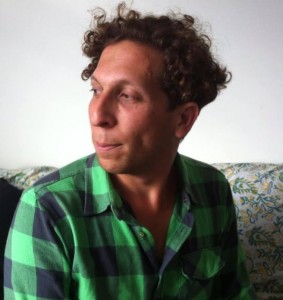
Brian Lobel

Brian Lobel


Without showing Brian Lobel either writers’ response to his show, I asked him if he had any reflection, as artist/creator and facilitator, on the difference between the Manchester and Brighton shows, and he had this to say:

“The major difference in the two shows was my personal time management: in Manchester times ran over significantly, and in Brighton things were much tighter, from a facilitation angle. I believe this did affect the overall performance in the space on the evening itself, but not in the overall impact of the piece. Because we ran over in Manchester, I followed up the next day with an email with further questions for panelists, and got lots of responses. Many had things they wanted to feed back, mostly very positive, and also a few did have burning questions they wished to ask the panelists, which they did via email. While it made the Manchester gig a bit less full-circle and warm and fuzzy on the evening, I feel very confident that people had a chance to engage fully.

The second time we created Sex, Cancer and Cocktails in Brighton it was very smooth, timings-wise. Because of this, most people were able to express themselves in the space. The same offer was made to audience members for follow up, but less took up this offer in Brighton – it appeared that most people got what they needed from the two hours.

If I could do it again, I would have loved to be stricter with times in Manchester, and to realise that, although people don’t come early to parties, they come early to performances… And this was a performance not a party.”

I did prime Brian a little bit on the question of ‘real life’ versus ‘performance’, mentioning that this had been raised as an issue, and he had this to say:

“Regarding the realness of the material, I’m not too worried about this critique. My performance work is currently about trying new forms of engagement which put people in unique situations and hopefully support them to learn, question, or participate in a new way. We ask people to contribute a thought about their relationship to cancer or sex before getting to the show in hopes of prepping them to participate. For these shows – unlike my other works – it is for a very particular audience member who I care to perform for/create with. I hope the performance, therefore, is in the rare gathering of people around a rare topic, a topic which lacks significant public representation (artistically as well as otherwise) but affects many.”
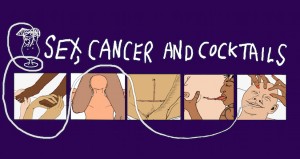
Brain Lobel: Sex, Cancer and Cocktails. Illustration by James Barker
Illustration by James Barker


Let’s now see what Lisa Wolfe had to say about the show when it was presented a week or so later, in Brighton:

“We are gathered here together this evening to share and interrogate, to break taboos, to learn from experts and each from other. To drink, to laugh, to think, then drink some more. Bring your own nibbles.

It’s Tuesday evening and in a womb-coloured lounge in Brighton’s gay village sit thirty people – a mix of ages, gender and nationalities. Created and hosted by Brian Lobel, this curious, hybrid event comprises three sections, led by three key speakers, with a cocktail refresher in-between.

We hear sobering statistics and practicalities about cancer and sex from the eloquent Dr Ali Mears, Consultant Physician at St Mary’s Hospital and a key Sick! Festival contributor. Beth McCann (Adolescent Haematology Clinical Nurse Specialist) shares the advice she gives to young people undergoing cancer treatment, mainly about what not to do. ‘There’s chemo in cum’ says Beth, softly. Then Jessica Everitt from Lust Stores, who clearly enjoys her job, passes around some ‘intimate’ items explaining how they can be used, with particular reference to people who have undergone surgery or have a low sex drive. They are not currently available on the NHS, to the disappointment of some present. Come on Miliband – seize the day!

At the heart of the evening is Brian reading his sex and cancer timeline. It’s a funny, poignant and beautifully crafted five minutes of prose. Most of Brian’s work is based on his own experience, and whilst that can cloy, he uses his natural warmth and wit to draw an audience in. He is generous too, with his body and his spirit, collaborating broadly. Fun with Cancer Patients is one such project, and his show An Appreciation invited bed-side visitors (such as me) to fondle his remaining testicle wearing a variety of gloves (I got the Marigolds). Brian loves to talk about his body and he wants more people to talk about theirs – he wants us to be uncomfortable together.

But tonight there is no requirement for guests to open up about themselves or their experience to the room. We are asked to write a question about sex and/or cancer that we are too scared to ask and let someone else read it aloud, with little follow-up. We are encouraged to ask questions of the professionals and of each other. Over the course of two hours, lubricated by more specially designed cocktails, guests become friends and private becomes more public. A young woman tells me she is here because her nan, who raised her, died of ovarian cancer and no-one in her family will talk about it. Her story so mirrors mine it is humbling – twenty years on and similar attitudes prevail.

I suspect we all learn something, of sex and of cancer, of a stranger’s tale, or simply how many pistachio nuts one can eat without gagging. As a part of Sick! Festival and supported by The Wellcome Collection’s Sexology Season, the event makes sense; it’s well-intended, open-hearted and not afraid to talk dirty.”

As someone who didn’t see the show, I’m now trying to evaluate the issues raised from hearing other people’s points of view. The differences between Carran and Lisa’s reports tell a story of how different any show – but particularly a show relying so heavily on audience for the creation of the content – can be from one showing to another. Reflecting on what all three, both writers and the artist, have to say, shows us what a massive difference even a few days makes in the creation of work – and how work of this nature has to be ‘rehearsed’ with a live audience. The ‘script’ and dramaturgical structure can be planned beforehand, but you have to do it to know how to do it.

It also shows me something that as a writer and an editor I’ve long known: that a ‘review’ is ultimately a subjective response, no matter how it is framed. Both Carran and Lisa are highly experienced writers who are also (like all Total Theatre’s writers) directly involved and engaged with the making of performance work. Carran’s concerns go beyond the issues of timing and structure that are so obviously teething problems in the Manchester showing – she wonders about the very nature of the piece, in which there is little if any ‘performance’ by ‘performers’. This isn’t an issue for Lisa, who feels that the format is a success when witnessing the piece in Brighton. Neither is right or wrong – it’s just a different perspective. A reminder that ultimately any report-back on a performance is just that – one perspective.

Footnote:

Sex, Cancer and Cocktails was presented at Sick! Festival in Manchester and Brighton, supported by The Wellcome Collection as part of the Sexology Season.

Carran Waterfield saw the show at a Manchester home on 9 March 2015.

Lisa Wolfe saw it presented in a Brighton home on 18 March 2015.

Brian Lobel is a Wellcome Trust Public Engagement Fellow.

He was joined for Sex, Cancer and Cocktails by:

Dr. Ali Mears, Consultant Physician at St. Mary’s Hospital, Imperial College Healthcare NHS

Prof. Jackie Stacey, Centre for the Study of Sexuality & Culture, University of Manchester

Beth McCann, Adolescent Clinical Nurse Specialist.

For more on Sick! Festival, see http://www.sickfestival.com/

For more about Brian Lobel’s work, see www.blobelwarming.com

Featured image credit (top): illustration by James Barker