Author Archives: Lisa Wolfe

Lisa Wolfe

About Lisa Wolfe

Lisa Wolfe is a freelance theatre producer and project manager of contemporary small-scale work. Companies and people she has supported include: Thirunarayan Productions, A&E Comedy, Three Score Dance, Pocket Epics, Jennifer Irons, Tim Crouch, Liz Aggiss, Sue MacLaine, Spymonkey and many more. Lisa was Marketing Manager at Brighton Dome and Festival (1989-2001) and has also worked for South East Dance, Chichester Festival Theatre and learning disability arts charity Carousel. She is an occasional performer and installation maker in collaboration with other artists, and is a Trustee at Brighton Open Air Theatre.

Silvia Gribaudi: A Corpo Libero

Silvia Gribaudi: A Corpo Libero

Silvia Gribaudi: A Corpo Libero

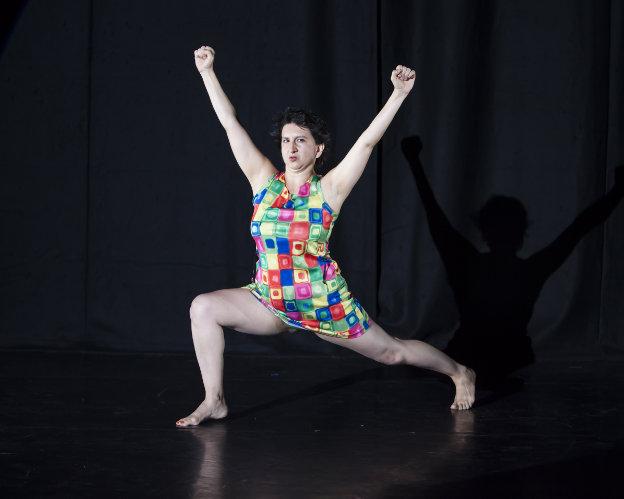
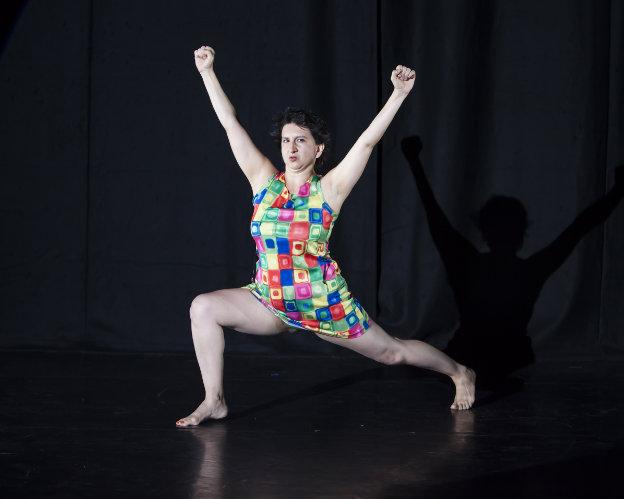
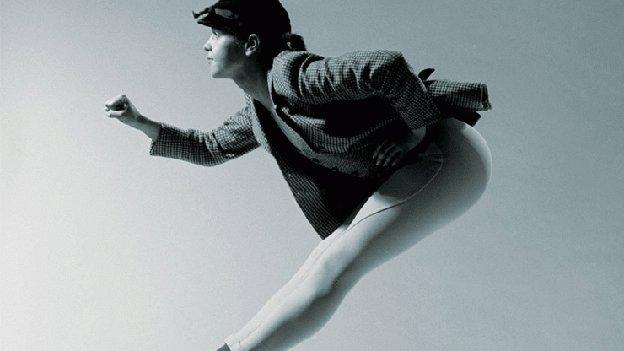
Silvia appears at the back of the stage, against the blacks, head down, tugging at the hem of her brightly coloured, tight fitting, slinky little dress. Too little, perhaps, for her generous frame and a cause of consternation as she ripples her body through a dance that is anything but routine.

She moves effortlessly and unconventionally, making limbs fly and land with a combination of light and weight, holding poses, dancing with her face and her fingertips. Subtle and gestural one moment, brash and knowing the next.

Playing with the spotlight she becomes more grand and in control as the light and the music get bigger. Silvia performs to us, for us.

To Iggy Pop’s The Passenger she does a wonderfully loose solo with her hair quiffed up. The music morphs into opera and the moment of ultimate freedom. Off comes the constricting garment to reveal bright green underwear; the dress gets wrapped around the head turban style. Now Silvia is free to be herself, to acknowledge her fabulous body with a proper belly dance and everything shaking. A Corpo Libero is a glorious and life affirming piece; short in length but big in heart. Everything is pitch perfect – lighting, sound, staging and choreography. A joy and a gem.

www.silviagribaudi.com

Tara Cheyenne Performance: bANGER

Tara Cheyenne Performance: bANGER

Tara Cheyenne Performance: bANGER

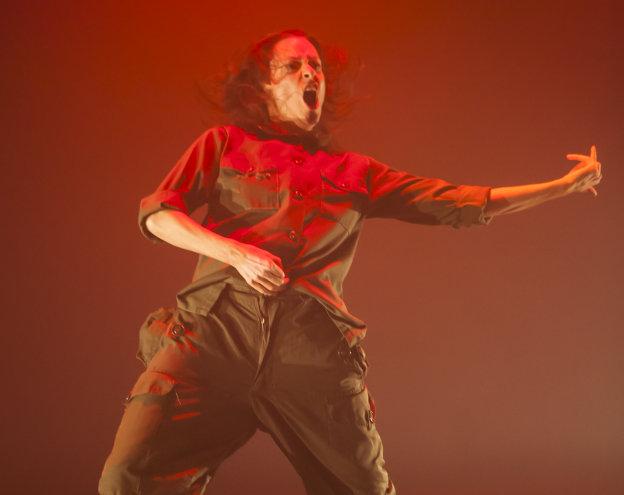
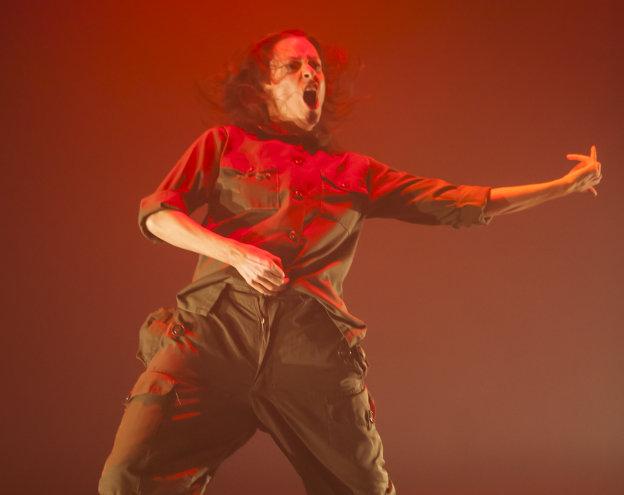
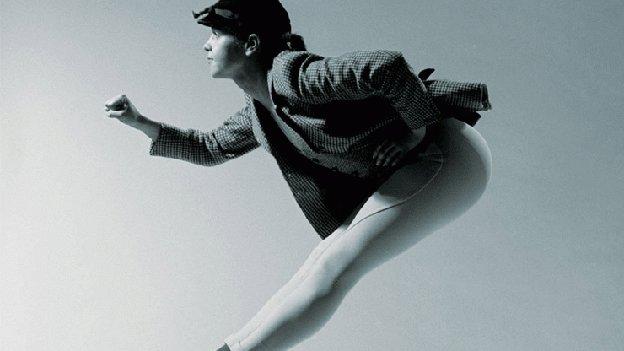
‘I am half man,’ says Tara Cheyenne, disconcertingly clad in lingerie, toes pointed at the end of very long legs. ‘My father is a man, and his father before him.’ Within minutes she has adopted not just the uniform of a male head-banging teenage high school misfit, but the whole physicality of him.

Acknowledging the gender appropriation and with a script that is funny and poignant in turn, bANGER is a dance-theatre piece that allows Tara to fully display her ‘awesome talent’ – as her character would no doubt say. His is a world of rock and roll fantasy, of loud guitars and war-games, of fancying unattainable girls, making a twit of himself in classes and getting beaten up in the locker rooms.

It is compelling stuff, loud and strong and danced with fierce conviction.

But once the character is established, the choreographic language becomes a little restricting, repeating signature moves of head-shaking and air guitar. This is perhaps why Tara introduces a sequence about the Battle of El Alamein, narrated by a goggly eyed English Colonel. It allows her to move in a different way and is certainly unexpected and brilliantly portrayed.

Marc Stewart’s musical score references Black Sabbath and Metallica and is pretty ear shattering in places, but never overwhelms. The lighting is a suitably full-on rock star design, serving the space well.

bANGER is a convincing portrayal of teenage angst and the characterisation is spot on, even if it does play rather to stereotype. Yes, he loves his mom, he is a history boffin (hence World War II re-enactment), he plays computer games and calls his one mate ‘dude’ – but dance gives him the freedom to express himself more fully. It’s what teenage misfits should be doing, Tara seems to suggest, as she figuratively opens her chest and throws her heart towards us.

www.taracheyenne.com

New Adventures: Matthew Bourne’s Early Adventures

New Adventures: Matthew Bourne’s Early Adventures

New Adventures: Matthew Bourne’s Early Adventures

The number of straight young men encouraged into ballet schools might plummet after two and half hours of brazen campery in Matthew Bourne’s triple bill. Presented to celebrate his company’s 25th anniversary, it is a timely selection for a year of Jubilee and Olympic festivities, a lighthearted, nostalgia-ladened programme of exquisitely performed classical ballet with a contemporary twist.

It begins with Spitfire. Four men in white underwear recreate the 1845 pas de quartre combined with a hint of Balanchine’s Serenade. A further influence is from advertising – the men hold poses, perform duos, solos and group interactions to virtuoso classical ballet music. Fun, lovely to watch, slightly absurd and an audience pleaser.

Town and Country hasn’t been performed since 1991 and is the full-length piece that launched Adventures in Motion Pictures as a company of national importance. Played here in two parts either side of the interval, it is an affectionate look at Middle England. Downton Abbey springs to mind, as upstairs and downstairs scenarios are played out in short, themed episodes. A puff of steam and here comes Brief Encounter: Noel Coward sings ‘Dearest Love’ and we’re into Fred and Ginger – but danced by two men. The choreography is elegant and Bourne’s eye for the big stage picture is evident even in these early works.

The country episode is equally easy on the eye and ear. This time we have a clog-dancing routine, some bucolic milkmaids, birdsong and an unfortunate hedgehog. There are lifts and leaps, solos through to ensemble dances. The basis of the movement language is pastiche but Bourne takes it a step beyond, enough to make the work feel fresh and modern, for 1991 if less so for today.

Music has always been vitally important to Bourne – hence his ongoing reinterpretations of classical ballets and opera (Car Man for example) and inEarly Adventures the pairing of music and dance is key. It is particularly evident in Shallow Brown, by Percy Grainger, sung by John Shirley-Quirk. Here the mood darkens a little in a poignant scene that seemed to preface a call to arms. A dancer held aloft and walked slowly across the back of the stage, just the head in a shaft of light high above the country scenery, was truly moving.

The set throughout has been a lush red curtain augmented by simple structures to frame the sections, and for Country a garden backcloth just like the old railway posters promoting days out to Morecambe Bay.

For the third piece, The Infernal Galop, it’s a Parisian street scene, with scale models of landmarks and a typically French urinal. This is another review piece, with vignettes illustrating an English view of the French set in c. 1940s mode. There is Chopin, Piaf and Django Reinhardt and the hint of a can-can. Cocteau inspired matelots serenade a silk-gowned merman to the strain’s of Trenet’s ‘La Mer’.

Here at last a bit of grit enters the choreography, albeit beautifully composed, as a male couple’s attempts to have sex get interrupted – twice – by a jolly band of street musicians.

The dancing throughout by the company of nine is faultless, the lighting beautiful, but although the time sweeps by effortlessly the dance becomes too familiar and lacks light and shade. I couldn’t detect much development in the style or choreographic language. There are few truly mesmerising encounters between dancers in any combination. It is, to use a proper English expression, all very nice.

www..new-adventures.net

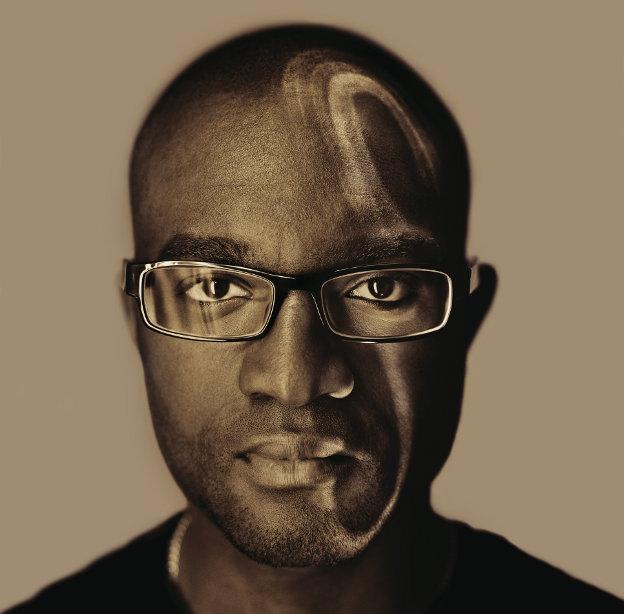
Inua Ellams: Black T-Shirt Collection ¦ Photo: Franklyn Rodgers

Inua Ellams: Black T-Shirt Collection

Inua Ellams: Black T-Shirt Collection ¦ Photo: Franklyn Rodgers

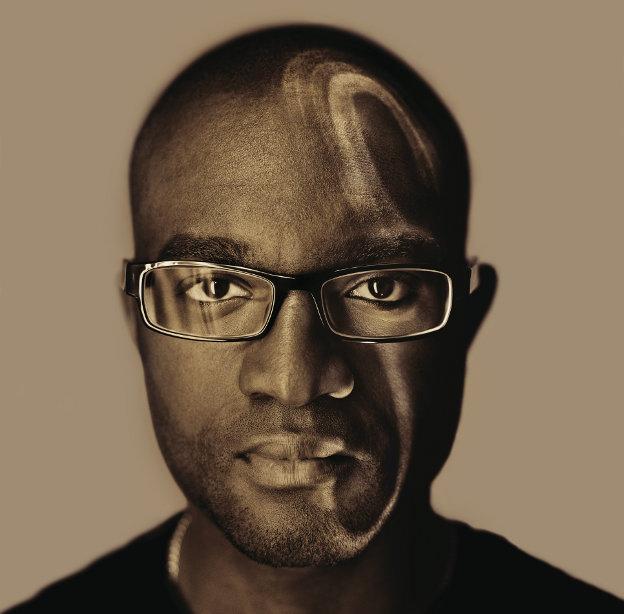
There are several pairings in Black T-shirt Collection, the third work by Nigerian-born Inua Ellams, who has enjoyed a swift ride to becoming a playwright of national status since his first production in 2009.

First, there is black and white, the colours that define the set. There are black blocks, a white cardboard box, a mono animation projected onto the back wall, and then there are the black t-shirts with white slogans that become the defining symbol of the play.

Inua introduces his protagonists, brothers Mohammed and Matthew (two ‘M’s), one Muslim and one Christian, one natural and one fostered. The rest of the family are two women, the mother and a sister.

The play begins with the announcement of the death of Mohammed and works backwards in detailing how he met his end. It is not altogether a linear narrative and moves across time and continent elegantly as the story unravels.

Inua is primarily a poet. His language is rich, defining place and atmosphere in bursts of prose or rhyme that repay close attention. There is a recurring motif of light filtering through dust, of things not quite in focus. This feeling of blurring vision mirrors the tale being told.

Matthew is an artist and entrepreneur, the younger of the brothers. Mohammed is a social creature, outgoing, with an easy rapport with his neighbourhood mates. He seems at home in his skin. Matthew reveres him and they have a close relationship despite their different religious backgrounds and parentage. So close that when Mohammed is outed in a clinch with another man, Matthew insists they flee Nigeria together.

Here the plot whizzes along with speed, journeying to Egypt, London and eventually China as the T-shirt business becomes a worldwide brand. There are encounters with PR folk and kindly hosts, they upscale to production lines and distribution contracts, and fame and fortune come quick. The demands on the brothers naturally causes tension between them.

The heart of the piece gets clotted up in this socio-political landscape. In the earnest need to make a statement about globalisation and exploitation of labour, the nub of the story retreats.

Too many characters lack sufficient depth, the descriptions of the business world are superficial, and the brothers, who have such strongly defined characters, begin to become caricatures.

I longed for it to remain focused on Nigeria and Egypt. We could have learned more about being a gay man in a dangerous country, about the massacre in Jos and the religious divide. About the family left behind which was given very scant coverage. It may be that these themes were investigated in the previous plays, and thus Inua felt the call to extend his geographical horizons. But it made for a long listen, with little visual distraction.

Inua is a fine presence on stage, confident and in full control of his material. The movement was a little too illustrative in places, but overall his delivery is strong and his voice certainly one that needs to be heard.

If Black T-Shirt Collection was intended to be a dynamic overview of globalisation from an unusual perspective, for a young audience at the National Theatre and around the country, it hits the right buttons, as its reviews to date support.

www.inuaellams.com

.dash: And Nothing Turned Itself Inside Out

.dash: And Nothing Turned Itself Inside Out

.dash: And Nothing Turned Itself Inside Out

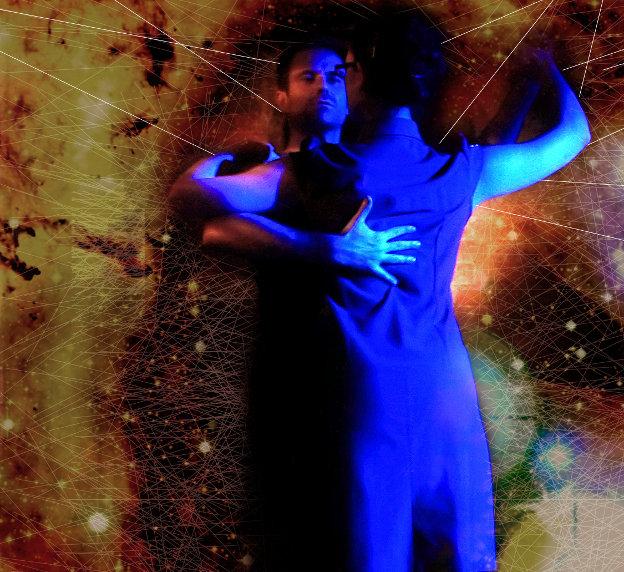
And Nothing Turned Itself Inside Out was one of those most frustrating of fringe shows, where it’s clear lots of thinking and ideas have informed what you are watching onstage but they don’t make it into the work. A miniature train set loops around the space, there are two running machines, side by side, a drum kit and a model box, and a live feed camera trained on the interior. An intriguing collection of ingredients, but it wasn’t clear to me why they were there.

We enter the space to the shambling drone of a narrator of sorts, brandishing a mic, whose monotone monologue circles around a framing idea for the piece – that they are going to talk to us about stars. Bookending his ramshackle presence is a leanly choreographed female narrator, much more able to get to the point, who interrupts and underscores the narrative throughout with lavishly detailed descriptions of the lifecycle of a star. The metaphorical connection they wish to make is between two individuals meeting, building a relationship and splitting up, and this epic tale of particles colliding to make light.

But there wasn’t enough light in the story for me to feel this metaphor could hold true. Put simply, there wasn’t enough believable love. So much focus was on the form of the storytelling, the frame, the ways in and out, that there was no space to share with us the beauty and power of the love in the relationship – a connection that for me felt necessary to justify the weighty parallels being drawn.

The company have devised some witty and believable material for their couple to play out, although they’re a young company and the relationship too feels quite immature (not necessarily an issue in itself, but becoming more so when placed alongside epic tales of stars gathering and collapsing). They are combining some interesting languages on stage and their storytelling feels fresh: it has a familiar frame but their storytellers never pushed us into overdone quasi mystical territory. Their technological ambitions were hampered in a festival venue and the intention behind the use of live feed wasn’t clear to me, but I admired the company’s energy and I would like to see them develop this piece further.

www.dashtheatre.co.uk