Dorothy Max Prior at the Edinburgh Fringe 2013
Eight days in, there’s exhaustion for sure – but also a gratitude for the opportunity to see so much theatre work in such an intensive time period. You get a broad sweep of the state of the art in the UK, and you get a chance to see artists from all over the world presenting work – you find themes and motifs and areas of exploration repeating and crossing over, and you find some things that you’ve never seen before. Your ability to judge what works and what doesn’t in performance sharpens and hones (invaluable for a critic and dramaturg, and indeed for anyone making work).
There are gaps, though, and the Fringe environment favours certain kinds of work – we need to acknowledge that. There is no street theatre in the programme, very little site-responsive work. Companies making unusual but accessible work have the edge over companies making work that needs time and space around it, Anyone with a show that is more than an hour long is taking a mighty risk in an environment in which audiences get twitchy after 55 minutes.
BlackSKYwhite’s Omega, is an example of a show that isn’t an easy ride. It’s such an intense, visceral experience that it is hard to go straight from it into another show. It’d probably be better as an evening show so that you could walk out and stare at the moon afterwards, rather than emerge blinking into the bustle of George Street on a sunny afternoon, although I suppose there is something decadent and appealing in that contrast. Dudendance’s This Side of Paradise explores the darker side of life, but the fact that it starts in daylight makes it even spookier for me. Oh and to flag up that although it is what you might call a minimal promenade, this is a site-responsive promenade piece.
Karavan Ensemble’s Somnambules (by ex-Derevo performers Tanya Khabarova, who co-founded the company, and her long-time colleague Yael Karavan) is programmed at 9.30pm, which feels right and good. It’s a show that I’ve seen twice in the past week, and which I enjoyed much more on second viewing. Perhaps some shows need that. After all, there are pop tunes that become instant ear-worms, and there is music that you need to hear a few times to really appreciate – the slow growers. Perhaps some theatre is like that too? Easy enough for you, I hear you say, with your press pass – those Fringe tickets are expensive, we can’t afford to go twice. Which is why I think companies/venues should let you in half price if you want to come back. I have given this idea to Anthony Roberts of Escalator East to Edinburgh / Colchester Arts. This gift was witnessed by Shôn Dale-Jones of Hoipolloi. Go, Dr Roberts – run with it.
Gecko’s Missing I feel is a show that would benefit from a second viewing. I enjoyed so much about it – fantastic design, accomplished choreography, interesting ideas about identity and trauma explored – but there was something – well yes, missing – for me. It’s like it’s a jig-saw puzzle with parts lost that, could I just locate them, would make sense of the whole picture. And yet, and yet – I keep seeing the images I witnessed popping up unsummoned in front of my eyes, keep puzzling over sections that I didn’t understand.
Gecko are part of the Escalator East programme. This curated bunch of shows from the East of England region is a mixed bag of emerging and established artists working across the board, from new writing to new performance via ensemble physical/devised theatre. Other Escalator things that have wooed and won are Bryony Kimmings’ Credible Likeable Superstar Role Model, and the Hunt & Darton Café, which this year is café-as-living-artwork during the day – guest waiters enhancing their shifts with performative interventions – and a more conventional venue at night. Conventional in the sense of full-length shows that are programmed, ticketed and all that jazz – although the shows presented are not your average Fringe show. On Thursday night (8 August) I arrived just for the ending of Richard DeDomenici’s Popaganda (a cleverly merry romp seen by TT in Brighton), indeed almost arrived onstage as I fought my way, Tommy Coper style, through the blacks, and I caught all of Hunt & Darton’s own show Boredom.
This is an interesting challenge: how to make a show about boredom that isn’t boring. Or perhaps is boring, but in the right sort of way. I was, I must confess, ready for some boredom after a week of intensive viewing. For example, viewing (and hearing) shows such as the intensely busy and overloaded – with ideas, with words, with sounds, with stuff of all sorts – Laquearia (written and directed by Victoria Miguel), which presents an imaginary chess game between John Cage and Samuel Beckett, a kind of performance lecture cum theatre show that would, I am sure, horrify both Cage (for its incessant unnecessary noise) and Beckett (for its self-conscious intellectualism and horribly hackneyed acting). So understandably I was really pleased to get a bit of silence and minimalism onstage. I think both Cage and Beckett would have approved of Boredom. The Hunt & Darton girls know a good pause when they see one.
Other bright young things: I was a lot less taken with Little Bulb’s Squally Showers than with their previous shows. I like the company’s work, but this one didn’t do it for me: I found myself longing for the innocence and sincerity of Crocosmia, rather than the postmodern pastiche seen here. As far as other young companies go – I haven’t seen it yet, but one of the Escalator shows getting a lot of interest (reviewed for TT by Terry O’Donovan) is New Wolsey Young Associate’s Party Piece. Another young company to watch: Clout’s The Various Lives of Infinite Nullity (reviewed for TT by Beccy Smith, seen also by yours truly) was a delightful surprise. A surprise because I was expecting How a Man Crumbled part two, and instead got a whole new aesthetic and a whole new take on dark clowning. A delight because it was so ridiculously, absurdly funny. No second-show syndrome here… Another bright young thing is Rachel Mars. The Way You Tell Them reflects on the use and abuse of comedy – it was funny and thought provoking, beautifully crafted by Ms Mars and director Jamie Wood (who alternates the lunchtime slot with Rachel, presenting his own show Beating McEnroe, which I thought I was booked in to see – but I got Rachel instead).
Theatre Re are relatively young, and The Little Soldiers (presented at the Pleasance Dome) has a lot going for it – accomplished mime/physical theatre performances, a really interesting integration of live music into the action, and a wicked way with mic cables which morph from horse reins to tightropes to strings that turn performers into living marionettes. The story is of an old family circus, and the fatal rivalry of two brothers who are both in love with the lovely lady acrobat. So it’s here that I lose patience: do we really need another story in the world with woman as desirable ‘other’, woman as trouble-maker, woman who plays one man against another. I’m not arguing for political correctness in theatre – just saying that this is a hackneyed storyline that is a waste of the company’s evident talents. But although this one doesn’t do it for me, I’ll be interested to see what they do next.
Also leaving me a little bemused was Lucy Hopkins, whose one-woman show is called The Veil. It’s what it says on the can: one woman, one long piece of silk cloth, numerous characters played. Minimal lighting and soundtrack, and that’s it – a quick get-in, then. So it’s all down to this person and her talent to conjure characters out of the blue, which she’s good at, but I just don’t like any of the characters, so lose interest quickly. They are all stereotypes of middle-class middle-aged womanhood: the bombastic bluestocking (‘I’m an artist’), the nervous apologiser with the fluttery voice and hands, the mad-as-a-hatter foreigner. The quick changes become ever-quicker until eventually they start to merge and muddle, and the work starts to reference its own theatricality ‘ You don’t exist, you are an invention!’ says one. ‘ I’m performing you!’ says another, before stepping out of the action altogether. Thinking back, I like the idea of the show better than the experience of watching it. There are, though, some very lovely moments: a breathless half-sung half-spoken rendition of La Vie en Rose; the words of Gloria Gaynor’s I Will Survive delivered with great aplomb as a speech; and a wide-eyed and tentative retreat from the stage into the audience’s space. So, I wasn’t totally won over, but by the end of the show I was far closer to being won over than I had been at the start…
Another one referencing its own existence as a piece of theatre is David Leddy’s Long Live the Little Knife, presented at the Traverse and reviewed here. Leddy is an Edinburgh Fringe perennial and has made many different sorts of work in the past – a site-responsive piece set in the Masonic lodge, an MP3 player piece for solo walkers (which was made long before this sort of thing was being done by everyone everywhere). This latest play is far more of a play than these other works, but it’s a good play – and sometimes that’s quite enough. Long Live the Little Knife is a play that pretends to be a verbatim piece; an actual verbatim piece – replete with ums and ers – is The Love Project, which is going out under award-winning Look Left Look Right’s auspices, but is the work of an associate artist (Ellie Browning) rather than the core company. It’s a very good example of a verbatim play, the interviews edited and segued together to create interesting rhythms and juxtapositions. I’m less taken with the performances. To be fair, they are feisty and energetic, and it is a big ask to swap character so swiftly back and forth throughout an hour – but there are far too many dodgy accents and far too little finding the change of character in the physical presence of the actor. But we meet some lovely characters – Cora and Bill are the stars, married in 1956. ‘Do you remember that time I made a sandwich?’ says Cora and Bill nods stoically. Of course he does – that’s what being married for more than half a century does for you…
Also at the Traverse are the multi-award winning Belgian company Ontroerend Goed with Fight Night, an interactive piece exploring the politics of democracy (reviewed here). Theatre about politics, and political theatre – not the same thing, of course, but there’s plenty of both at the Fringe. I’ve seen a few shows that tackle issues around cultural identity and politics. Theatre Ad Infinitum’s Ballad of the Burning Star is a must – an inspired use of cabaret mores to explore the chequered history and current challenges of Israel. Upopirates Theatre’s Caryatid Unplugged is a solo show by a young Greek woman, Evi Stamatiou. It’s a chirpy piece of work that marries good comic writing with effervescent and engaging performance, using ‘poor theatre’ tools (a mop puppet, a talking hat, a packing crate). She tells the story of an immigration officer John facing up to Rita, a Greek woman who doesn’t want to be deported, and Caryatid – a Greek statue who does. You and I might see Caryatid as one of the Elgin Marbles but she doesn’t see herself that way – Lord Elgin seemed like a nice enough chap, seducing her into running away with him to England, but he deceived her and locked her up in the British Museum, and now she wants to go home, back to the Parthenon. It’s a clever idea – a very entertaining hour with a bit of an edge to it. Oh, and featuring a very lovely take on shadow theatre, using a shower curtain, to the pulp song Common People. All together now: ‘She came from Greece she had a thirst for knowledge / She studied sculpture at Saint Martin’s College…’
I should mention here that Hill Street Theatre (the Fringe’s oldest venue) have taken a decision that from this year on they will only programme solo theatre shows – with a stated desire to make this lovely little theatre the hub for solo performance of all sorts (theatre, dance, live art – anything but stand-up, basically. An interesting development in the Fringe landscape.
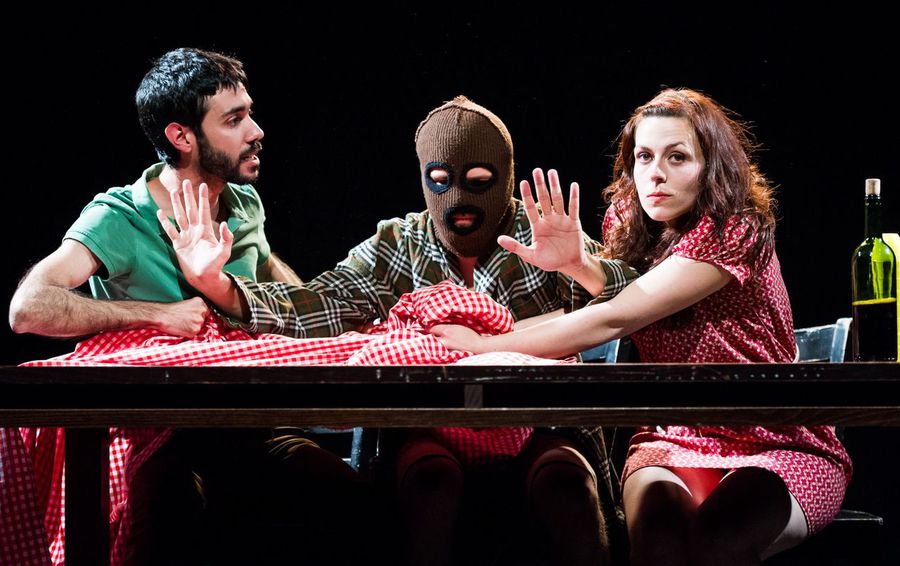
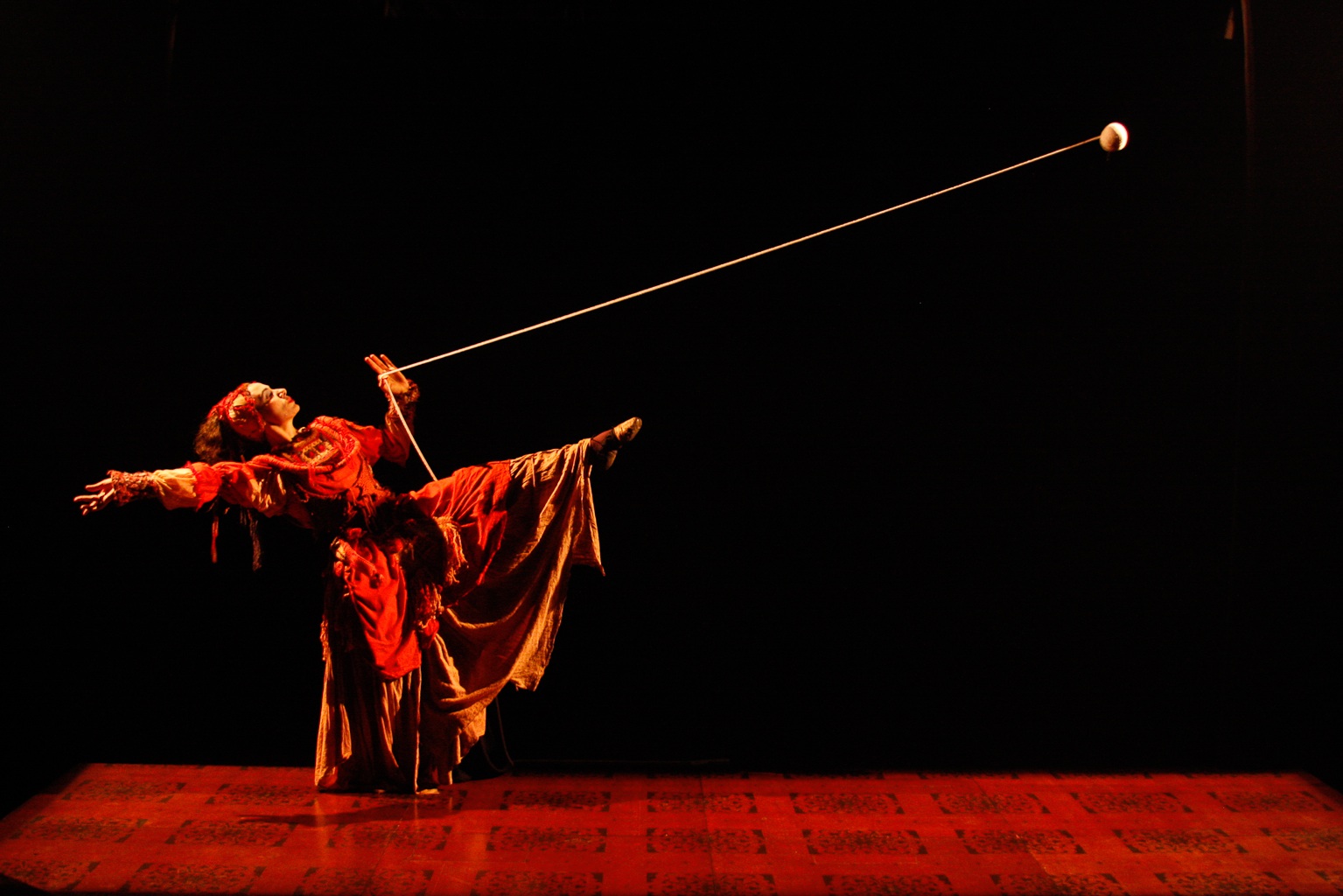
Another interesting new venture is the Brazilian Theatre Season presented by Cena Brasil at Venue 150, part of the Edinburgh Conference Centre, a rather sterile venue a little off the beaten path (although only a stone’s through from the Traverse so not too far from the heart of the city). The programme presents four works by renowned Brazilian companies, with an emphasis on physical/visual work. I’ve seen Caixa do Elefante’s The Weaver which is a lovely, lyrical piece of puppetry/animation and physical performance. Because the venue is an unknown one off the usual circuit, these top quality shows are not getting as large an audience as they deserve. Choice of venue at the Edinburgh Fringe is such a major decision for artists and producers – I can see the appeal for Cena of having such a well-equipped and clean space practically to themselves, but there is no passing trade, no buzz, no-one to pick up the programme flyers whilst seeing other theatre shows… Other International shows I’ve enjoyed include the BE Festival supported Solfatara, by Catalan company Atresbandes, a mad-cap deconstruction of couple relationships using a very clever mix of theatrical devices, including anarchic surtitling that fights back (reviewed here soon). I also saw Vladimir Tzekov’s Fantasy no 10: The Beauty of Life, also a BE show, also presented at Summerhall – but this appealed less. It’s a beautifully performed piece of absurdist physical theatre, but I felt alienated, and didn’t warm to the tone or the physical/ visual imagery presented. And yes, I understand that was partly the point – the ambiguity of images and idea – but still. A bearded man in a ballet tutu, a man tipped out of wheelchair, aggressive language ‘take me out of here, bitch’, slaps and pushes, a woman carted around like a frozen doll, Tiger Lillies songs – I feel I’ve been there and done that many times over, although take my hat off to the company for the energy and precision of their performances.
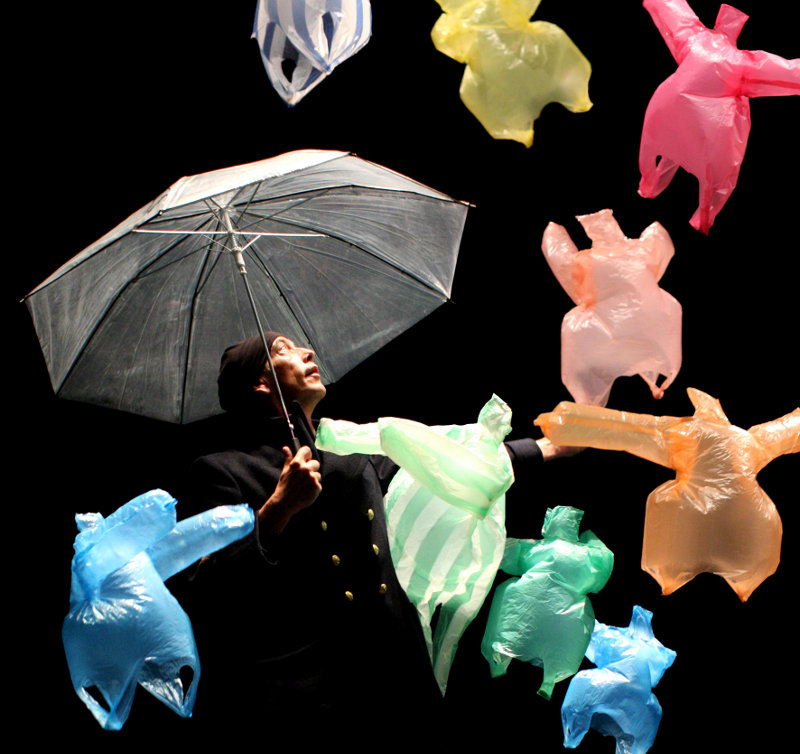
Then, there’s two lovely French shows presented at Summerhall: Cie Bal/Jeanne Mordoj with La Poème, a gorgeous solo performance featuring a hand-held harmonium and a lot of eggs, and Cie Non Nova’s L’Apres Midi d’un Faun. Listed in the Children’s section, it’s a one-man show – a very simple idea of animating plastic bags with fans that somehow becomes a beautiful exploration of the joy of freedom, the fickle hand of fate, and the finite nature of life (and death).
Over at a long-standing venue, the Roxy (once Demarco’s gaff, now under the care of the Assembly – which by the way is different to the newly reopened Assembly Rooms, but if you want to know more about all that Google it or speak to Stewart Lee, it’s a long story), Wet Picnic, better known as a street theatre company, are presenting Death and Gardening. First to say that gardening doesn’t feature, the show is about death and non-death – in other words, it’s a reworking of the age-old story made famous in the film A Matter of Life and Death: person on deathbed, messengers from beyond the grave coming to claim his soul etc etc. There is a twist, though, which I won’t give away. At the time of seeing it, the show was in dire need of development. There was 50 minutes of zany clowning and humorous flashbacks, then a sudden switch in tone for a finale that hadn’t been earned by the story as told to that point. But as someone said to me, that’s what the Fringe is for – doing a month’s run and learning how to work the show.
But is it? So much is at stake for artists bringing work here, and it is such a great big global showcase, that it seems a bit risky to present a work-in-progress, unless it is in a ‘safe’ environment like the Forest Fringe, where the experimental nature of the work is flagged up very clearly. And there’s a difference between trying out a new idea and presenting a supposedly finished show with dodgy dramaturgy…
Another show that left me wondering was French Cie HERVE-GIL’s Fleurs de Cimetiere, which on paper looked interesting – a piece combining choreography and poetic text in a reflection on women and ageing (fleurs de cimetiere – cemetery flowers – is the French name for age freckles, those brown marks that appear on ageing skin). It could have been an empowering statement – that’s what the pre-publicity seemed to promise – instead it came across as an angsty whinge, delivered in a heavy French accent that got the stresses and rhythms of the English language wrong time and time again. And although the choice of music is good, from lieder to Scottish folk tunes via Kate Bush and La Vie en Rose (yes, again – I’ve heard it used in four shows so far at this Fringe), the choreography is unchallenging. It starts with some nice sub-Pina Bausch gestural stuff and play with chairs, but doesn’t really move forward into anything else. The five women performers are of very varying dance ability – which is perhaps the point, but it doesn’t inspire.
At the other end of the contemporary dance spectrum come Rosie Kay and Guilherme Miotto with Sluts of Possession, seen at Dance Base. Oh my, here is dance talent, here is all the energy and vitality in dance performance you could hope for. Created in collaboration with filmmaker Louis Price, the piece has used archive film – anthropological field recordings from The Pitt Rivers Museum – as its starting point, a catalyst for the choreography and a source material for the very beautifully made and ingeniously projected film. The subject to-hand is ‘possession’, emotional and spiritual – an exploration of the cross-cultural notion of primitive drives and transcendental states. I loved it, but my enthusiasm was somewhat dampened in a conversation in the bar afterwards with someone who was extremely angry at what they perceived to be an ‘imperialist’ approach to other cultures in the use of the field recordings and what they saw as a parody of ‘primitivism’. Which is interesting in itself – you think you like something, then someone tells you that you can’t possibly like it because of XYZ. But I still like it. I think. Isn’t it all right to reflect on shared ideas and modes of expression throughout humanity’s history? Hasn’t all progression in dance come about through cultural appropriation? Does this mean I shouldn’t dance the tango because it belongs to Argentina. Except it doesn’t, it came from Spain and Africa, and possibly Paraguay. There is no ‘purity’ in dance. Discuss…
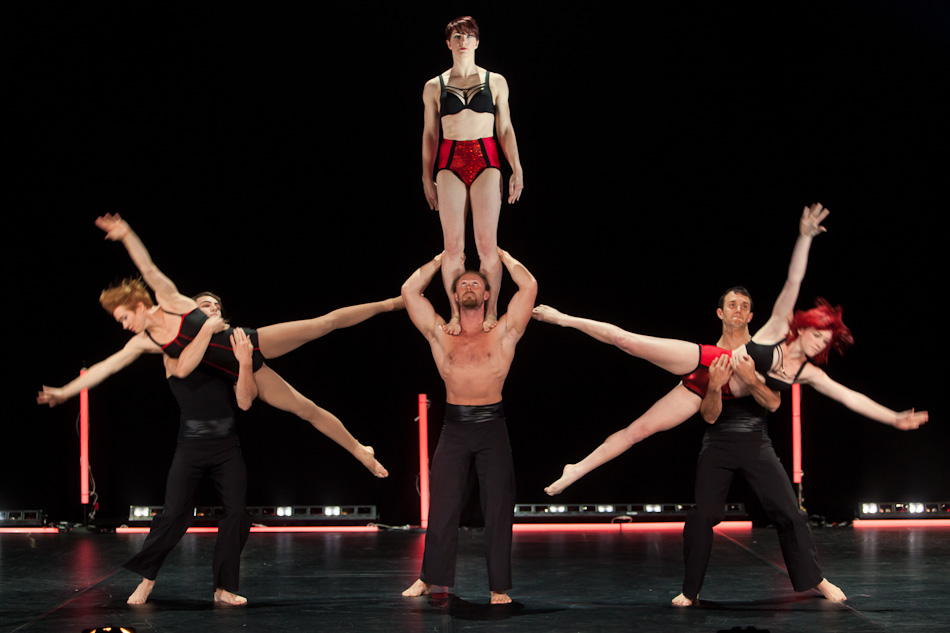
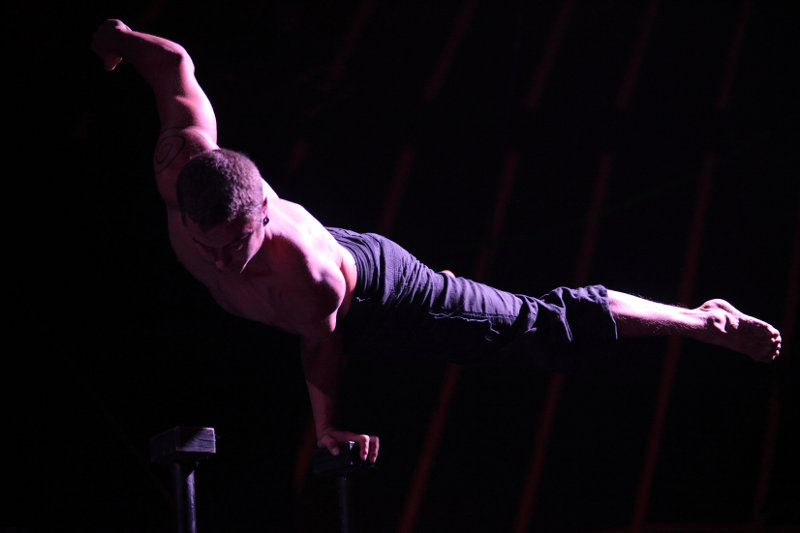
From dance to circus: some of my favourite things seen so far at Fringe 2013 are the circus shows, from the ultra-slick and sexy Wunderkammer by Circa to the beautifully anarchic Fright or Flight by fellow Australians 3 is a Crowd, via not one but two shows by NoFit State, Bianco presented in their own tent, and Noodles, which goes up in a lunchtime slot at New Town Theatre. Then there’s Flown by Pirates of the Carabina, and the not-to-be-missed Smashed by Gandini Juggling, which has been doing the rounds for a couple of years but making its Edinburgh Fringe debut. I feel that there is a lot to say about all of these, but this will need to be at another time – exhaustion has set in, for me and no doubt for the reader trying to digest all of this! And this was just week one. But these magnificent circus shows will be reflected on soon. Watch this space – further reviews, features and reflections to be posted.