Aimed at undergraduates in drama, theatre or performing arts, Pickering’s Key Concepts describes itself as ‘an informative and accessible guide to the subject’. Each of the five chapters (textual concepts, performance concepts, production concepts, staging concepts, critical concepts) begins with a brief introduction to the concepts it embraces, followed by an alphabetical listing of those concepts. For the most part, it does its job nicely, and is a genuinely useful reference book. But it is sometimes hard to understand the entry allocations under the given chapter separations: what, for example, makes ‘carnival’ a performance concept, and therefore in chapter two,’ site-specific’ a production concept (chapter three) and ‘street theatre’ a staging concept (chapter four)? Why is absurdism in chapter one and surrealism in chapter four? Wouldn’t it be easier just to place everything alphabetically? And there is far too great an emphasis on playwright-led theatre for this to be a truly comprehensive reference work: the entry on ‘dramaturg’, for example, gives no indication of any potential role within physical, devised or visual theatre. But interesting and informative, so worth having on the bookshelf.
Author Archives: Dorothy Max Prior
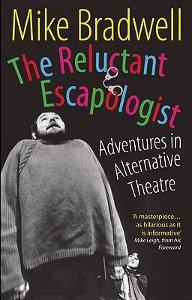
The Reluctant Escapologist – Adventures in Alternative Theatre
Mike Bradwell is a legendary figure, a mainstay of British counter-culture for over forty years. I first met him in 1975-76 when I was working at the ICA in London. I was assistant stage manager, and the ICA theatre regularly programmed the company he founded and directed for many years, Hull Truck Theatre Company. I also, in 1976, helped to programme an Ethnographic Film Festival at the ICA (this in the days when you didn’t need a degree in Arts Management to be let loose in a venue, and could multi-task), which featured new-kid-on-the-filmmakingblock Mike Leigh’s first feature Bleak Moments, in which Mike Bradwell played a transient South London guitarist, the lost and lonely Norman. To those of us ‘of a certain age’, the 70s punk ethos will always rule our souls. Mike Bradwell’s take on the ‘here’s three chords, now form a band’ line is thus: ‘Find a play. Squat a building. Steal a van. Now make a show.’ Well go on, what are you waiting for?
Of course the history of Hull Truck features heavily in Bradwell’s book, as does working with Mike Leigh (on stage, then on screen). But we are also treated to the onstage mass orgasms of The Living Theatre; eating fire with Bob Hoskins; and becoming an underwater escapologist (reluctantly – hence the book’s title) in the Ken Campbell Roadshow. Oh and then there was his proper job, running the Bush Theatre in West London for ten years – in which the theatrepunk renegade finds himself dealing with Health & Safety officers and funders galore. All this is interesting, but for this reviewer, the best bits are the tales from the early days: after all, who could resist a chapter entitled ‘Who Put the Cunt in Scunthorpe?’ especially when the opening line is ‘It was not easy to make revolutionary theatre in Scunthorpe in 1968.’
In his foreword, Mike Leigh recounts Bradwell’s attempt (before he’d even written the thing), to get a print-worthy quote for the book. ‘I wasn’t sure what would suit,’ says Leigh, ‘so he suggested “Buy this book. It is a work of genius. Laugh? I almost shat.” Well, I read it and it gave me diarrhoea.’ And what better endorsement could you ask for than that?
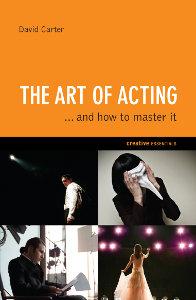
The Art of Acting… and how to master it
It is easy, here in the hallowed halls of Total Theatre, to fall into the trap of thinking that there are no longer any divides in theatre-making practice, and that evolution of practice in the past three decades – in which physical and devised theatre and ‘new writing’ have moved ever closer – means that we are sharing so much of the same territory. Then there has been the inroads of, on the one hand, contemporary collaborative theatre-making and, on the other, multimedia cross-discipline live art, both beloved of so many of our university departments.
But then along comes a book like The Art of Acting to remind us that there’s a whole other world out there: a world in which statements like this are delivered with no hint of irony: ‘there are aspects to the job of directing a play that need not concern an actor … set and costume design, planning the lighting and sound, and the like’. And then: ‘the balance of opinion among actors seems to be that, while there are some excellent directors around, the majority are not much help’.
In its favour, the speedy and brief run through of ‘the history of acting styles and techniques’ references the likes of Copeau, Grotowski and Brook in passing), and could be useful to someone who wants to get a straightforward précis of theatre history. But most of the book is dedicated to a necessarily shallow ‘teach-yourself acting techniques’ approach, bolstered up with tips from famous actors and ‘actresses’ (as this book insists on labelling women actors). It also cautions against an over-reverential attitude toward Stanislavski, then references him endlessly throughout.
This book, I fear, will not be high on most Total Theatre Magazine readers’ wanted lists, and in its approach and attitude (born of David Carter’s 30 years in am dram, and reverential approcah to ‘the theatre’) is probably about as far away from Mike Bradwell’s ethos as you could possibly imagine!
Drama Games for Those Who Like to Say No
Described (pretty accurately as it goes) as ‘a dip-in, flick-through, quick-fire resource book’, and one of an ongoing Nick Hern Books series, Drama Games for Those Who Like to Say No is – unsurprisingly – for teachers and workshop leaders working with ‘difficult or reluctant students, youth groups, young offenders, and all those who seem intent on saying “no” to whatever is offered them’.
It’s compiled by veteran workshop facilitator / drama games maestro Chris Johnston (of House of Games fame), and the author brings to this collection his impressive track-record of work with professional theatre practitioners, in the wider community, and – specifically – within the prison/remand centre system. Thus, we trust his judgement on what exercises work in what sized group with what aged participants, and how much time should be allowed for the game… and it is good to have all of this summarised efficiently with each exercise. He also includes a short Training section to help teachers/facilitators working with challenging groups to gain some professional development and support.
It may be a small book, but it’s packed to the brim with bright and breezy ideas (ninety games in all, so that works out at around 10p a game – a bargain!). The first half focuseson getting-started games, some of which willbe familiar territory to those who run drama workshops regularly, and some more unusual ones. The second half of the book is its USP: a selection of scenarios to kick-start role-play sessions, broken down into headers such as ‘Skills – Reasoning’ or ‘Challenges – Managing Emotions’. There is some crossover with Boal’s Theatre of the Oppressed work, but that is no bad thing – the world could certainly do with as much as it can get of dramainitiated ‘collaboration’ ‘communication’ and ‘negotiation’ (to reference a few more section headers).